A Practical Introduction to Test-Driven Development (Coursera)

Offered by LearnQuest,
A Practical Introduction to Test-Driven Development (Coursera)

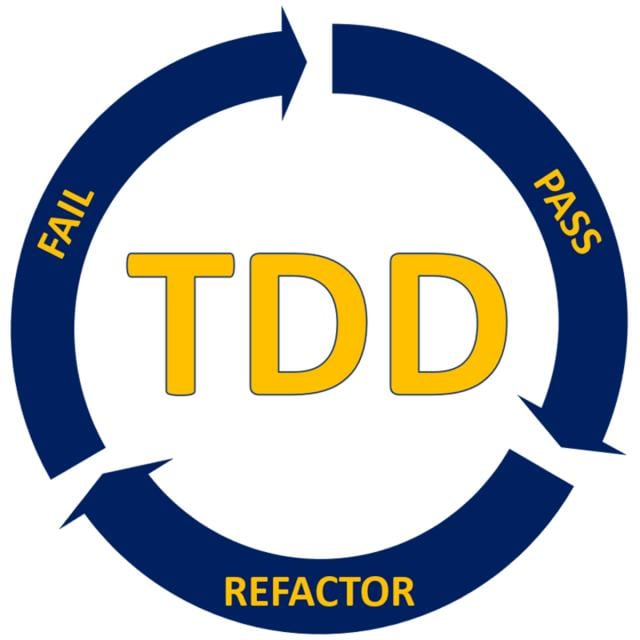
To be a proficient developer you need to have a solid grasp of test writing before putting code into production. In this course, we will take a hands-on look at Test-Driven Development by writing and implementing tests as soon as week one. TDD starts with good unit tests, so we will start there. Topics will also cover translating user specs into unit tests, applying the Red-Green-Refactor mantra, and applying mocks in python with the unittest.mock module. Once finished, you will have covered all the steps of TDD before development.

Class Deals by MOOC List - Click here and see Coursera's Active Discounts, Deals, and Promo Codes.

Course 2 of 4 in the Test-Driven Development Specialization.

Syllabus

WEEK 1
Automated Unit Testing Basics
Test-Driven Development starts with testing, and good TDD starts with good unit tests.
Unit Testing best practices
In this module we will discover the best practices for writing unit tests.

WEEK 2
Writing Tests for TDD
In this module, we'll be translating user specs into unit tests, including all the steps of TDD before development.
The Red-Green-Refactor cycle in practice
In this module we'll discover a hands on approach to applying the Red-Green-Refactor mantra of unit testing.

WEEK 3
The power of mocks
In this module we'll learn how to use mocks in python with the unittest.mock module.
Go to Class
MOOC List is learner-supported. When you buy through links on our site, we may earn an affiliate commission.

Related Courses

Build a Data Warehouse Using BigQuery (Coursera) Coursera
Starweaver

Build a Data Warehouse Using BigQuery (Coursera)

Unlock the power of Google BigQuery as you embark on a journey to become proficient in data warehouse building and advanced querying. In this comprehensive course, you'll learn to harness the capabilities of BigQuery, from setting up and accessing the platform to creating data warehouses using both the user interface and Python. Through hands-on lessons and practical applications, you'll develop the fundamental skills needed to manage, query, and optimize your data in this powerful cloud-based platform.

Sep 28th 2026
1 Week
Single Page Web Applications with AngularJS (Coursera) Coursera
Johns Hopkins University

Single Page Web Applications with AngularJS (Coursera)

Do you want to write powerful, maintainable, and testable front end applications faster and with less code? Then consider joining this course to gain skills in one of the most popular Single Page Application (SPA) frameworks today, AngularJS. Developed and backed by Google, AngularJS is a very marketable skill to acquire.

Sep 14th 2026
5-12 Weeks
Programming for Data Science (Coursera) Coursera
University of Leeds

Programming for Data Science (Coursera)

Explore the basics of programming and familiarise yourself with the Python language. After completing this course, you will be able to write Python programs in Jupyter Notebook and describe basic programming. In this course, you will learn everything you need to start your programming journey. You will discover the different data types available in Python and how to use them, learn how to apply conditional and looping control structures, and write your own functions.

Sep 21st 2026
3 Weeks
Intel® Network Academy - Network Transformation 102 (Coursera) Coursera
Intel Corporation

Intel® Network Academy - Network Transformation 102 (Coursera)

Welcome to the Intel® Network Academy – a comprehensive training program on network transformation. In this program, we will be covering the topic areas of software defined infrastructure (SDI) network functions virtualization (NFV), software-defined networking (SDN) and beyond. Network Transformation 102 covers topics such as VNF Operations & Development, Cryptography, and Hyperscan technology, students will dive into the benefits of Intel hardware and software and explore how to accelerate compute-intensive operations with Intel® QuickAssist Technology (Intel® QAT).

Sep 28th 2026
4 Weeks
Comparing Genes, Proteins, and Genomes (Bioinformatics III) (Coursera) Coursera
University of California, San Diego

Comparing Genes, Proteins, and Genomes (Bioinformatics III) (Coursera)

Once we have sequenced genomes in the previous course, we would like to compare them to determine how species have evolved and what makes them different. In the first half of the course, we will compare two short biological sequences, such as genes (i.e., short sequences of DNA) or proteins. We will encounter a powerful algorithmic tool called dynamic programming that will help us determine the number of mutations that have separated the two genes/proteins.

Sep 14th 2026
5-12 Weeks
Machine Learning for Accounting with Python (Coursera) Coursera
University of Illinois at Urbana-Champaign

Machine Learning for Accounting with Python (Coursera)

This course, Machine Learning for Accounting with Python, introduces machine learning algorithms (models) and their applications in accounting problems. It covers classification, regression, clustering, text analysis, time series analysis. It also discusses model evaluation and model optimization. This course provides an entry point for students to be able to apply proper machine learning models on business related datasets with Python to solve various problems.

Sep 21st 2026
5-12 Weeks
TDD - Desenvolvimento de Software Guiado por Testes (Coursera) Coursera
Instituto Tecnológico de Aeronáutica

TDD - Desenvolvimento de Software Guiado por Testes (Coursera)

Neste curso, assumimos que você já sabe projetar e desenvolver programas mais complexos em Java, com método e organização graças às boas práticas e princípios exercitados no curso anterior; mas você talvez não se sinta ainda confortável em projetar programas usando técnicas ágeis, como o desenvolvimento guiado por testes (TDD).

Sep 14th 2026
4 Weeks
Machine Learning: Concepts and Applications (Coursera) Coursera
University of Chicago

Machine Learning: Concepts and Applications (Coursera)

This course gives you a comprehensive introduction to both the theory and practice of machine learning. You will learn to use Python along with industry-standard libraries and tools, including Pandas, Scikit-learn, and Tensorflow, to ingest, explore, and prepare data for modeling and then train and evaluate models using a wide variety of techniques. Those techniques include linear regression with ordinary least squares, logistic regression, support vector machines, decision trees and ensembles, clustering, principal component analysis, hidden Markov models, and deep learning.

Sep 21st 2026
5-12 Weeks
Visualización de Datos con Python (Coursera) Coursera
IBM

Visualización de Datos con Python (Coursera)

"Una imagen vale mas que mil palabras". Todos estamos familiarizados con esta expresión. Se aplica especialmente cuando se trata de explicar la información obtenida del análisis de conjuntos de datos cada vez más grandes. La visualización de datos juega un papel esencial en la representación de datos tanto a pequeña como a gran escala. Una de las habilidades clave de un científico de datos es la capacidad de contar una historia convincente, visualizando datos y hallazgos de una manera accesible y estimulante

Sep 28th 2026
3 Weeks
Programación en Python (Coursera) Coursera
Universidad de los Andes

Programación en Python (Coursera)

¡Te damos la bienvenida al curso de Programación en Python de la Universidad de los Andes! El propósito de este curso es ofrecerte un ambiente interactivo para que desarrolles tus habilidades de pensamiento computacional, aprendas a programar en el lenguaje Python y te entrenes en la resolución de problemas utilizando un computador. La estrategia pedagógica empleada es el aprendizaje activo basado en casos.

Sep 28th 2026
4 Weeks
Laboratório de Programação Orientada a Objetos - Parte 1 (Coursera) Coursera
Universidade de São Paulo, Brasil

Laboratório de Programação Orientada a Objetos - Parte 1 (Coursera)

Este curso apresenta os conceitos mais importantes em torno do paradigma de desenvolvimento mais comum da indústria de software hoje: a Programação Orientação a Objetos (POO). Oferecido pelo Departamento de Ciência da Computação do Instituto de Matemática e Estatística da USP, o curso é voltado para quem já conhece os conceitos básicos de POO e quer se aprofundar no assunto, tornando-se um excelente programador. Ele funciona bem como uma sequência natural aos 2 cursos anteriores do Prof. Fabio Kon do IME-USP no coursera: Introdução à Ciência da Computação com Python.

Sep 21st 2026
5-12 Weeks