Poultry Health (FutureLearn)

Poultry Health (FutureLearn)

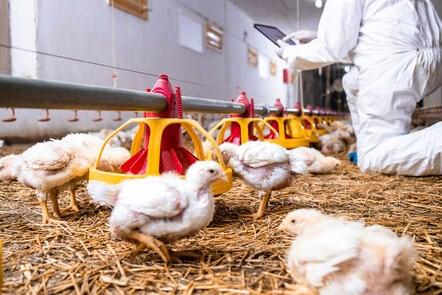
Get technically and scientifically accurate information on how to care for non-commercial poultry. Identify the clinical features of diseased birds and when they need treatment. On this veterinary course, you’ll get expert advice on how to recognise when poultry are unwell, and the options available to you for treatment.

Class Deals by MOOC List - Click here and see FutureLearn's Active Discounts, Deals, and Promo Codes.

Grow your understanding of poultry health and effective treatments
This course will help both small animal vets and the large number of pet owners who keep poultry. Small animal vets often feel poorly prepared for treating sick birds and lack knowledge of the treatment options available to them.
Likewise, new owners may be unaware of diseases and predators which may harm their birds, and may not have access to veterinarians who are sufficiently knowledgeable.

Understand chicken anatomy and poultry disease
You’ll learn how to identify the key anatomical features of chickens, including major organs and organ systems.
Alongside specialists at the University of Nottingham, you’ll identify how to diagnose the main clinical features of illness within poultry, as well as the diseases that affect them, and determine at what point a vet needs to be consulted.
You’ll come away with a practical understanding of how to reduce the risk of animal disease impacting public health, the key responsibilities of people keeping non-commercial poultry, and the main pieces of legislation that apply to them.

Syllabus

Week 1: Introduction
Week 2: What poultry need and how do you handle them correctly
Week 3: Infectious diseases of poultry
Week 4: Non-infectious diseases of poultry
Week 5: Interaction with the vet
Week 6: Surgical case studies

What will you achieve?
By the end of the course, you‘ll be able to...

  • Describe the lifecycle of poultry, and the differences between commercial and non-commercial birds.
  • Describe the key requirements of poultry regarding their housing, biosecurity, nutrition and protection from predators.
  • Evaluate a bird's general health and identify the key signs which indicate poor health.
  • Discuss the main categories of infectious disease affecting poultry, including examples of pathogens causing respiratory, gastrointestinal, reproductive, and dermatological infections.
  • Discuss the main categories of non-infectious disease affecting poultry, including examples of skeletal, gastrointestinal, cardiovascular, and dietary/nutritional disorders.
  • Discuss the importance of vaccination in disease control.
  • Describe the key features of avian immunity and how this differs from mammalian immunity.
  • Discuss the role of antimicrobials in disease treatment, and the impact of antimicrobial resistance.
  • Discuss the main diseases likely to present in backyard poultry in a small animal clinic and the decision process of how each condition could be managed.
Go to Class
MOOC List is learner-supported. When you buy through links on our site, we may earn an affiliate commission.

Related Courses

Global Biosecurity for One Health (FutureLearn) FutureLearn
Murdoch University

Global Biosecurity for One Health (FutureLearn)

Learn about the drivers, activities and collaborative networks that protect human, animal and environmental health. Discover the environmental, economic and social impacts of pests and diseases. In a world where global trade and human movement is increasing, pests and diseases pose a major threat to agriculture, trade and the environment. Biosecurity is central to the management of these threats.

No sessions available
3 Weeks
The Truth About Cats and Dogs (Coursera) Coursera
University of Edinburgh

The Truth About Cats and Dogs (Coursera)

What is your cat revealing to you when she purrs? What is your dog expressing when he yawns or wags his tail? Understanding your cat and dog’s behaviour and the way they communicate with you, will enable you to better understand their needs and strengthen your relationship with them. This MOOC is divided into five topics, the appliance of science; behaviour and body language, senses and perception; challenges for the human-animal relationship, including pet problem behaviour; and how to improve the quality of life for cats and dogs in our care.

Sep 21st 2026
5-12 Weeks
Introduction to Animal Ethics (edX) EdX
Kyoto University,KyotoUx

Introduction to Animal Ethics (edX)

Learn about what ethical issues arise in human-animal relationships, and how to think about such issues systematically. The course utilizes Manga as a study aid. Why do many of us who eat pigs condemn those who eat dogs? Is there any difference between lab mice and companion hamsters that justify the use of the former for drug tests? Our attitude toward animals is full of seeming inconsistencies and unexplained conventions.

Self Paced
Self-Paced
Genetic Models for Animal Breeding (edX) EdX
Wageningen University,WageningenX

Genetic Models for Animal Breeding (edX)

Understand the genetic and statistic principles that enable responsible animal breeding. Animal breeding involves the selective breeding of domestic animals with the intention to improve desirable (and heritable) qualities in the next generation. This course introduces the steps required to design a program for breeding animals and teaches the genetic and statistical concepts that are needed to build a solid breeding program.

Self Paced
Self-Paced
Edward Jenner Leadership for Veterinary Professionals: Your Leadership Self (FutureLearn) FutureLearn
NHS Leadership Academy,Royal College of Veterinary Surgeons

Edward Jenner Leadership for Veterinary Professionals: Your Leadership Self (FutureLearn)

Explore the concept of leadership, why it matters, the types of issues faced by leaders, and why you are already a leader. Discover what 'leadership' is and why you are already a leader. All veterinary professionals are leaders, it is part of the job. But what is leadership? What makes a great leader? And how can vets and veterinary professionals grow as inclusive and effective leaders?

No sessions available
4 Weeks
Introduction to Horses (BHI) Box Hill Institute
Box Hill Institute

Introduction to Horses (BHI)

This course is an introduction to horses, demonstrating basic tasks that you would carry out on a daily basis with a horse. This course can help you to form your decision to enter the wonderful world of horses.

Self Paced
1 Week
Semeiotica chirurgica veterinaria (Federica Web Learning) Federica Web Learning
University of Naples Federico II

Semeiotica chirurgica veterinaria (Federica Web Learning)

Gli animali non parlano e non possono dirci se c’è qualcosa che non va. Ma capirlo spesso non è difficile, se si sa cosa cercare e come cercarlo. Il corso di Semeiotica Chirurgica Veterinaria si propone di fornire le conoscenze di base sulla corretta conduzione dell’esame clinico nelle varie specie di animali domestici, sulla metodologia interpretativa dei sintomi e dei segni clinici finalizzata alla diagnostica delle più comuni affezioni di interesse chirurgico.

Sep 9th 2019
No Information
Le bien-être des animaux d'élevage (FUN) FUN
VetAgro Sup

Le bien-être des animaux d'élevage (FUN)

Le bien-être des animaux est une préoccupation sociétale désormais majeure. Mais de quoi parle-t-on quand on fait référence au bien-être animal? Qu’est-ce qu’est réellement le bien-être animal ? Est-il le même pour tous les animaux ? De quoi dépend-il ? Le bien-être d'un animal en plein air est-il forcément toujours meilleur à celui d’un animal en bâtiment ? Suffit-il de s’occuper d’un animal pour qu’il soit bien ? Peut-on vraiment évaluer le bien-être des animaux, objectivement et scientifiquement ou est-ce purement subjectif ? Enfin, peut-on vraiment l’améliorer, comment et quels sont les avantages pour les animaux et pour les humains ? Toutes ces questions sont importantes quand on parle du bien-être des animaux, et notamment des animaux d’élevage ! L’objectif du MOOC « le bien-être des animaux d’élevage » est d’apporter des réponses à ces différentes questions.

No sessions available
5-12 Weeks
Animal Advocacy Introductory Course (Animal Advocacy Careers) Other Providers
Animal Advocacy Careers

Animal Advocacy Introductory Course (Animal Advocacy Careers)

This online course will walk you through some of the key considerations involved in working to help animals and will help you plan your next steps. it will provide you with the knowledge that you need to start working out which career path will enable you to maximise your positive impact for animals. You will be supported to use this knowledge in creating a career plan and working out which actions you should take next.

Nov 15th 2021
13-24 Weeks
Animals, Self, and Society (Coursera) Coursera
University of Colorado Boulder

Animals, Self, and Society (Coursera)

This course explores how animals and people are situated within the web of structures and connections known as “society.” Module 1 considers some of the key symbolic roles that animals play in society by investigating the practice of “thinking with animals.” We investigate how people construct different meanings of animals and the implications these meanings have for both animals and humans. You will gain first-hand experience of this by analyzing how animals are represented in the media.

Sep 21st 2026
4 Weeks