EdX

Policy Lessons from South Korea's Development (edX)

Offered by World Bank Group, WBGx,
Policy Lessons from South Korea's Development (edX)

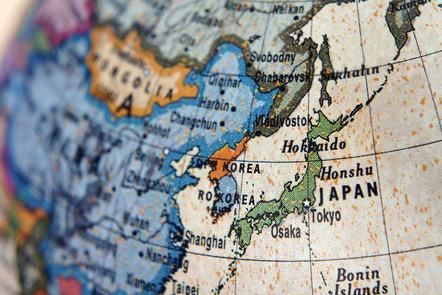
Learn about South Korea’s remarkable transformation from a low- to high-income economy in only three decades. South Korea presents a compelling story of economic growth. It’s one of few countries that made the transition from a resource-poor, low-income nation to a high-income economy in only three decades. It offers a model for developing countries and in this MOOC, leading experts will explain how South Korea achieved this outcome by implementing an export-led industrial strategy.

Class Deals by MOOC List - Click here and see EdX's Active Discounts, Deals, and Promo Codes.

This course examines South Korea’s past developmental experience as well as its current strategy and policy initiatives to overcome global and domestic challenges, and sustain economic growth into the 21st century. You’ll have an opportunity to consider and discuss institutional and policy lessons applicable to the developmental challenges facing your own countries.
The course will be of interest to all those wanting to learn how South Korea was transformed into a high-income, with the help of a highly skilled workforce, and the development of high-end manufacturing and services sectors. Also of great interest is Korea’s creation of a futuristic city, Songdo, equipped with smart and green technologies. This MOOC will be of particular interest to policymakers involved in economic development.

What you'll learn:

  • The factors that contributed to South Korea’s remarkable performance from the 1960s to the 1990s and how some of its policies could be applied to similar effect today
  • The strategies used to build a science, technology and innovation system and to nurture innovation capability
  • The forward looking developments promoting diversification into advanced manufacturing, tradable services and digital/green technologies
  • Current efforts to upgrade skills and productivity of an ageing workforce and the strengthening of a social safety net
  • The city of Songdo; the effectiveness, scalability and applicability of its green and smart technologies

Course Syllabus

Module 1: Korean Development in Global Perspective
This module sets the stage for the three modules that follow; you’ll learn of the factors that gave Korea an enduring edge over other developing countries in the 1960s and 1970s, and examine Korea’s model for development in the regional context. You’ll learn how Korea was able to take the lead and capitalize on the globalizing of trade.

Module 2: Rapid Growth: The First Three Decades
This module examines the evolution of Korea’s policies and structural changes that paved the way for a transition from an economy dependent on agriculture to one centered on the urban industrial sector. You’ll learn how Korea transformed its workforce through improvements in the education system, resulting in a highly skilled and productive workforce. You’ll also examine how Korea successfully transitioned to high-tech industries including consumer electronics, office equipment, and automobiles—achieving foreign market penetration in each sector.

Module 3: Evolving a 21st Century Development Model
This module explores the ongoing economic transformation as Korea shifts focus and adopts a strategy better suited for the 21st century environment. You’ll learn about the reform and consolidation of industry and finance after the East Asian Financial Crisis as well as the steps taken by Korea to build and strengthen the science, technology and innovation system. You’ll also learn about Korea’s efforts at greening industrialization in cities such as Ulsan and at creating a smart city from scratch via the Songdo city initiative.

Module 4: Post-Industrial Development Challenges
Module 4 examines how productivity becomes the main source of growth in a mature industrial economy, while capital investment remains a complementary driver. You’ll learn of the considerations associated with maximizing potential of an ageing workforce and strengthening social safety nets. You’ll also learn about Korea’s efforts for rebalancing the country’s industrial organization, managing dominance of conglomerates and enhancing the growth potential of small and medium-sized enterprises.
Go to Class
MOOC List is learner-supported. When you buy through links on our site, we may earn an affiliate commission.

Related Courses

Data for Effective Policy Making (edX) EdX
Inter-American Development Bank - IDB,IDBx

Data for Effective Policy Making (edX)

Take control of data and gain a better understanding of the tools used in public policy planning, management, and evaluation. In this age of information, data is available everywhere and grows at an exponential rate. How can we make sense of all this data? How do we take advantage of data when making decisions? How do we use data to help us guide the management and planning of our policies?

Self Paced
Self-Paced
Macroeconomic Principles (edX) EdX
Arizona State University

Macroeconomic Principles (edX)

Learn how the economic decisions you and others make impact what you pay for things and how much you get paid, in this credit-eligible course. The macroeconomy is the sum of all our productive efforts, spending, and income. Economic outcomes are the result of our complex interactions with other people, businesses, the government, as well as with people and businesses globally. In this economics course, you will learn the basic stylized framework that economists use to think about, account for, measure and explain these complex interactions and outcomes.

No sessions available
5-12 Weeks
Security Governance & Compliance (Coursera) Coursera
University of California, Irvine

Security Governance & Compliance (Coursera)

Students are introduced to the field of cyber security with a focus on the domain of security & risk management. Topics include the fundamental concepts and goals of cybersecurity (the CIA triad), security governance design, the NIST cybersecurity framework, relevant laws and regulations, and the roles of policies, strategies, and procedures in cybersecurity governance.

Sep 21st 2026
4 Weeks
Chinese Politics Part 1 - China and Political Science (Coursera) Coursera
The Hong Kong University of Science and Technology - HKUST

Chinese Politics Part 1 - China and Political Science (Coursera)

This course offers a conceptual framework for understanding China that highlights the intersection of politics and economics. It shows that rather than develop into a full blown market economy, state and party officials at all levels of the political system maintain significant influence in economic development. Such a “political” economy has had both positive and negative outcomes, which we will assess in detail.

Sep 14th 2026
5-12 Weeks
Understanding Financial Markets (Coursera) Coursera
University of Geneva

Understanding Financial Markets (Coursera)

In this course, you will learn what the main financial markets and their characteristics are as well as how they are linked to the economy. Our very diversified team of experts will start by teaching you how the price of stocks and bonds are computed and why they move while you will become increasingly aware of the notion of risk and why it matters when measuring an investment's performance. The focus will then move to less popular markets such as gold, emerging markets, real estate, hedge funds and private markets.

Sep 14th 2026
4 Weeks
Macroeconomic Financial Accounts (Coursera) Coursera
Sapienza University of Rome

Macroeconomic Financial Accounts (Coursera)

This course is primarily aimed at undergraduates attending their final year or Master’s students in monetary and financial economics, international macroeconomics and data mining. Professionals in Government institutions, Central Banks, business and the financial industry, along with other professionals interested in finance and macroeconomics, may also benefit from this course.

Sep 21st 2026
5-12 Weeks
Taiwan Law in Focus: Economy, Society and Democracy (Coursera) Coursera
National Taiwan University

Taiwan Law in Focus: Economy, Society and Democracy (Coursera)

“Taiwan Law in Focus” is the first online course provided by the College of Law, National Taiwan University. This course will give you an introduction to the legal system in Taiwan, which includes the topics of Constitution, administration law, criminal law, civil law, corporative law, and some related issues. You will learn about the brief history of Taiwan’s legal system and its transition in recent decades.

Oct 5th 2026
5-12 Weeks