Parallel Programming Concepts (openHPI)

Parallel Programming Concepts (openHPI)

The openHPI online course “Parallel Programming Concepts” presents relevant theoretical and practical foundations for parallel programming. We show crucial theoretical ideas such as semaphores and actors, the architecture of modern parallel hardware, different programming models such as task parallelism, message passing and functional programming, and several patterns and best practices.

Since the very beginning of computer technology, processors have been built with ever-increasing clock frequencies and smarter optimizations for achieving a faster software execution. Developers and the software industry are used to applications becoming faster by merely exchanging the underlying hardware. However, since the beginning of the century it has become apparent that this approach no longer works.
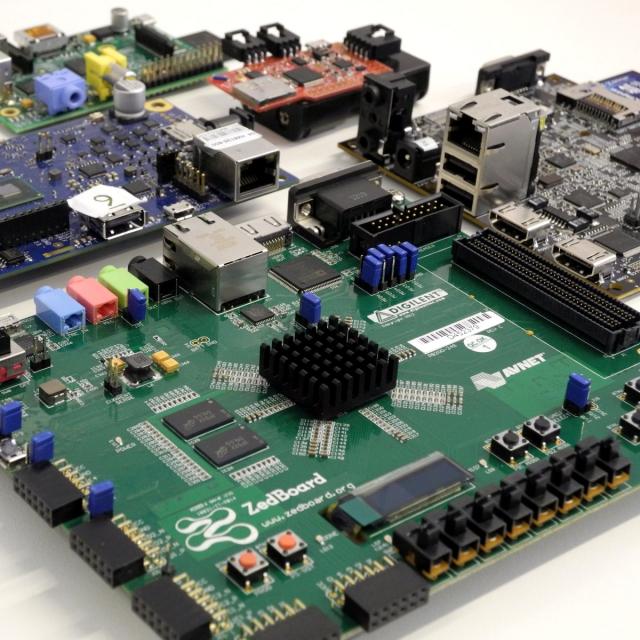
Moore's law about the ever-increasing number of transistors per chip is still valid, but power consumption, thermal management and memory latency issues are making make serial code acceleration increasingly harder. Instead, hardware vendors now use additional transistors for multiple processing elements (‘cores’) per processor chip and deeper memory hierarchies. Modern hardware has the capability to transform any desktop, server, or even mobile system into some kind of parallel computer. This makes parallel programming the new default for application development. The exploitation of any additional horsepower from hardware is now in the responsibility of the software.
The openHPI online course “Parallel Programming Concepts” presents relevant theoretical and practical foundations for parallel programming. We show crucial theoretical ideas such as semaphores and actors, the architecture of modern parallel hardware, different programming models such as task parallelism, message passing and functional programming, and several patterns and best practices.
The course is suitable for all participants who are interested in getting a broader overview of parallelism, especially beyond the usage of multiple threads. Participants should have knowledge in at least one programming language - other skills are not necessary.

Go to Class
MOOC List is learner-supported. When you buy through links on our site, we may earn an affiliate commission.

Related Courses

Data Structures (Coursera) Coursera
University of California, San Diego,Higher School of Economics - HSE University

Data Structures (Coursera)

A good algorithm usually comes together with a set of good data structures that allow the algorithm to manipulate the data efficiently. In this course, we consider the common data structures that are used in various computational problems. You will learn how these data structures are implemented in different programming languages and will practice implementing them in our programming assignments.

Jun 1st 2026
5-12 Weeks
Ordered Data Structures (Coursera) Coursera
University of Illinois at Urbana-Champaign

Ordered Data Structures (Coursera)

In this course, you will learn new data structures for efficiently storing and retrieving data that is structured in an ordered sequence. Such data includes an alphabetical list of names, a family tree, a calendar of events or an inventory organized by part numbers. The specific data structures covered by this course include arrays, linked lists, queues, stacks, trees, binary trees, AVL trees, B-trees and heaps. This course also shows, through algorithm complexity analysis, how these structures enable the fastest algorithms to search and sort data.

Jun 3rd 2026
4 Weeks
In-Memory Data Management (内存数据库管理) (openHPI) OpenHPI
Hasso-Plattner-Institut

In-Memory Data Management (内存数据库管理) (openHPI)

The online course focuses on the management of enterprise data in column-oriented in-memory databases. Latest hardware and software trends led to the development of a new revolutionary technology that enables flexible and lightning-fast analysis of massive amounts of enterprise data.

Self Paced
Self-Paced
MPI: A Short Introduction to One-sided Communication (FutureLearn) FutureLearn
Partnership for Advanced Computing in Europe - PRACE

MPI: A Short Introduction to One-sided Communication (FutureLearn)

Learn the details of one-sided communication in MPI programming. Discover the advantages to one-sided communication in parallel programming. Message Passing Interface (MPI) is a key standard for parallel computing architectures. On this course, you’ll learn the essential concepts of one-sided communication in MPI, as well as the advantages of the MPI communication model.

No sessions available
2 Weeks
Wie designe ich meine eigene Homepage? (openHPI) OpenHPI
Hasso-Plattner-Institut

Wie designe ich meine eigene Homepage? (openHPI)

Du bist ein Weltenbummler und möchtest deine Erfahrungen und Fotos auf einer eigenen Homepage teilen? Du informierst dich in Fashionblogs über die neuesten Trends und überlegst in einem eigenen Blog deine persönlichen Lieblingsstücke zu präsentieren? Oder hast du ein anderes cooles Hobby und würdest gerne alle Infos dazu auf einer eigenen Webseite zusammenstellen?

Self Paced
Self-Paced
Parallel programming (Scala 2 version) (Coursera) Coursera
École Polytechnique Fédérale de Lausanne

Parallel programming (Scala 2 version) (Coursera)

With every smartphone and computer now boasting multiple processors, the use of functional ideas to facilitate parallel programming is becoming increasingly widespread. In this course, you'll learn the fundamentals of parallel programming, from task parallelism to data parallelism. In particular, you'll see how many familiar ideas from functional programming map perfectly to to the data parallel paradigm. We'll start the nuts and bolts how to effectively parallelize familiar collections operations, and we'll build up to parallel collections, a production-ready data parallel collections library available in the Scala standard library.

May 18th 2026
4 Weeks
iOS App Development Basics (Coursera) Coursera
University of Toronto

iOS App Development Basics (Coursera)

iOS App Development Basics, the second course in the iOS App Development with Swift specialization, expands your programming skills and applies them to authentic app development projects. The topics covered in this course include Xcode basics, Core iOS and Cocoa Touch frameworks, simple user interface creation, MVC Architecture and much more. With a focus on using Apple’s components to access sensors like camera, microphone and GPS, by the end of this course you will be able to create a basic App according to specified parameters and guidelines.

Jun 1st 2026
5-12 Weeks
Java for Android (Coursera) Coursera
Vanderbilt University

Java for Android (Coursera)

This MOOC teaches you how to program core features and classes from the Java programming language that are used in Android, which is the dominant platform for developing and deploying mobile device apps. In particular, this MOOC covers key Java programming language features that control the flow of execution through an app (such as Java’s various looping constructs and conditional statements), enable access to structured data (such as Java's built-in arrays and common classes in the Java Collections Framework, such as ArrayList and HashMap), group related operations and data into classes and interfaces (such as Java's primitive and user-defined types, fields, methods, generic parameters, and exceptions), customize the behavior of existing classes via inheritance and polymorphism (such as subclassing and overriding virtual methods).

Jun 2nd 2026
4 Weeks
Introduction to Parallel Programming with CUDA (Coursera) Coursera
Johns Hopkins University

Introduction to Parallel Programming with CUDA (Coursera)

This course will help prepare students for developing code that can process large amounts of data in parallel on Graphics Processing Units (GPUs). It will learn on how to implement software that can solve complex problems with the leading consumer to enterprise-grade GPUs available using Nvidia CUDA. They will focus on the hardware and software capabilities, including the use of 100s to 1000s of threads and various forms of memory.

May 25th 2026
5-12 Weeks