Out of core nuclear fuel management: front end (Coursera)

Out of core nuclear fuel management: front end (Coursera)

You will be will be able to recognize and describe the basic principles of the different steps of the front end of the fuel cycle, will be capable to find updated information and knowledge about the subject of study and will have the skills to perform basic calculations of the front end of the nuclear fuel cycle.

Class Deals by MOOC List - Click here and see Coursera's Active Discounts, Deals, and Promo Codes.

This course is part of the Nuclear fuel management: a practical approach Specialization.

Syllabus

Introduction to the nuclear fuel cycle
Mining and Milling, Conversion of nuclear fuel
Enrichment of Nuclear Fuel
Nuclear Fuel Fabrication
Case of study

Go to Class
MOOC List is learner-supported. When you buy through links on our site, we may earn an affiliate commission.

Related Courses

Our Energy Future (Coursera) Coursera
University of California, San Diego

Our Energy Future (Coursera)

This course is designed to introduce students to the issues of energy in the 21st century – including food and fuels – which are inseparably linked – and will discuss energy production and utilization from the biology, engineering, economics, climate science, and social science perspectives. This course will cover the current production and utilization of energy, as well as the consequences of this use, examining finite fossil energy reserves, how food and energy are linked, impacts on the environment and climate, and the social and economic impacts of our present energy and food production and use.

Nov 16th 2026
5-12 Weeks
Introduction to the Arctic: Climate (Coursera) Coursera
University of Alberta

Introduction to the Arctic: Climate (Coursera)

The University of Alberta, the University of Tromso and the University of the Arctic invite you to explore this four week course that examines the environment and climate of the circumpolar North. This course is the result of an international collaboration and provides you with an insight into our planet's North. Following an overview of regional geography, we will focus on the cryosphere (ice), as well as the atmosphere and ocean of the region.

Nov 16th 2026
4 Weeks
Global Warming I: The Science and Modeling of Climate Change (Coursera) Coursera
University of Chicago

Global Warming I: The Science and Modeling of Climate Change (Coursera)

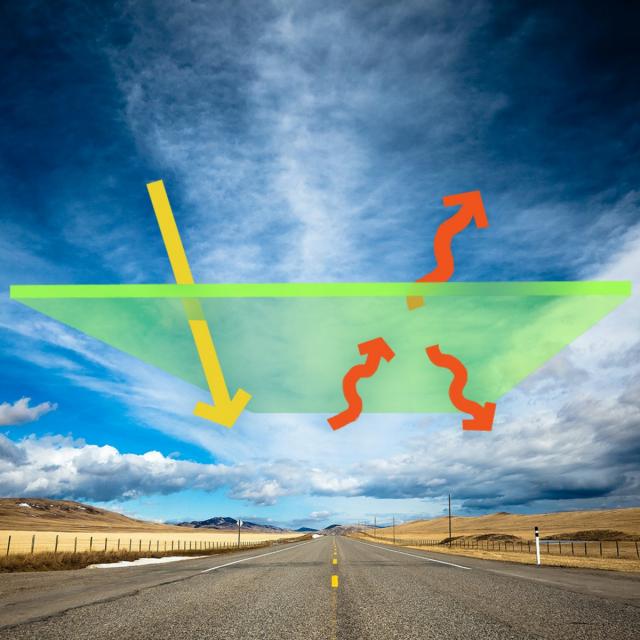
This class describes the science of global warming and the forecast for humans’ impact on Earth’s climate. Intended for an audience without much scientific background but a healthy sense of curiosity, the class brings together insights and perspectives from physics, chemistry, biology, earth and atmospheric sciences, and even some economics—all based on a foundation of simple mathematics (algebra).

Nov 16th 2026
5-12 Weeks
Marine Biology (Coursera) Coursera
American Museum of Natural History

Marine Biology (Coursera)

This course is about life in the oceans, from the sunlit surface to the inky depths, from microscopic phytoplankton to the great blue whale. The ocean is among the world’s most inhospitable environments for scientific research, which is why we know as much about the surface of the moon as we do the bottom of the sea. This course uncovers the evolutionary history of marine organisms, adaptations to life in water, the behavior and functional morphology of sea animals, interactions between species, and current threats.

Nov 23rd 2026
5-12 Weeks
Net-Zero Building Fundamentals (Coursera) Coursera
Indian Institute for Human Settlements

Net-Zero Building Fundamentals (Coursera)

Interested in decarbonisation, high performance, and climate resilient buildings? Then this course is for you. Our future is low-carbon, net-zero buildings that are super-efficient and self-sufficient in terms of their energy and water use. Decarbonisation, digitisation, and deglobalisation are driving the infrastructure revolution over the next 20 years. This course, offered jointly by the Alliance for an Energy Efficient Economy (AEEE) and the Indian Institute for Human Settlements (IIHS), will enable you to reap the benefits of this revolution and work on climate change.

Nov 23rd 2026
5-12 Weeks
Oceanography: a key to better understand our world (Coursera) Coursera
University of Barcelona,Barcelona Foundation for Ocean Sailing - FNOB

Oceanography: a key to better understand our world (Coursera)

The course for a round the world regatta leads the boats through the Mediterranean Sea and the Atlantic, Southern Indian and South Pacific Oceans. On their voyage, the skippers come across a large variety of oceanographic situations: strong currents, floating ice, wave formations of every kind and biological diversity. In this course the student will learn about the foundations of the science of oceanography. You'll learn about the classification and formation of the ocean floor, how current sea satellite analysis systems work, the chemistry of the oceans and the processes that led to its formation.

Nov 23rd 2026
5-12 Weeks
In core nuclear fuel management (Coursera) Coursera
Universidad Nacional Autónoma de México

In core nuclear fuel management (Coursera)

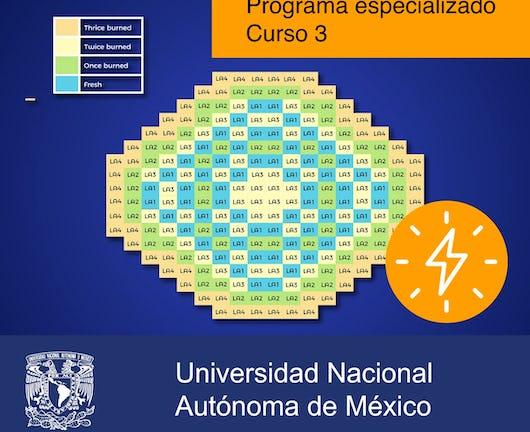
Upon completion of this MOOC, students will gain comprehensive knowledge in nuclear fuel management and reactor core design. They will learn to list and understand the basic parameters involved in in-core fuel management, including the estimation of fuel batch reload fraction and enrichment for equilibrium cycles using the linear reactivity method. The course will also cover the core aspects of reactor core design, the stages of fuel reloads design, and the principles of nuclear fuel assembly design, including the role of burnable poisons.

Nov 9th 2026
5-12 Weeks
Tropical Forest Landscapes 101: Conservation & Restoration (Coursera) Coursera
Yale University

Tropical Forest Landscapes 101: Conservation & Restoration (Coursera)

Conserving and restoring tropical forest landscapes offers an opportunity to address pressing environmental and social challenges. Effective conservation and restoration initiatives support multiple objectives, including ecosystem functioning, climate change mitigation and adaptation, food security, and economic growth.

Nov 23rd 2026
5-12 Weeks
Climate Adaptation in Africa (Coursera) Coursera
University of Cape Town

Climate Adaptation in Africa (Coursera)

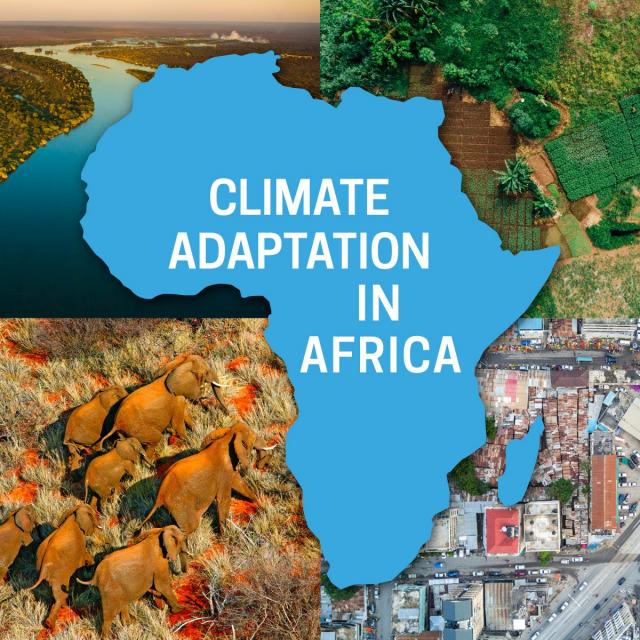
This course explores why climate change adaptation is important in the African context. Africa is considered one to be one of the most vulnerable regions to climate change. Historically, climate-related hazards such as drought, flooding, pest and disease outbreaks, coastal storms and heat waves have had devastating impacts on people and the environment in which they live.

Nov 23rd 2026
5-12 Weeks
21st Century Energy Transition: how do we make it work? (Coursera) Coursera
University of Alberta

21st Century Energy Transition: how do we make it work? (Coursera)

Affordable, abundant and reliable energy is fundamental to human well-being and prosperity. For the past 150 years, more and more people have gained access to energy, primarily in the form of fossil fuels – coal, petroleum and natural gas. But now, even while half of humanity cannot access adequate energy supplies, we are beginning a profound transition to more diverse energy sources. Climate change, environmental sustainability, and energy poverty are all important – and sometimes conflicting – drivers as we strive to supply more energy to more people with fewer negative impacts on Earth’s environments.

Nov 23rd 2026
5-12 Weeks