Object-Oriented Design (Coursera)

Offered by University of Alberta,
Object-Oriented Design (Coursera)

This course takes Java beginners to the next level by covering object-oriented analysis and design. You will discover how to create modular, flexible, and reusable software, by applying object-oriented design principles and guidelines. And, you will be able to communicate these designs in a visual notation known as Unified Modelling Language (UML). You will be challenged in the Capstone Project to apply your knowledge of object-oriented design by evolving and documenting the Java codebase for an Android application with corresponding UML documentation.

Class Deals by MOOC List - Click here and see Coursera's Active Discounts, Deals, and Promo Codes.

After completing this course, you will be able to:
• Apply the Class Responsibility Collaborator (CRC) technique to analyze and design the object-oriented model for a problem.
• Explain and apply object-oriented modeling principles and their purpose (e.g., abstraction, encapsulation, decomposition, generalization).
• Explain and apply different types of inheritance
• Explain the difference between association, aggregation, and composition dependencies.
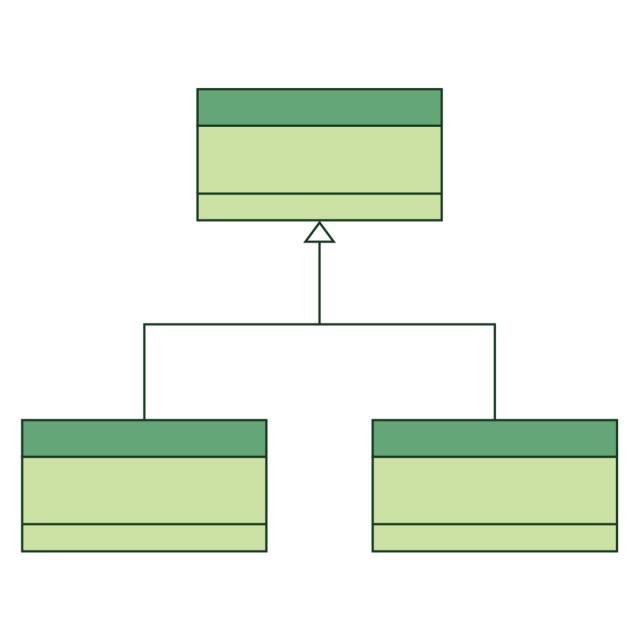
• Express object-oriented models as Unified Modeling Language (UML) class diagrams.
• Translate between UML class diagrams and equivalent Java code.
• Apply design guidelines for modularity, separation of concerns, information hiding, and conceptual integrity to create a flexible, reusable, maintainable design.
• Explain the tradeoff between cohesion and coupling.

Course 1 of 4 in the Software Design and Architecture Specialization

Syllabus

WEEK 1
Object-Oriented Analysis and Design
Good software design begins before coding. After establishing the initial software requirements, design practices involve two main activities: conceptual design and technical design. In this module, you will realize the importance of design and object-oriented thinking, and learn how to design software using techniques like CRC cards.

WEEK 2
Object-Oriented Modeling
Best software design practices have evolved alongside programming languages. Today, all developers should be familiar with abstraction, encapsulation, decomposition, and generalization, which are fundamental principles in object-oriented design. You will learn all of these principles and how they are expressed in Java and communicated visually in Unified Modelling Language.

WEEK 3
Design Principles
Additional design principles will help you to create code that is flexible, reusable, and maintainable. In this module you will learn about coupling and cohesion, separation of concerns, information hiding, and conceptual integrity. You will also learn to avoid common pitfalls with inheritance, and ways to express software behavior in UML.

WEEK 4
Capstone Challenge
In the previous modules you were introduced to object-oriented analysis and design, object-oriented modeling, and design principles. To cement your understanding of this material, you created a UML class diagram from an example Android code base, and used your understanding of the code base to make sequence and state diagrams to model its behavior. Now, in the final module of the course, given a description of new functionality and an updated UML class diagram, you will implement the updated design into the Android code base. After completing this development task, you will be ready to complete the final exam.
Go to Class
MOOC List is learner-supported. When you buy through links on our site, we may earn an affiliate commission.

Related Courses

Working with Integrated Development Environments (Coursera) Coursera
University of Leeds

Working with Integrated Development Environments (Coursera)

Integrated Development Environments (IDEs) are vital in increasing developer productivity and learning to work with them will help you create impressive software projects whether you're a beginner or have some programming experience. This course provides the essential skills and knowledge to excel in software development using Integrated Development Environments (IDEs). You'll cover IDE fundamentals, including environment setup, interface navigation, and valuable features like debugging.

Jul 27th 2026
2 Weeks
Engineering Maintainable Android Apps (Coursera) Coursera
Vanderbilt University

Engineering Maintainable Android Apps (Coursera)

Engineering Maintainable Android Apps, which is a 4 week MOOC that shows by example various methods for engineering maintainable Android apps, including test-driven development methods and how to develop/run unit tests using JUnit and Robotium (or equivalent automated testing frameworks for Android), as well as how to successfully apply common Java/Android software patterns to improve the extensibility and clarity of Android apps.

Jul 20th 2026
4 Weeks
The Arduino Platform and C Programming (Coursera) Coursera
University of California, Irvine

The Arduino Platform and C Programming (Coursera)

The Arduino is an open-source computer hardware/software platform for building digital devices and interactive objects that can sense and control the physical world around them. In this class you will learn how the Arduino platform works in terms of the physical board and libraries and the IDE (integrated development environment). You will also learn about shields, which are smaller boards that plug into the main Arduino board to perform other functions such as sensing light, heat, GPS tracking, or providing a user interface display. The course will also cover programming the Arduino using C code and accessing the pins on the board via the software to control external devices.

Jul 20th 2026
4 Weeks
面向对象技术高级课程 (The Advanced Object-Oriented Technology) (Coursera) Coursera
Peking University

面向对象技术高级课程 (The Advanced Object-Oriented Technology) (Coursera)

如果将软件开发人员看作行走江湖的武侠,那么各种软件开发技术就是武侠赖以傍身的武术秘籍。有的秘籍以易学灵巧见长,练习者很快掌握,并有立竿见影的功效,但失之厚重持久;有的秘籍初学乍练顿显困难,虽冥思苦解仍不得要领,需坚持不断的内功修炼方成正果,却是成为武林大侠必备的至宝。本课程有些类似于后者。

Jul 20th 2026
13-24 Weeks
Agile Planning for Software Products (Coursera) Coursera
University of Alberta

Agile Planning for Software Products (Coursera)

This course covers the techniques required to break down and map requirements into plans that will ultimately drive software production. Upon successful completion of this course, you will be able to: create effective plans for software development; map user requirements to developer tasks; assess and plan for project risks; apply velocity-driven planning techniques; generate work estimates for software products.

Aug 3rd 2026
4 Weeks
Java Programming: Principles of Software Design (Coursera) Coursera
Duke University

Java Programming: Principles of Software Design (Coursera)

Solve real world problems with Java using multiple classes. Learn how to create programming solutions that scale using Java interfaces. Recognize that software engineering is more than writing code - it also involves logical thinking and design. By the end of this course you will have written a program that analyzes and sorts earthquake data, and developed a predictive text generator.

Jul 20th 2026
4 Weeks
Advanced Modeling for Discrete Optimization (Coursera) Coursera
University of Melbourne,The Chinese University of Hong Kong

Advanced Modeling for Discrete Optimization (Coursera)

Optimization is a common form of decision making, and is ubiquitous in our society. Its applications range from solving Sudoku puzzles to arranging seating in a wedding banquet. The same technology can schedule planes and their crews, coordinate the production of steel, and organize the transportation of iron ore from the mines to the ports. Good decisions in manpower and material resources management also allow corporations to improve profit by millions of dollars.

Jul 20th 2026
5-12 Weeks
Introducción a UML (Coursera) Coursera
Universidad de los Andes

Introducción a UML (Coursera)

Bienvenidos a este curso de introducción al Lenguaje de Modelado Unificado, o UML por su sigla en inglés. Este curso surge como respuesta a la necesidad de los ingenieros de software de desarrollar la habilidad de abstraer y representar en un modelo problemas o soluciones. Esta habilidad es especialmente importante en el mundo del software donde las tecnologías son tan cambiantes. Un modelo te provee una forma de comunicar y validar un entendimiento, independiente de la tecnología en la que construirás una solución.

Aug 3rd 2026
4 Weeks
Software Design as an Element of the Software Development Lifecycle (Coursera) Coursera
University of Colorado System

Software Design as an Element of the Software Development Lifecycle (Coursera)

This course talks about software development lifecycles a description/prescription for how we write software. Design is a step in this life cycle, and the course explores the implications of this. Design has a role in the life cycle; it is always there, regardless of the kind of life cycle we’re talking about. Why is that? Why was design considered as a step in this life cycle?

Jul 20th 2026
5-12 Weeks
Development of Real-Time Systems (Coursera) Coursera
EIT Digital

Development of Real-Time Systems (Coursera)

This course is intended for the Master's student and computer engineer who likes practical programming and problem solving! After completing this course, you will have the knowledge to plan and set-up a real-time system both on paper and in practice. The course centers around the problem of achieving timing correctness in embedded systems, which means to guarantee that the system reacts within the real-time requirements.

Jul 27th 2026
5-12 Weeks
Programación en Python (Coursera) Coursera
Universidad de los Andes

Programación en Python (Coursera)

¡Te damos la bienvenida al curso de Programación en Python de la Universidad de los Andes! El propósito de este curso es ofrecerte un ambiente interactivo para que desarrolles tus habilidades de pensamiento computacional, aprendas a programar en el lenguaje Python y te entrenes en la resolución de problemas utilizando un computador. La estrategia pedagógica empleada es el aprendizaje activo basado en casos.

Aug 3rd 2026
4 Weeks