EdX

Nuclear Energy: Science, Systems and Society (edX)

Offered by MIT, MITx,
Nuclear Energy: Science, Systems and Society (edX)

Learn how a nuclear reactor works, what the future of nuclear fusion looks like, and the numerous useful applications of nuclear radiation in four easy-to-follow modules, complemented with a chance to explore background radiation in your backyard.

Class Deals by MOOC List - Click here and see EdX's Active Discounts, Deals, and Promo Codes.

Nuclear Energy: Science, Systems and Society offers an introduction to the basic physics of nuclear energy and radiation, with an emphasis on the unique attributes and challenges of nuclear energy as a low-carbon solution. Peaceful applications of ionizing radiation to help mankind, such as reactors for materials science research, nuclear medicine, and security initiatives, will be introduced.
The course will explore fission energy, establishing the scientific, engineering, and economic basis for fission reactors, and will describe the state of the art in nuclear reactor technology.
We will also learn about magnetic fusion energy research, with lectures covering the scientific and engineering basis of tokamaks, the state of the art in world fusion experiments, and the MIT vision for high-magnetic field fusion reactor.
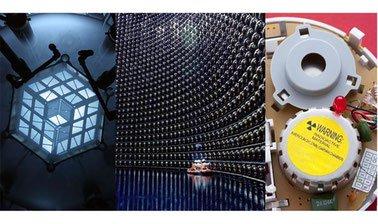
In addition, the course also includes an optional hands-on section, where you will be able acquire radiation detectors and use them to explore radiation in the world around them, using guided exercises available on-line.

What you'll learn
Learners will be able to critically assess questions such as;

  • “What are common and not-so-common sources of radiation, and should I be concerned?”
  • “Can nuclear energy help to solve the climate change problem?”
  • "Is nuclear energy cost competitive?"
  • “Do I want a nuclear power plant in my backyard?”
  • “What is the basic idea behind fusion energy and how viable are proposed paths to develop fusion reactors?”
  • “How much radiation exists around me?”

Course Syllabus

Module 1: Introduces the basics of ionizing radiation – what it is, where it comes from, and how it is used to benefit humanity. We specifically focus on the origins and energetics of ionizing radiation, and quantify what radiation dose is, where it comes from, and how much people can safely tolerate with no adverse effects.

Module 2: Will articulate attributes and challenges of nuclear energy as a commercial source of electric power. Will focus on potential contribution of nuclear energy to decarbonization of the power sector, including discussion of nuclear power plant economics and safety. A few innovations in nuclear energy systems will be described.

Module 3: Will cover the basics of nuclear fusion, including fundamental plasma physics concepts needed to understand the prospects for development of magnetic confinement fusion. Innovation and future directions will be described.


Go to Class
MOOC List is learner-supported. When you buy through links on our site, we may earn an affiliate commission.

Related Courses

The Quantum Internet and Quantum Computers: How Will They Change the World? (edX) EdX
Delft University of Technology,DelftX

The Quantum Internet and Quantum Computers: How Will They Change the World? (edX)

Discover quantum computers and the quantum internet. Learn the principles and promises behind these developments and how they will impact our future. There is no doubt that quantum computers and the quantum internet will have a great impact on our world. But we don’t yet know quite how. As with traditional computers - we will only see the effects in the decades to come.This course will provide you with a basic understanding of quantum computing and the quantum internet. Together, we’ll peek into the fascinating world of quantum phenomena, such as qubits, superposition, and entanglement.

Self Paced
Self-Paced
Planetary Boundaries (edX) EdX
SDGAcademyX,SDG Academy

Planetary Boundaries (edX)

Can our planet continue to support the current scope of human activity? A thriving global society relies on the stability of the Earth and its resilience across oceans, forests, waterways, biodiversity, the atmosphere and more. So how do we shape sustainability at a global scale? The boundaries set by the planet’s natural resources, the resilience of those resources, and the human activities that impact sustainability all come into play.

Self Paced
Self-Paced
Understanding Nuclear Power (FutureLearn) FutureLearn
The Open University

Understanding Nuclear Power (FutureLearn)

Learn more about nuclear power, from the risks and benefits to the technology and its future, with this free online course. Nuclear power remains a contentious issue - does it offer our best chance at sustainable energy future? Or do the risks outweigh the benefits? This course will answer some of these questions and is aimed at a broad audience - whether you’re an engineer or scientist thinking of working in the nuclear industry; a policy adviser working in energy or technology; a technical journalist; a teacher or lecturer; concerned with how infrastructure is financed or simply keep to develop your understanding of nuclear power.

No sessions available
5-12 Weeks
Introduction to International Nuclear Law (Coursera) Coursera
National Research Nuclear University MEPhI

Introduction to International Nuclear Law (Coursera)

So, what is international nuclear law? What aspects of international cooperation exist in this direction? You will learn about this in our course. Nuclear power gives us hope and potential for significant benefits, in a variety of fields, from medicine and agriculture to electricity production and industry. At the same time, we all know that nuclear energy poses serious risks to the health and safety of humans and to the environment. These risks must be managed very carefully and thoroughly.

May 9th 2022
5-12 Weeks
The Science of Nuclear Energy (FutureLearn) FutureLearn
The Open University

The Science of Nuclear Energy (FutureLearn)

Discover the science behind nuclear energy and its role in energy provision in the past, present and future. Understand the science of nuclear power and the arguments for and against it. With the need to reduce carbon emissions around the world, the way we generate our power has to change and nuclear energy is back on the political agenda.

No sessions available
4 Weeks
In core nuclear fuel management (Coursera) Coursera
Universidad Nacional Autónoma de México

In core nuclear fuel management (Coursera)

Upon completion of this MOOC, students will gain comprehensive knowledge in nuclear fuel management and reactor core design. They will learn to list and understand the basic parameters involved in in-core fuel management, including the estimation of fuel batch reload fraction and enrichment for equilibrium cycles using the linear reactivity method. The course will also cover the core aspects of reactor core design, the stages of fuel reloads design, and the principles of nuclear fuel assembly design, including the role of burnable poisons.

Aug 3rd 2026
5-12 Weeks
Introduction to nuclear (POK) Polimi OPEN KNOWLEDGE
Politecnico di Milano

Introduction to nuclear (POK)

Nuclear processes and measurement for radiation detection. The study of static and dynamic properties of nuclei constitutes a first essential step in the comprehension and exploitation of Nuclear Science. Starting from the experimental evidence of radioactivity, the course will explore: the physical and the random nature of radioactive decay and nuclear reactions; the experimental methods and detector technologies to measure radiations produced by nuclear processes.

Available
4 Weeks
Discovering Nuclear Science: energy and beyond (POK) Polimi OPEN KNOWLEDGE
Politecnico di Milano

Discovering Nuclear Science: energy and beyond (POK)

Where do natural radioactivity come from? What is a radioactive atom? Which are the phases of nuclear fission? How is radioactive pollution monitored? Are nuclear waste managed managed? Talking about “nuclear issues”, many questions arise: this MOOC aims at providing scientific answers. Enroll in the course and unlock the potential of Nuclear Science to shape our future for the better. Let's get started!

Available
3 Weeks
Energy-The Technology You Must Know in the 21st Century | 能源─21世紀你必須了解的科技! (edX) EdX
OECx

Energy-The Technology You Must Know in the 21st Century | 能源─21世紀你必須了解的科技! (edX)

A comprehensive introduction to existing and emerging energy technologies and their applications. (Taught in Mandarin). Energy technology is a highly multidisciplinary subject, which extends from engineering (e.g. mechanical, chemical, civil, environmental and electrical) to economy and ecology.

No sessions available
4 Weeks
Tsunamis and Storm Surges: Introduction to Coastal Disasters (edX) EdX
Waseda University,WasedaX

Tsunamis and Storm Surges: Introduction to Coastal Disasters (edX)

Learn about natural coastal disasters and how you can help improve global disaster management. In 2011, a magnitude 9.0 earthquake triggered a major tsunami that devastated northeast Japan, killing more than 15,000 people and crippling a nuclear power plant. Natural disasters like this one can be seen throughout our Earth’s history. They will continue to prey on all regions, bringing devastation when they strike. But are we so powerless? What if we could improve preparedness over the world and limit the devastation caused by coastal disasters?

Self Paced
Self-Paced
Introduction to Environmental Science (edX) EdX
DartmouthX,Dartmouth College

Introduction to Environmental Science (edX)

A scientific study of the natural world and how it is influenced by people. Major topics include: food, energy, human population, biodiversity and global change. Environmental science is the study of patterns and processes in the natural world and their modification by human activity. To understand current environmental problems, we need to consider physical, biological and chemical processes that are often the basis of those problems.

Self Paced
4 Weeks