MOQ (Coursera)

Offered by Board Infinity,
MOQ (Coursera)

"Introduction to MOQ for .NET Testing" is a comprehensive course designed to equip .NET developers with essential skills in using MOQ, a mocking framework for unit tests. Spanning two modules, the course starts with the fundamentals of MOQ, covering its setup, basic concepts, and implementation in .NET projects. It then advances to more complex scenarios, teaching advanced mocking techniques, handling complex dependencies, and integrating MOQ with popular testing frameworks.

Class Deals by MOOC List - Click here and see Coursera's Active Discounts, Deals, and Promo Codes.

Through this course, participants will gain a deep understanding of MOQ's capabilities and how to leverage it for effective unit testing in .NET environments, enhancing their testing proficiency and software quality.
"Module 1: Fundamentals of MOQ" introduces the concept of mocking in software testing using MOQ, a popular framework in the .NET ecosystem. It begins with an explanation of MOQ and its relevance, followed by a guide to setting it up in a .NET project. The module then covers creating your first mock, along with basic techniques such as mocking methods, properties, verification processes, and using callbacks and returns in mocks. This module is essential for .NET developers seeking to enhance their unit testing skills with MOQ.
"Module 2: Deepening Your MOQ Skills" progresses into more advanced aspects of mocking with MOQ in .NET. This module tackles challenging scenarios like mocking complex objects and dependencies, setup sequences, and conditional mocking. It also addresses how to handle events and exceptions within MOQ. Furthermore, it guides you through best practices for organizing mocks, avoiding common pitfalls, and effectively integrating MOQ with testing frameworks like xUnit or NUnit. Tailored for developers looking to refine their unit testing and mocking techniques, this module offers in-depth knowledge and practical applications of MOQ.
This course caters to anyone in the .NET development ecosystem who wishes to build strong foundations in mocking using MOQ, ensuring high-quality, maintainable, and reliable software development.

What you'll learn

  • Understand the basics of MOQ and its role in .NET unit testing.
  • Learn to set up and implement basic mocks using MOQ.
  • Master advanced mocking techniques including complex object and dependency mocking.

Syllabus

Fundamentals of MOQ
"Module 1: Fundamentals of MOQ" introduces the concept of mocking in software testing using MOQ, a popular framework in the .NET ecosystem. It begins with an explanation of MOQ and its relevance, followed by a guide to setting it up in a .NET project. The module then covers creating your first mock, along with basic techniques such as mocking methods, properties, verification processes, and using callbacks and returns in mocks. This module is essential for .NET developers seeking to enhance their unit testing skills with MOQ.

Deepening Your MOQ Skills
"Module 2: Deepening Your MOQ Skills" progresses into more advanced aspects of mocking with MOQ in .NET. This module tackles challenging scenarios like mocking complex objects and dependencies, setup sequences, and conditional mocking. It also addresses how to handle events and exceptions within MOQ. Furthermore, it guides you through best practices for organizing mocks, avoiding common pitfalls, and effectively integrating MOQ with testing frameworks like xUnit or NUnit. Tailored for developers looking to refine their unit testing and mocking techniques, this module offers in-depth knowledge and practical applications of MOQ.


Go to Class
MOOC List is learner-supported. When you buy through links on our site, we may earn an affiliate commission.

Related Courses

Automated Software Testing: Model and State-based Testing (edX) EdX
Delft University of Technology,DelftX

Automated Software Testing: Model and State-based Testing (edX)

Learn the advanced software testing techniques, tools, and best practices required to deliver high-quality software. Software testing gets a bad rap for being difficult, time-consuming, redundant, and above all - boring. But in fact, it is a proven way to ensure that your software will work flawlessly and can meet release schedules.

Self Paced
Self-Paced
Securing Digital Democracy (Coursera) Coursera
University of Michigan

Securing Digital Democracy (Coursera)

In this course, you'll learn what every citizen should know about the security risks--and future potential — of electronic voting and Internet voting. We'll take a look at the past, present, and future of election technologies and explore the various spaces intersected by voting, including computer security, human factors, public policy, and more.

Nov 16th 2026
5-12 Weeks
Software Analysis & Testing (Udacity) Udacity
Georgia Institute of Technology,Udacity

Software Analysis & Testing (Udacity)

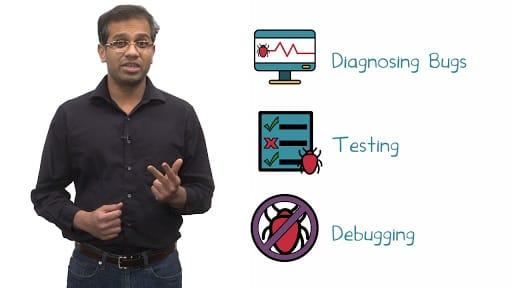
This course covers the theory and practice of software analysis, which lies at the heart of many software development processes such as diagnosing bugs, testing, debugging, and more. It presents diverse techniques, each with their own strengths and limitations, for automating tasks such as testing, debugging, and finding bugs in complex real-world programs. These techniques include dataflow analysis, constraint-based analysis, type systems, model checking, symbolic execution, and more. The course teaches the principles underlying these techniques as well as imparts hands-on experience with using and implementing tools based on these techniques.

Self Paced
Self-Paced
Learn Software Testing Certification course (Eduonix) Eduonix
Eduonix Learning Solutions Pvt. Ltd.

Learn Software Testing Certification course (Eduonix)

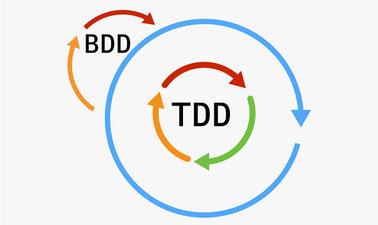
Software Testing is one of the most important and critical component of Software development life cycle. The testing team is ultimately responsible of Software quality and forms the bedrock before it goes out to actual users and to market place. Over the years with innovative development techniques the software testing and quality assurance field has undergone a sea change. With new techniques like TDD(Test driven development) taking hold in industry the software developers must understand the nuances of new approaches to software quality. This is a free course with a MOOC List coupon.

Self Paced
Self-Paced
Cybersecurity and Its Ten Domains (Coursera) Coursera
University System of Georgia

Cybersecurity and Its Ten Domains (Coursera)

This course is designed to introduce students, working professionals and the community to the exciting field of cybersecurity. Throughout the MOOC, participants will engage in community discourse and online interaction. Participants will gain knowledge and understanding of cybersecurity and its domains. They will engage with expertly produced videos, gain insight from industry experts, participate in knowledge assessments, practice assessing their environmental awareness, and gain access to materials that address governance and risk management, compliance, business continuity and disaster recovery, cryptography, software development security, access control, network security, security architecture, security operations, and physical and environmental security.

Nov 23rd 2026
5-12 Weeks
Introduction to Automated Analysis (Coursera) Coursera
University of Minnesota

Introduction to Automated Analysis (Coursera)

This course introduces state-of-the-art techniques for automated analysis. Automated analysis encompasses both approaches to automatically generate a very large number of tests to check whether programs meet requirements, and also means by which it is possible to *prove* that software meets requirements and that it is free from certain commonly-occurring defects, such as divide-by-zero, overflow/underflow, deadlock, race-condition freedom, buffer/array overflow, uncaught exceptions, and several other commonly-occurring bugs that can lead to program failures or security problems.

Nov 2nd 2026
4 Weeks
Rust Fundamentals (Coursera) Coursera
Duke University

Rust Fundamentals (Coursera)

This comprehensive Rust programming course welcomes learners of all levels, including beginners and those with some programming experience. No prior knowledge of Rust is required, making it accessible to coding novices. Throughout the course, you will gain a solid foundation in Rust programming and develop proficiency in advanced concepts, enabling you to write efficient, reliable, and high-performance code.

Nov 2nd 2026
4 Weeks
Algorithmic Toolbox (Coursera) Coursera
University of California, San Diego,Higher School of Economics - HSE University

Algorithmic Toolbox (Coursera)

The course covers basic algorithmic techniques and ideas for computational problems arising frequently in practical applications: sorting and searching, divide and conquer, greedy algorithms, dynamic programming. We will learn a lot of theory: how to sort data and how it helps for searching; how to break a large problem into pieces and solve them recursively; when it makes sense to proceed greedily; how dynamic programming is used in genomic studies. You will practice solving computational problems, designing new algorithms, and implementing solutions efficiently (so that they run in less than a second).

Nov 2nd 2026
5-12 Weeks