Modelling and simulation of mechanical systems (Coursera)

Modelling and simulation of mechanical systems (Coursera)

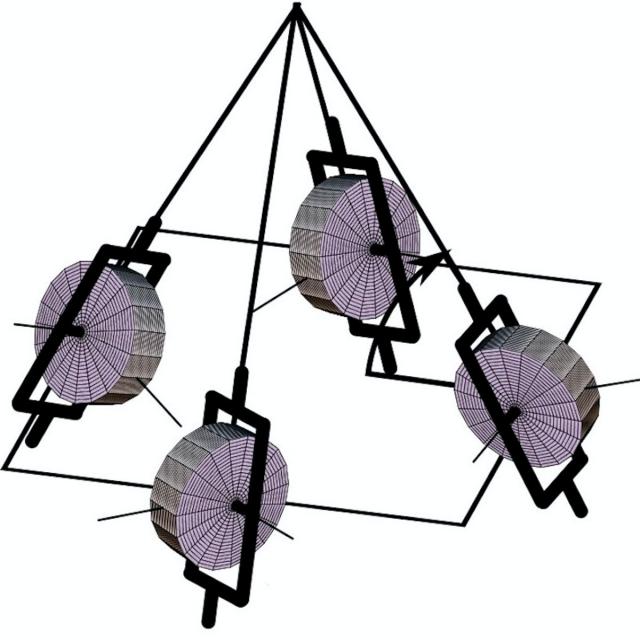
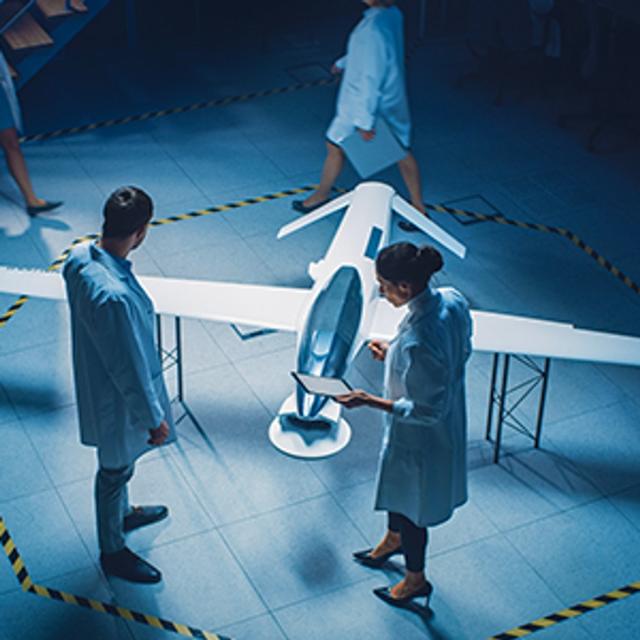
The course provides the principles of modelling and simulation of modern mechatronic systems, which are mechanical systems integrated with several types of sensors and actuators. The aim of the course is to show different methodologies to improve the potential of mechanical systems by transforming them into mechatronic systems based on virtual models. In particular, the lessons will be focused on case studies in three engineering fields: robotics, controlled electro-hydraulic actuators and smart devices.

Class Deals by MOOC List - Click here and see Coursera's Active Discounts, Deals, and Promo Codes.

This course is part of the Autonomous Vehicle Engineering Specialization.

Syllabus

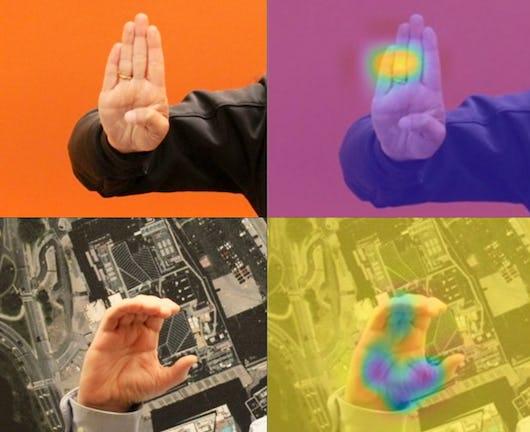
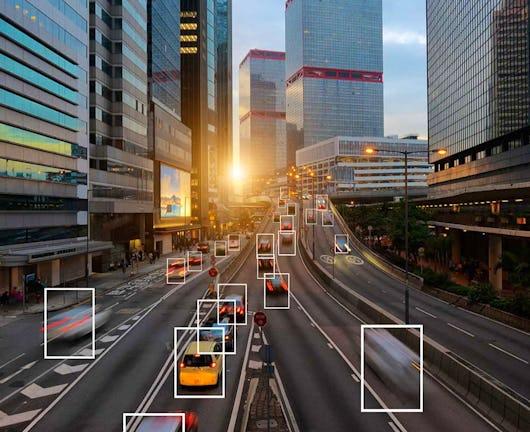
Computer vision for the control of mechanical systems
Module 1
Computer vision for the control of mechanical systems.

Modelling, control and simulation of electro-hydraulic shake tables
Module 2
Modelling, control and simulation of electro-hydraulic shake tables.

Design and development of a smart tyre
Module 3
Design and development of a smart tyre.
Go to Class
MOOC List is learner-supported. When you buy through links on our site, we may earn an affiliate commission.

Related Courses

Robotics: Computational Motion Planning (Coursera) Coursera
University of Pennsylvania

Robotics: Computational Motion Planning (Coursera)

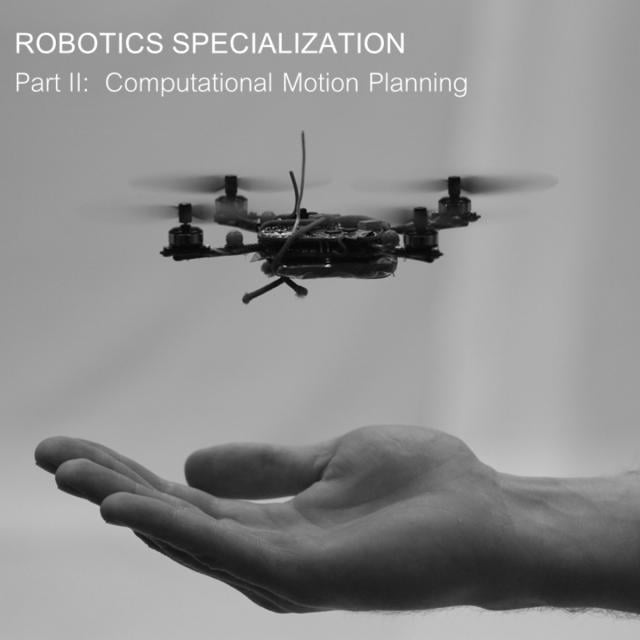
Robotic systems typically include three components: a mechanism which is capable of exerting forces and torques on the environment, a perception system for sensing the world and a decision and control system which modulates the robot's behavior to achieve the desired ends. In this course we will consider the problem of how a robot decides what to do to achieve its goals.

Jan 6th 2025
4 Weeks
Deep Learning Applications for Computer Vision (Coursera) Coursera
University of Colorado Boulder

Deep Learning Applications for Computer Vision (Coursera)

This course can be taken for academic credit as part of CU Boulder’s Master of Science in Data Science (MS-DS) degree offered on the Coursera platform. The MS-DS is an interdisciplinary degree that brings together faculty from CU Boulder’s departments of Applied Mathematics, Computer Science, Information Science, and others. With performance-based admissions and no application process, the MS-DS is ideal for individuals with a broad range of undergraduate education and/or professional experience in computer science, information science, mathematics, and statistics.

Oct 12th 2026
5-12 Weeks
Features and Boundaries (Coursera) Coursera
Columbia University

Features and Boundaries (Coursera)

This course focuses on the detection of features and boundaries in images. Feature and boundary detection is a critical preprocessing step for a variety of vision tasks including object detection, object recognition and metrology – the measurement of the physical dimensions and other properties of objects. The course presents a variety of methods for detecting features and boundaries and shows how features extracted from an image can be used to solve important vision tasks.

Sep 21st 2026
5-12 Weeks
Introduction to Deep Learning for Computer Vision (Coursera) Coursera
MathWorks

Introduction to Deep Learning for Computer Vision (Coursera)

Starting with zero deep learning knowledge, this foundational course will guide you to effectively train cutting-edge models for image classification purposes. From analyzing medical images to recognizing traffic signs, classification is important for many applications. Classification models also serve as the backbone for more complicated object detection models.

Sep 28th 2026
4 Weeks
Computer Vision Basics (Coursera) Coursera
University at Buffalo,The State University of New York

Computer Vision Basics (Coursera)

By the end of this course, learners will understand what computer vision is, as well as its mission of making computers see and interpret the world as humans do, by learning core concepts of the field and receiving an introduction to human vision capabilities. They are equipped to identify some key application areas of computer vision and understand the digital imaging process. The course covers crucial elements that enable computer vision: digital signal processing, neuroscience and artificial intelligence.

Sep 21st 2026
4 Weeks
3D Reconstruction - Multiple Viewpoints (Coursera) Coursera
Columbia University

3D Reconstruction - Multiple Viewpoints (Coursera)

This course focuses on the recovery of the 3D structure of a scene from images taken from different viewpoints. We start by first building a comprehensive geometric model of a camera and then develop a method for finding (calibrating) the internal and external parameters of the camera model. Then, we show how two such calibrated cameras, whose relative positions and orientations are known, can be used to recover the 3D structure of the scene. This is what we refer to as simple binocular stereo.

Sep 21st 2026
5-12 Weeks
Analytical Mechanics for Spacecraft Dynamics (Coursera) Coursera
University of Colorado Boulder

Analytical Mechanics for Spacecraft Dynamics (Coursera)

This course is part 2 of the specialization Advanced Spacecraft Dynamics and Control. It assumes you have a strong foundation in spacecraft dynamics and control, including particle dynamics, rotating frame, rigid body kinematics and kinetics. The focus of the course is to understand key analytical mechanics methodologies to develop equations of motion in an algebraically efficient manner.

Sep 21st 2026
3 Weeks
Internet of Things: Multimedia Technologies (Coursera) Coursera
University of California, San Diego

Internet of Things: Multimedia Technologies (Coursera)

Content is an eminent example of the features that contributed to the success of wireless Internet. Mobile platforms such as the Snapdragon™ processor have special hardware and software capabilities to make acquisition, processing and rendering of multimedia content efficient and cost-effective.

Oct 12th 2026
3 Weeks
Control automático: La tecnología invisible (Coursera) Coursera
Universidad Nacional Autónoma de México

Control automático: La tecnología invisible (Coursera)

A lo largo de la historia, el ser humano se ha empeñado en construir dispositivos que le hagan más cómodo su día a día. Además, siempre ha estado interesado en que éstos lleven a cabo la tarea por sí mismos, sin necesidad de una supervisión continua. En nuestros días, muchos dispositivos llevan a cabo tareas como por arte de magia; pareciera que piensan o que adivinan nuestros deseos, que nunca se pueden equivocar o que su precisión y velocidad no puede ser superada. Los sistemas de control son una parte crucial de este funcionamiento.

Sep 28th 2026
3 Weeks
Introduction to TensorFlow for Artificial Intelligence, Machine Learning, and Deep Learning (Coursera) Coursera
DeepLearning.AI

Introduction to TensorFlow for Artificial Intelligence, Machine Learning, and Deep Learning (Coursera)

If you are a software developer who wants to build scalable AI-powered algorithms, you need to understand how to use the tools to build them. This course is part of the upcoming Machine Learning in Tensorflow Specialization and will teach you best practices for using TensorFlow, a popular open-source framework for machine learning.

Oct 12th 2026
4 Weeks
Calculus through Data & Modelling: Integration Applications (Coursera) Coursera
Johns Hopkins University

Calculus through Data & Modelling: Integration Applications (Coursera)

This course continues your study of calculus by focusing on the applications of integration. The applications in this section have many common features. First, each is an example of a quantity that is computed by evaluating a definite integral. Second, the formula for that application is derived from Riemann sums. Rather than measure rates of change as we did with differential calculus, the definite integral allows us to measure the accumulation of a quantity over some interval of input values.

Sep 28th 2026
4 Weeks