In-Memory Data Management (openHPI)

In-Memory Data Management (openHPI)

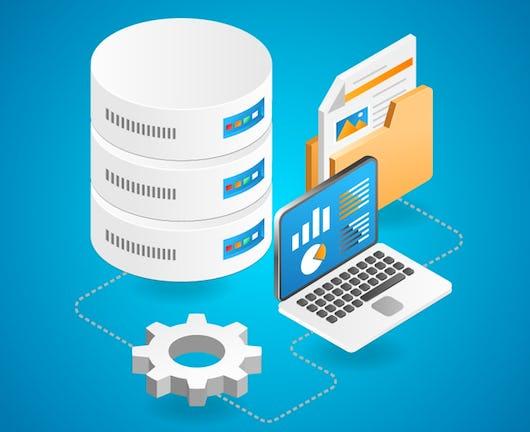
The „In-Memory Data Management" course in 2015 is the fourth iteration of Prof. Hasso Plattner's successful introduction into the inner mechanics of this recent technology. The course focuses on the management of enterprise data in column-oriented in-memory databases. Latest hardware and software trends led to the development of a new revolutionary database technology that enables flexible and lightning-fast analysis of massive amounts of enterprise data.

The basic concepts and design principles of this technology are explained in detail. Beyond that, the implications of the underlying design principles for future enterprise applications and their development are discussed. The course will explain in detail the differences and advantages of an in-memory column-oriented database in contrast to traditional row-oriented disk-based storages.

  • Requirements for Modern Enterprise Computing, Enterprise Application Characteristics
  • Hardware Trends, Columnar Storage vs. Row Storage
  • Dictionary Encoding, Compression
  • Scans, Selects, Deletes, Inserts, Updates
  • Indices, Joins
  • Applications

Participants of this course will receive access to the extensive reading material accompanying the lectures.

Go to Class
MOOC List is learner-supported. When you buy through links on our site, we may earn an affiliate commission.

Related Courses

Algorithms on Strings (Coursera) Coursera
University of California, San Diego,Higher School of Economics - HSE University

Algorithms on Strings (Coursera)

World and internet is full of textual information. We search for information using textual queries, we read websites, books, e-mails. All those are strings from the point of view of computer science. To make sense of all that information and make search efficient, search engines use many string algorithms. Moreover, the emerging field of personalized medicine uses many search algorithms to find disease-causing mutations in the human genome.

Jun 1st 2026
4 Weeks
GIS Data Formats, Design and Quality (Coursera) Coursera
University of California, Davis

GIS Data Formats, Design and Quality (Coursera)

In this course, the second in the Geographic Information Systems (GIS) Specialization. What you will learn: design data tables and use separating and joining data in a relational database; write query strings to subset data; create and work with raster data; create web maps.

Jun 1st 2026
4 Weeks
In-Memory Data Management (内存数据库管理) (openHPI) OpenHPI
Hasso-Plattner-Institut

In-Memory Data Management (内存数据库管理) (openHPI)

The online course focuses on the management of enterprise data in column-oriented in-memory databases. Latest hardware and software trends led to the development of a new revolutionary technology that enables flexible and lightning-fast analysis of massive amounts of enterprise data.

Self Paced
Self-Paced
Datenmanagement mit SQL (openHPI) OpenHPI
Hasso-Plattner-Institut

Datenmanagement mit SQL (openHPI)

Datenbanken bilden die Basis fast aller großen Software-Anwendungen. In Unternehmen, in der Forschung, im Web – überall entstehen riesige Datenmengen, die es gilt sicher zu speichern und die effizient abfragbar sein müssen.

Self Paced Course - Start anytime
Self-Paced
Unordered Data Structures (Coursera) Coursera
University of Illinois at Urbana-Champaign

Unordered Data Structures (Coursera)

The Unordered Data Structures course covers the data structures and algorithms needed to implement hash tables, disjoint sets and graphs. These fundamental data structures are useful for unordered data. For example, a hash table provides immediate access to data indexed by an arbitrary key value, that could be a number (such as a memory address for cached memory), a URL (such as for a web cache) or a dictionary.

Jun 3rd 2026
4 Weeks
Data Structures and Performance (Coursera) Coursera
University of California, San Diego

Data Structures and Performance (Coursera)

How do Java programs deal with vast quantities of data? Many of the data structures and algorithms that work with introductory toy examples break when applications process real, large data sets. Efficiency is critical, but how do we achieve it, and how do we even measure it? This is an intermediate Java course. We recommend this course to learners who have previous experience in software development or a background in computer science, and in particular, we recommend that you have taken the first course in this specialization (which also requires some previous experience with Java).

Jun 1st 2026
5-12 Weeks
Python Data Analysis (Coursera) Coursera
Rice University

Python Data Analysis (Coursera)

This course will continue the introduction to Python programming that started with Python Programming Essentials and Python Data Representations. We'll learn about reading, storing, and processing tabular data, which are common tasks. We will also teach you about CSV files and Python's support for reading and writing them. CSV files are a generic, plain text file format that allows you to exchange tabular data between different programs. These concepts and skills will help you to further extend your Python programming knowledge and allow you to process more complex data.

Jun 1st 2026
4 Weeks
Algorithms on Graphs (Coursera) Coursera
University of California, San Diego,Higher School of Economics - HSE University

Algorithms on Graphs (Coursera)

If you have ever used a navigation service to find optimal route and estimate time to destination, you've used algorithms on graphs. Graphs arise in various real-world situations as there are road networks, computer networks and, most recently, social networks! If you're looking for the fastest time to get to work, cheapest way to connect set of computers into a network or efficient algorithm to automatically find communities and opinion leaders in Facebook, you're going to work with graphs and algorithms on graphs.

Jun 1st 2026
5-12 Weeks
The Structured Query Language (SQL) (Coursera) Coursera
University of Colorado Boulder

The Structured Query Language (SQL) (Coursera)

In this course you will learn all about the Structured Query Language ("SQL".) We will review the origins of the language and its conceptual foundations. But primarily, we will focus on learning all the standard SQL commands, their syntax, and how to use these commands to conduct analysis of the data within a relational database. Our scope includes not only the SELECT statement for retrieving data and creating analytical reports, but also includes the DDL ("Data Definition Language") and DML ("Data Manipulation Language") commands necessary to create and maintain database objects.

Jun 2nd 2026
5-12 Weeks
Data Science in Real Life (Coursera) Coursera
Johns Hopkins University

Data Science in Real Life (Coursera)

Have you ever had the perfect data science experience? The data pull went perfectly. There were no merging errors or missing data. Hypotheses were clearly defined prior to analyses. Randomization was performed for the treatment of interest. The analytic plan was outlined prior to analysis and followed exactly. The conclusions were clear and actionable decisions were obvious. Has that every happened to you? Of course not. Data analysis in real life is messy. How does one manage a team facing real data analyses? In this one-week course, we contrast the ideal with what happens in real life. By contrasting the ideal, you will learn key concepts that will help you manage real life analyses.

Jun 1st 2026
1 Week
Big Data Emerging Technologies (Coursera) Coursera
Yonsei University

Big Data Emerging Technologies (Coursera)

Every time you use Google to search something, every time you use Facebook, Twitter, Instagram or any other SNS (Social Network Service), and every time you buy from a recommended list of products on Amazon.com you are using a big data system. In addition, big data technology supports your smartphone, smartwatch, Alexa, Siri, and automobile (if it is a newer model) every day. The top companies in the world are currently using big data technology, and every company is in need of advanced big data technology support. Simply put, big data technology is not an option for your company, it is a necessity for survival and growth.

Jun 1st 2026
5-12 Weeks
Ordered Data Structures (Coursera) Coursera
University of Illinois at Urbana-Champaign

Ordered Data Structures (Coursera)

In this course, you will learn new data structures for efficiently storing and retrieving data that is structured in an ordered sequence. Such data includes an alphabetical list of names, a family tree, a calendar of events or an inventory organized by part numbers. The specific data structures covered by this course include arrays, linked lists, queues, stacks, trees, binary trees, AVL trees, B-trees and heaps. This course also shows, through algorithm complexity analysis, how these structures enable the fastest algorithms to search and sort data.

Jun 3rd 2026
4 Weeks