EdX

Mechanical Behavior of Materials, Part 1: Linear Elastic Behavior (edX)

Offered by MIT, MITx,
Mechanical Behavior of Materials, Part 1: Linear Elastic Behavior (edX)

Explore materials from the atomic to the continuum level, and apply your learning to mechanics and engineering problems. All around us, engineers are creating materials whose properties are exactly tailored to their purpose. This course is the first of three in a series of mechanics courses from the Department of Materials Science and Engineering at MIT. Taken together, these courses provide similar content to the MIT subject 3.032: Mechanical Behavior of Materials.

Class Deals by MOOC List - Click here and see EdX's Active Discounts, Deals, and Promo Codes.

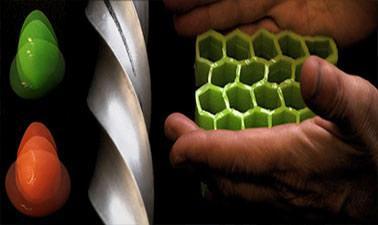
The 3.032x series provides an introduction to the mechanical behavior of materials, from both the continuum and atomistic points of view. At the continuum level, we learn how forces and displacements translate into stress and strain distributions within the material. At the atomistic level, we learn the mechanisms that control the mechanical properties of materials. Examples are drawn from metals, ceramics, glasses, polymers, biomaterials, composites and cellular materials.

Part 1 covers stress-strain behavior, topics in linear elasticity and the atomic basis for linear elasticity, and composite materials.

Part 2 covers stress transformations, beam bending, column buckling, and cellular materials.

Part 3 covers viscoelasticity (behavior intermediate to that of an elastic solid and that of a viscous fluid), plasticity (permanent deformation), creep in crystalline materials (time dependent behavior), brittle fracture (rapid crack propagation) and fatigue (failure due to repeated loading of a material).

What you'll learn:

  • The behavior of linear elastic materials
  • The atomic basis for linear elasticity
  • How to solve mechanics problems relating to stress, strain, and strain energy

Syllabus

Week 1: Normal and shear stress Normal and shear strain Hooke's law for isotropic materials
Week 2: 3D stress states Stress strain curves for engineering materials Strain energy
Week 3: Anisotropic materials and symmetry Composite materials
Week 4: Bonding between atoms; energetic basis for linear elasticity; Thermal strain; origins of thermal strain Rubber elasticity: entropic basis for non-linear elasticity
Week 5: Final Quiz

Go to Class
MOOC List is learner-supported. When you buy through links on our site, we may earn an affiliate commission.

Related Courses

Biomaterials and Biofabrication: Design, Engineering and Innovation (edX) EdX
University of Bayreuth,BayreuthX

Biomaterials and Biofabrication: Design, Engineering and Innovation (edX)

Take our MOOC to expand your knowledge about biomaterials, biomedical engineering, additive manufacturing, tissue engineering and to obtain insights on the future of biofabrication. This MOOC will benefit individuals working in the biomedical sector to discover emerging trends and achieve their next career step.

Self Paced
Self-Paced
Fundamentals of Engineering Exam Review (Coursera) Coursera
Georgia Institute of Technology

Fundamentals of Engineering Exam Review (Coursera)

The purpose of this course is to review the material covered in the Fundamentals of Engineering (FE) exam to enable the student to pass it. It will be presented in modules corresponding to the FE topics, particularly those in Civil and Mechanical Engineering. Each module will review main concepts, illustrate them with examples, and provide extensive practice problems.

Aug 10th 2026
5-12 Weeks
Computers, Waves, Simulations: A Practical Introduction to Numerical Methods using Python (Coursera) Coursera
Ludwig-Maximilians-Universität München

Computers, Waves, Simulations: A Practical Introduction to Numerical Methods using Python (Coursera)

Interested in learning how to solve partial differential equations with numerical methods and how to turn them into python codes? This course provides you with a basic introduction how to apply methods like the finite-difference method, the pseudospectral method, the linear and spectral element method to the 1D (or 2D) scalar wave equation.

Aug 10th 2026
5-12 Weeks
Cavity Quantum Optomechanics (edX) EdX
École Polytechnique Fédérale de Lausanne,EPFLx

Cavity Quantum Optomechanics (edX)

Fundamentals of optomechanics. Basic principles, recent developments and applications. Optomechanics is the study of the interaction between light and mechanical systems which can result in the manipulation of the state of both light and the mechanics. The nature of this interaction gives rise to a wide range of applications in both fundamental physics and technological advancements. In this course, you will learn the concepts and tools required for conducting research in the field of cavity optomechanics.

Self Paced
Self-Paced
Mechanics of Deformable Structures: Part 1 (edX) EdX
MIT,MITx

Mechanics of Deformable Structures: Part 1 (edX)

Study the foundational mechanical engineering subject “Strength of Materials”. Learn to predict deformation and failure in structures composed of elastic, elastic-plastic and viscoelastic elements. Many natural and man-made structures can be modeled as assemblages of interconnected structural elements loaded along their axis (bars), in torsion (shafts) and in bending (beams). In this course you will learn to use equations for static equilibrium, geometric compatibility and constitutive material response to analyze structural assemblages.

No sessions available
5-12 Weeks
Particle Dynamics (Coursera) Coursera
Korea Advanced Institute of Science and Technology - KAIST

Particle Dynamics (Coursera)

This course teaches dynamics, one of the basic mechanics subjects of Mechanical Engineering. Students would be able to organize their knowledge about force and motion, work-energy, impulse-momentum in view of Newton's 2nd law and its integration over time and displacement. The Engineering Dynamics consists of two parts: particle dynamics and rigid body dynamics.

Aug 17th 2026
13-24 Weeks
Fundamentals of Non-Destructive Testing (edX) EdX
Purdue University,PurdueX

Fundamentals of Non-Destructive Testing (edX)

Learn the fundamentals of non-destructive testing (NDT), a technique used to evaluate material and structure properties and defects without causing damage. Non-destructive testing (NDT) is used across industries to ensure product integrity and reliability; it is used in the aerospace, defense, oil and gas, and automotive sectors. In civil engineering, NDT is commonly used to detect flaws and defects in concrete elements and structures.

Jan 10th 2022
5-12 Weeks
Thermodynamics (edX) EdX
IIT Bombay,IITBombayX

Thermodynamics (edX)

Introduction to basic concepts and applications of thermodynamics in mechanical engineering. ME209x is a basic course in thermodynamics, designed for students of mechanical engineering. We will study the terms and concepts used in thermodynamics, with precise definitions. The three laws of thermodynamics (zeroth, first, and second) will be explored in detail, and the properties of materials will be studied.

No sessions available
5-12 Weeks
Ideal Gases (Coursera) Coursera
University of Colorado Boulder

Ideal Gases (Coursera)

Course 3 of Statistical Thermodynamics, Ideal Gases, explores the behavior of systems when intermolecular forces are not important. This done by evaluating the appropriate partition functions for translational, rotational, vibrational and/or electronic motion. We start with pure ideal gases including monatomic, diatomic and polyatomic species.

Aug 3rd 2026
3 Weeks
Materials in Oral Health (Coursera) Coursera
University of Hong Kong

Materials in Oral Health (Coursera)

The drive for development of new and novel oral biomaterials has never been more important with many people using oral biomaterials today and seeing their benefits in restoring and improving their oral health for a more enjoyable lifestyle. The unique properties of biomaterials such as titanium (Ti), zirconia (ZrO2) and various polymeric materials have made them materials of choice in oral health: dental implants, oral and maxillofacial surgery, and even regenerative medicine. Oral biomaterials research today is an exciting and intensive multidisciplinary area that encompasses contributions from a wide range of fields from professional dentistry to biology, chemistry, physics, material science, and engineering.

Aug 7th 2026
4 Weeks