Welcome to The Making of US Foreign Policy course! This course seeks to provide you with a comprehensive understanding of the United States’ Foreign Policy (USFP). Through this course, you will look at the evolution of USFP from its founding to the present. You will analyze the role of the institutions which play a role in defining USFP. You will also explore how the USFP relies on trade and economic interdependence to define global economic relations.
Class Deals by MOOC List - Click here and see Coursera's Active Discounts, Deals, and Promo Codes.
Course 2 of 3 in the American Politics, Foreign Policy, and US-India Ties Specialization.
What You Will Learn
- Describe the origins of United States Foreign Policy and how history, domestic institutions, and trade have defined it.
- Analyze American foreign policy and its impact on the world order.
- Demonstrate interpretive and analytical arguments clearly through discussions.
Syllabus
WEEK 1
The Development of American Foreign Policy
In this module, you will learn about America’s participation in world affairs from the republic’s inception in 1776 to the end of World War I. The module also discusses the Monroe Doctrine, Roosevelt’s Corollary, Wilsonian Idealism, the League of Nations, and America’s Isolationism. You will also gain an insight into how the United States became a great power and reluctantly played a major role in world affairs.
WEEK 2
Institutions and Processes of the US Foreign Policy
In this module, you will explore prominent hallmarks of the US domestic political life and their impact on its foreign policy. This will specifically include the institutional structure of the Presidential form of governance with its separation of powers under the aegis of democracy. You will also learn about the powers and oversight of the apex offices, including the White House, the US State Department, the US Congress, Senate, Central Intelligence Agency (CIA), National Security Council, etc. This module also delves into the role and impact of public activism, particularly in times of conflict, its consequence on foreign policy goals, and the role of public support in the democratic political process. You will also gain an insight into the bipartisan aspect of the US politics and analyze whether divergences on the domestic front are reflected in foreign policy aspirations. Lastly, the module also makes a comparative analysis with friends and foes of the US and how their domestic political environment is similar or dissimilar while looking at transnational institutions, particularly those where the US leadership has been critical in determining a regional or global balance of power.
WEEK 3
The US During World War II and the Cold War
In this module, you will learn about the rise of the United States as a global power, its role in World War II, and the advent of the nuclear age. The module also analyzes the impact of the US foreign policy and global outlook and how the US shaped the liberal international order by creating the UN and its affiliated institutions. The module also discusses the Cold War with the Soviet Union, the Cuban Missile Crisis, the containment strategies for the USSR such as NATO, the Marshall Plan, and the Truman Doctrine. You will also gain an insight into US interventions in Korea, Vietnam, Afghanistan (1979), and detente with the USSR. The module also looks at the US and the Cold War in Asia and its continuing relevance in contemporary international politics. Lastly, through this module, you can appreciate how the US has dealt with fellow great powers and weaker powers, and the grand strategy that has motivated the US since 1945.
WEEK 4
Configuring US Role in the Unipolar World
In this module, you will learn about how the United States has managed its rise following the disintegration of the Soviet Union, and why instead of countering the United States, many of the nations are bandwagoning with the superpower. You will also learn about different concepts such as hegemonic stability theory, balancing, and bandwagoning; the international power structure; and the role of smaller nations in configuring their best national interests. The module will also highlight the role that the United States has been playing in political, economic, cultural, social, and defense fields. Further, you will gain an insight into the power multiplier aspects of a nation which includes technology, information, connectivity, and the emergence of digital evolution. Finally, you will learn about the role that the US plays as a constabulary and expeditionary power and why it is critical for order at the international level.
WEEK 5
The US Policy Toward Trade, Economics, and Globalization
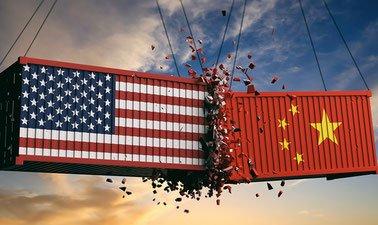
In this module, you will learn about how the United States drives economic globalization and the role it plays in international economic institutions like the International Monetary Fund (IMF), World Bank, and the World Trade Organization (WTO). The module also discusses the impacts of the global financial crisis of 2008 as well as the contemporary US-China trade war, which is redefining global economic relations. Finally, you will also gain an insight into the trade dimensions of the US-India relationship, delving into both past and possibilities.