EdX

U.S. Public Policy: Social, Economic, and Foreign Policies (edX)

U.S. Public Policy: Social, Economic, and Foreign Policies (edX)

Learn about public policy in America and the dynamics of American politics. Public policy puts laws into action. The executive branch directs the combined activities of the federal government to address a multitude of problems, from the environment to the economy. The policies of the United States affect social issues, economic growth, taxes, regulation, and foreign affairs. This course will take a broad view of public policy in America but will use specific examples, such as the 2008 economic downturn and climate change, to illustrate the wide-ranging effects of those policies.

Class Deals by MOOC List - Click here and see EdX's Active Discounts, Deals, and Promo Codes.

We’ll address the intersection of religion and politics, and how issues such as abortion and same-sex marriage have played out in the political arena. We’ll discuss fiscal, monetary, welfare and income policy—what they are, what tools they involve, and what political divisions they create. We’ll examine partisan divisions over regulatory policy, and the basis for those divisions. Finally, we’ll trace the evolution of America’s position as a trading nation by examining trade agreements like the North American Free Trade Agreement (NAFTA) and the Trans-Pacific Partnership (TPP).
This course will also serve as an overview of American government, concentrating on overarching tendencies such as its fragmented power structure. The importance of these tendencies will be explained by showing how thoroughly each of them affects American politics.
This course is part of the U.S. Government XSeries Program.

What you'll learn

  • How religion and politics have been a persistent source of conflict
  • The nature of U.S. fiscal policy and monetary policy
  • How America’s welfare policies are distinct from those of other Western democracies
  • The structure and politics of the U.S. tax system
  • The partisan divisions over regulatory policy and the basis for those divisions
  • The factors that made America an economic powerhouse

Syllabus

Week 1: Social Policy
This session will concentrate on the intersection of religion and politics, historically and currently. We will explain how issues such as abortion and same-sex marriage have played out in ways that have aligned religious conservatives with the Republican Party and religious liberals and seculars with the Democratic Party.

Week 2: Fiscal & Monetary Policy
This session examines fiscal policy and monetary policy—what they are, what tools they involve, and what political divisions they create. The nature of these policies will be illustrated through several cases, including the policies enacted in response to the economic downturn that began in 2008.

Week 3: Welfare & Income Policy
This session will describe and explain these developments, relating them to both the nature of the U.S. economy and the nature of U.S. policy. The structure and politics of the U.S. welfare system and the U.S. tax system will be points of emphasis.

Week 4: Regulatory Policy
While emphasizing policy, the session will also address partisan divisions over regulatory policy, and the basis for those divisions. Several cases, most notably the politics and policies of climate change, will be used to illustrate key points.

Week 5: Foreign Policy
This session will trace the evolution of America’s position as a trading nation during the post-World War II era, concentrating first on the factors that made America in the immediate post-war period the world’s unquestioned economic power and then on the factors that weakened that position. The session will conclude with an examination of the politics and policies of trade agreements, including adoption in 1993 of the North American Free Trade Agreement (NAFTA) and the rejection in 2017 of the proposed Trans-Pacific Partnership (TPP).

Week 6: Dynamics of American Politics
This session will serve as an overview of the course, concentrating on major tendencies within the American system, such as its fragmented power structure. The importance of these tendencies will be explained by showing how thoroughly each of them affects American politics. The purpose of this session is to reinforce and clarify the “lessons learned” during the course.


Go to Class
MOOC List is learner-supported. When you buy through links on our site, we may earn an affiliate commission.

Related Courses

Ciudades en crisis y nuevas políticas urbanas (Coursera) Coursera
Universitat Autònoma de Barcelona

Ciudades en crisis y nuevas políticas urbanas (Coursera)

Las ciudades se han convertido en un foco de interés preferente para el análisis de políticas públicas. Con una concentración de personas cada vez mayor viviendo en contextos urbanos, las ciudades son hoy el escenario de un apasionante cambio de época que afecta la esfera social, política, económica y tecnológica.

Sep 28th 2026
4 Weeks
Macroeconomics: Theory and Policy (edX) EdX
Indian Institute of Management, Bangalore,IIMBx

Macroeconomics: Theory and Policy (edX)

This course provides a basic understanding of the overall components of economies which tend to be the key factor for taking decisions in a large scale. The course deals with theoretical models of Consumption, Savings, Investment alongwith key economic concepts like Inflation and Unemployment. This course will discuss the unique economic terms which dictate the working of economies all over the world.

Self Paced
Self-Paced
Understanding the Australian economy: An introduction to macroeconomic and financial policies (Coursera) Coursera
The University of Sydney

Understanding the Australian economy: An introduction to macroeconomic and financial policies (Coursera)

This four-week, four-module course explores selective aspects of the Australian economy, with emphasis on macroeconomic and financial policies. The course introduces participants to several key attributes of the Australian economy and discusses how they are influenced by both domestic and international forces. We will examine some of the key issues and dilemmas facing the Australian economy and how policymakers can deal with them using monetary and fiscal policies.

Sep 28th 2026
4 Weeks
Data for Effective Policy Making (edX) EdX
Inter-American Development Bank - IDB,IDBx

Data for Effective Policy Making (edX)

Take control of data and gain a better understanding of the tools used in public policy planning, management, and evaluation. In this age of information, data is available everywhere and grows at an exponential rate. How can we make sense of all this data? How do we take advantage of data when making decisions? How do we use data to help us guide the management and planning of our policies?

Self Paced
Self-Paced
Foundations of Central Bank Law (edX) EdX
International Monetary Fund - IMF,IMFx

Foundations of Central Bank Law (edX)

This online course, presented by the IMF Institute and the IMF Legal Department, introduces participants to the foundations of central bank law. The course covers the legal issues that are necessary to support sound and effective central banks. It addresses the legal underpinnings of the mandate, decision-making structures, autonomy, accountability, transparency, and operations of central banks. This course combines theoretical components with practical exercises on how to analyze and design central bank legal frameworks.

Self Paced
Self-Paced
Electric Cars: Policy (edX) EdX
Delft University of Technology,DelftX

Electric Cars: Policy (edX)

Learn about the role of public policy in steering technological innovation and infrastructural change toward zero-emission mobility. Electric cars are more than a novel means of mobility. They have been recognized as an essential building block of the energy transition. Fulfilling their promise will imply a significant change in the technical, digital and social dimensions of transport and energy infrastructure.

Self Paced
Self-Paced
Macroeconomics of Climate Change: Climate Risks for the Financial Sector (edX) EdX
International Monetary Fund - IMF,IMFx

Macroeconomics of Climate Change: Climate Risks for the Financial Sector (edX)

Learn the key components of financial and monetary policies that can help manage physical and transition climate risks. This online course, presented by the IMF's Institute for Capacity Development, Monetary and Capital Markets Department, and Research Department, serves as the fifth in a six-part "Macroeconomics of Climate Change (MCCx)" series.

Self Paced
Self-Paced
Patrick Henry: Forgotten Founder (Coursera) Coursera
University of Virginia,UVA Lifetime Learning, Patrick Henry Memorial Foundation

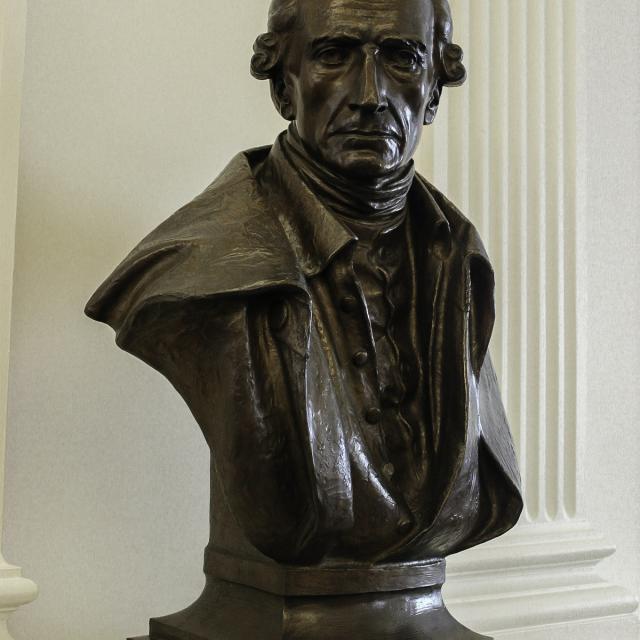
Patrick Henry: Forgotten Founder (Coursera)

“Give me liberty, or give me death:” Remembering Patrick Henry, the Forgotten Founder. Patrick Henry was enormously popular during the American Revolution. Even Thomas Jefferson, who over time developed a deep loathing of Henry (some would say jealousy), had to admit that “it is not now easy to say what we should have done without Patrick Henry.” Edmund Randolph, a patriot leader in his own right, explained that “It was Patrick Henry … awakening the genius of his country, and binding a band of patriots together to hurl defiance at the tyranny of so formidable a nation as Great Britain.”

Sep 21st 2026
5-12 Weeks
American Government: Constitutional Foundations (edX) EdX
HarvardX,Harvard University

American Government: Constitutional Foundations (edX)

Learn how early American politics informed the U.S. Constitution and why its promise of liberty and equality has yet to be fully realized. This course explores the origins of U.S. political culture, how that culture informed the Constitution, and how that framework continues to influence the country’s politics and policies.

Self Paced
Self-Paced