Llama for Python Programmers (Coursera)

Llama for Python Programmers (Coursera)

Llama for Python Programmers is designed for programmers who want to leverage the Llama 2 large language model (LLM) and take advantage of the generative artificial intelligence (AI) revolution. In this course, you’ll learn how open-source LLMs can run on self-hosted hardware, made possible through techniques such as quantization by using the llama.cpp package.

Class Deals by MOOC List - Click here and see Coursera's Active Discounts, Deals, and Promo Codes.

You’ll explore how Meta’s Llama 2 fits into the larger AI ecosystem, and how you can use it to develop Python-based LLM applications. Get hands-on skills using methods such as few-shot prompting and grammars to improve and constrain Llama 2 output, allowing you to get more robust data interchanges between Python application code and LLM inference. Lastly, gain insight into the different Llama 2 model variants, how they were trained, and how to interact with these models in Python.
This course does not require a data science or statistics background. It is developed specifically for Python application developers who are interested in integrating generative AI, such as Llama 2, into their work.

What you'll learn

  • Understand how to use llama.cpp Python APIs to build Llama 2-based large language model (LLM)applications.
  • Learn to run and interact with the Llama 2 large language model on commodity local hardware.
  • Learn to utilize zero- and few-shot prompting as well as advanced methods like grammars in llama.cpp to enhance and constrain Llama 2 model output.
  • Learn about the different Llama 2 model variants: the base model, chat model, and code llama and how to interact with these models in Python.

Syllabus

Introduction to Llama 2: A High Quality Open Source Large Language Model
This module introduces you to Llama 2, highlighting its architecture, training method, and capabilities as a high-quality open-source LLM. This foundational segment prepares you for hands-on learning in the following modules.

Under the Hood with Llama2 and Python: Understanding How it Works
This module unravels Llama 2's intricacies within Python, guiding you through tokenization, the development of Llama 2 applications via llama.cpp, and parameter adjustments for improved interactions.

Building a Llama 2 Application
This module begins with a demonstration of zero and few-shot prompting techniques, then moves on to controlling model output for tailored responses. It culminates in practical programming assignments, enabling you to apply your knowledge and showcase your skills in crafting refined Llama 2 applications.
Go to Class
MOOC List is learner-supported. When you buy through links on our site, we may earn an affiliate commission.

Related Courses

An Introduction to Interactive Programming in Python (Part 2) (Coursera) Coursera
Rice University

An Introduction to Interactive Programming in Python (Part 2) (Coursera)

This two-part course is designed to help students with very little or no computing background learn the basics of building simple interactive applications. Our language of choice, Python, is an easy-to learn, high-level computer language that is used in many of the computational courses offered on Coursera. To make learning Python easy, we have developed a new browser-based programming environment that makes developing interactive applications in Python simple.

Aug 10th 2026
4 Weeks
The Fundamental of Data-Driven Investment (Coursera) Coursera
Sungkyunkwan University - SKKU

The Fundamental of Data-Driven Investment (Coursera)

In this course, the instructor will discuss the fundamental analysis of investment using R programming. The course will cover investment analysis topics, but at the same time, make you practice it using R programming. This course's focus is to train you to do the elemental analysis for investment management that you might need to do in your job every day. Additionally, the study note to do using Python programming will be provided.

Aug 10th 2026
4 Weeks
Python Data Visualization (Coursera) Coursera
Rice University

Python Data Visualization (Coursera)

This if the final course in the specialization which builds upon the knowledge learned in Python Programming Essentials, Python Data Representations, and Python Data Analysis. We will learn how to install external packages for use within Python, acquire data from sources on the Web, and then we will clean, process, analyze, and visualize that data. This course will combine the skills learned throughout the specialization to enable you to write interesting, practical, and useful programs.

Aug 7th 2026
4 Weeks
Foundations of Data Science: K-Means Clustering in Python (Coursera) Coursera
University of London,Goldsmiths, University of London

Foundations of Data Science: K-Means Clustering in Python (Coursera)

This MOOC, designed by an academic team from Goldsmiths, University of London, will quickly introduce you to the core concepts of Data Science to prepare you for intermediate and advanced Data Science courses. It focuses on the basic mathematics, statistics and programming skills that are necessary for typical data analysis tasks.

Aug 10th 2026
5-12 Weeks
Introduction to Prompt Injection Vulnerabilities (Coursera) Coursera
Coursera Instructor Network

Introduction to Prompt Injection Vulnerabilities (Coursera)

In this course, we enter the space of Prompt Injection Attacks, a critical concern for businesses utilizing Large Language Model systems in their AI applications. By exploring practical examples and real-world implications, such as potential data breaches, system malfunctions, and compromised user interactions, you will grasp the mechanics of these attacks and their potential impact on AI systems.

Aug 10th 2026
1 Week
Introdução à Ciência da Computação com Python Parte 2 (Coursera) Coursera
Universidade de São Paulo, Brasil

Introdução à Ciência da Computação com Python Parte 2 (Coursera)

Bem vindo ao curso de Introdução à Ciência da Computação destinado aos alunos regulares da Universidade de São Paulo! Esta é a segunda parte do Curso, onde você vai continuar a aprender os principais conceitos introdutórios de Ciência da Computação e também aprenderá a desenvolver pequenos programas na linguagem Python.

Aug 10th 2026
5-12 Weeks
Getting Started with CyberGIS (Coursera) Coursera
University of Illinois at Urbana-Champaign

Getting Started with CyberGIS (Coursera)

This course is intended to introduce students to CyberGIS—Geospatial Information Science and Systems (GIS)—based on advanced cyberinfrastructure as well as the state of the art in high-performance computing, big data, and cloud computing in the context of geospatial data science. Emphasis is placed on learning the cutting-edge advances of cyberGIS and its underlying geospatial data science principles.

Aug 3rd 2026
4 Weeks
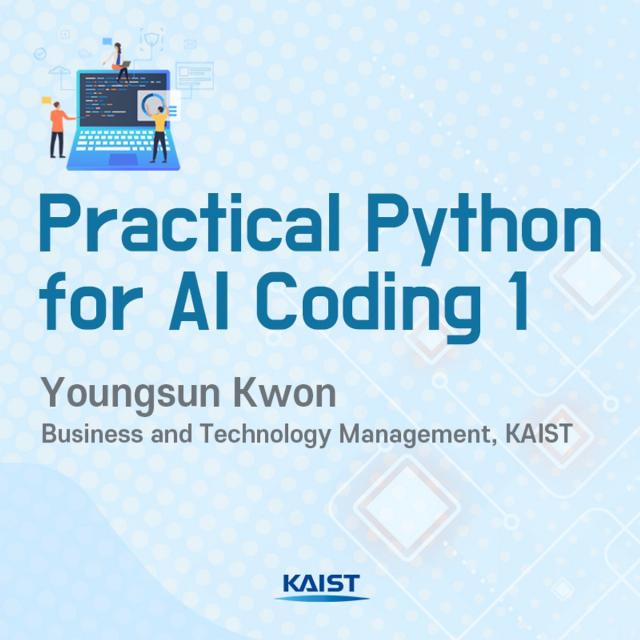
Practical Python for AI Coding 1 (Coursera) Coursera
Korea Advanced Institute of Science and Technology - KAIST

Practical Python for AI Coding 1 (Coursera)

This course is for a complete novice of Python coding, so no prior knowledge or experience in software coding is required. This course selects, introduces and explains Python syntaxes, functions and libraries that were frequently used in AI coding. In addition, this course introduces vital syntaxes, and functions often used in AI coding and explains the complementary relationship among NumPy, Pandas and TensorFlow, so this course is helpful for even seasoned python users.

Aug 3rd 2026
5-12 Weeks
Applied Calculus with Python (Coursera) Coursera
Johns Hopkins University

Applied Calculus with Python (Coursera)

This course is designed for the Python programmer who wants to develop the foundations of Calculus to help solve challenging problems as well as the student of mathematics looking to learn the theory and numerical techniques of applied calculus implemented in Python. By the end of this course, you will have learned how to apply essential calculus concepts to develop robust Python applications that solve a variety of real-world challenges.

Aug 3rd 2026
5-12 Weeks
Data Processing Using Python (Coursera) Coursera
Nanjing University

Data Processing Using Python (Coursera)

This course is mainly for non-computer majors. It starts with the basic syntax of Python, to how to acquire data in Python locally and from network, to how to present data, then to how to conduct basic and advanced statistic analysis and visualization of data, and finally to how to design a simple GUI to present and process data, advancing level by level.

Aug 10th 2026
5-12 Weeks
Build a Data Warehouse Using BigQuery (Coursera) Coursera
Starweaver

Build a Data Warehouse Using BigQuery (Coursera)

Unlock the power of Google BigQuery as you embark on a journey to become proficient in data warehouse building and advanced querying. In this comprehensive course, you'll learn to harness the capabilities of BigQuery, from setting up and accessing the platform to creating data warehouses using both the user interface and Python. Through hands-on lessons and practical applications, you'll develop the fundamental skills needed to manage, query, and optimize your data in this powerful cloud-based platform.

Aug 3rd 2026
1 Week