A Journey Through Transfer Medicine (FutureLearn)

A Journey Through Transfer Medicine (FutureLearn)

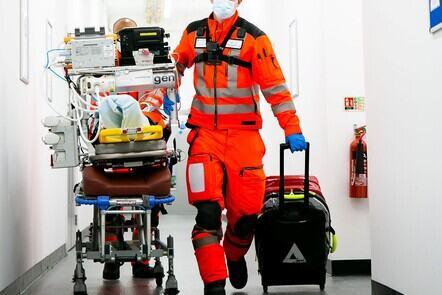
Understanding the complexity and diversity of transfer medicine for critically ill patients across a global landscape. Discover how to keep critically ill patients safe during transfer. Across the world, thousands of critically ill patients are transferred within hospitals and between locations, yet there is little formal training available.

Class Deals by MOOC List - Click here and see FutureLearn's Active Discounts, Deals, and Promo Codes.

This novel, interactive course is designed to address this gap. You will develop skills and knowledge around transferring critically ill patients across road, air and remote environments. Working with pilots, we have included non-technical skills training, drawing parallels with aviation, and relating these back to medicine. We will explore transfer medicine in specialised settings and hear experts on preparing for these.
Whatever your background, you will learn to plan and execute transfers of critically ill patients safely.

Syllabus

Week 1: Introduction To Transfer Medicine
Week 2: A Practical Guide To Transfers
Week 3: Equipment, Decision Making & Aeromedical Transfers
Week 4: Specialist & Extreme Transfers

What will you achieve?
By the end of the course, you‘ll be able to...

  • Explore the scope of transfer medicine practice and understand the risks involved in transferring critically unwell patients
  • Summarise the physiological principles, human factors and relevant guidelines required to optimise a patient, transfer them safely and handle critical incidents
  • Assess the importance of equipment and different modes of transport in executing a safe transfer
  • Develop an understanding of specialist, unusual and remote situations and specific patient groups who need safe critical transfer

Who is the course for?
This course is designed for all healthcare professionals with an interest in the transfer of critically ill patients.
This includes nurses, paramedics, practitioners and doctors in anaesthesia, critical care, emergency medicine, prehospital medicine and various other disciplines, as well as students in these fields.

Go to Class
MOOC List is learner-supported. When you buy through links on our site, we may earn an affiliate commission.

Related Courses

Myocardial Infarction (Coursera) Coursera
University of Zurich

Myocardial Infarction (Coursera)

Cardiovascular diseases are – according to the (World Health Organization (WHO) – the number one cause of death globally. Myocardial infarction (heart attack) is the most prominent under the Cardiovascular diseases. In Switzerland alone, the risk to develop a coronary heart disease during life time is around 25% for men and 18% for women. Most cardiovascular diseases can be prevented by addressing behavioral risk factors, the understanding of these risk factors, their mechanisms and impact on the cardiovascular system.

Oct 26th 2026
5-12 Weeks
Tackling Antibiotic Resistance: What Should Dentists Do? (FutureLearn) FutureLearn
British Society for Antimicrobial Chemotherapy - BSAC,FDI World Dental Federation

Tackling Antibiotic Resistance: What Should Dentists Do? (FutureLearn)

Discover the danger posed by antibiotic resistance, and how dental teams can meet the challenge to protect patients. Explore how dentists can tackle the threat of global antibiotic resistance. Antibiotics are lifesaving drugs – when you need them, you need them to work. Antimicrobial resistance (AMR) poses a significant threat to health and wealth globally. Dental teams can do their bit by optimising the use of antibiotics. On this course, you’ll identify ways in which those involved in dental practice can do their bit to tackle antibiotic resistance (ABR).

May 11th 2026
3 Weeks
Integrative Pain Management - Chinese Medicine and Western Medicine (FutureLearn) FutureLearn
HKU School of Professional and Continuing Education

Integrative Pain Management - Chinese Medicine and Western Medicine (FutureLearn)

Improve your pain diagnosis and treatment as you learn how to combine Chinese and Western medicine for effective pain management. Develop your understanding of pain management. Pain, though common, is often extremely complex to treat and diagnose. Health professionals must navigate through the many different causes and influential factors to provide effective treatment for their patients.

Self Paced
4 Weeks
Perioperative Medicine in Action (FutureLearn) FutureLearn
University College London

Perioperative Medicine in Action (FutureLearn)

Explore perioperative medicine and how you can improve care for the high risk surgical patient. Join this RCoA endorsed course. Too many patients die or suffer prolonged complications following surgery. Perioperative medicine is an emerging, multi-disciplinary approach, which tackles this issue, by optimising the care of high-risk surgical patients. It encompasses disciplines including anaesthetics, surgery, nursing, care of the elderly, physiotherapy and healthcare management.

Self Paced
4 Weeks
Genomic Medicine: Transforming Patient Care in Diabetes (FutureLearn) FutureLearn
University of Exeter

Genomic Medicine: Transforming Patient Care in Diabetes (FutureLearn)

Learn how developments in genomics are transforming our knowledge and treatment of conditions such as diabetes. This course introduces genomics, using the University of Exeter’s research expertise in diabetes with patient cases, to illustrate the clinical application and impact of current knowledge.

Nov 2nd 2020
4 Weeks
The Science of Medicines (FutureLearn) FutureLearn
Monash University

The Science of Medicines (FutureLearn)

Learn the science behind how and why medicines work, and what can improve patient's treatment, with this online course. What do you know about the medicines you take? The world’s growing population faces major health issues, and medicines are a primary pillar to effect better health. Learn about the science of key medicines used to manage heart disease, depression, diabetes, pain control and smoking cessation.

Jan 17th 2022
5-12 Weeks
Challenges in Antibiotic Resistance: Non-Fermenting Gram Negative Bacteria (FutureLearn) FutureLearn
British Society for Antimicrobial Chemotherapy - BSAC

Challenges in Antibiotic Resistance: Non-Fermenting Gram Negative Bacteria (FutureLearn)

Gain an understanding of antibiotic resistance in non-fermenting gram negative bacteria. Understand antibiotic resistance in non-fermenting gram negative bacteria. Non-fermenting gram negative bacteria are a group of bacteria which cause infection in a growing number of patients. Many of these bacteria are resistant to antibiotics, so it’s vital to accurately identify the specific bacteria in order to administer appropriate treatment. This informative two-week course will increase your understanding of the mechanisms of resistance, and will teach practical techniques for diagnosis and infection prevention and control.

No sessions available
2 Weeks
Nanotechnology for Health: Innovative Designs for Medical Diagnosis (FutureLearn) FutureLearn
University of Twente

Nanotechnology for Health: Innovative Designs for Medical Diagnosis (FutureLearn)

Discover how types of nanotechnology can be used for exciting new opportunities in healthcare. Explore the use and implications of nanotechnology in medicine. Nanotechnology is used to control and manipulate nanometer-sized matter with nanometer precision. This can be atoms, molecules, or larger biological structures such as DNA or living cells. On this course, you’ll explore the potential of nanotechnology products in medical applications, to create new devices that can be used to diagnose a disease or monitor a medical treatment.

Available now
4 Weeks
Medicines Adherence: Supporting Patients with their Treatment (FutureLearn) FutureLearn
King's College London

Medicines Adherence: Supporting Patients with their Treatment (FutureLearn)

How can healthcare professionals help patients to improve their health through medicines adherence? It is estimated that 30-50% of patients do not take their medicines as prescribed. So how should we, as healthcare professionals, respond? As medicines are key to the successful management of chronic conditions, underuse or non-adherence represents a lost opportunity for the health improvement for the patient as well as being a waste of valuable resources for healthcare systems. In Europe alone, the cost of poor adherence to treatment is estimated at 195,000 lives and €20 billion annually.

No sessions available
2 Weeks