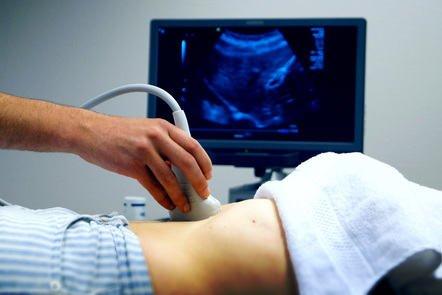
Ultrasound Imaging: What Is Inside? (FutureLearn)

Offered by University of Twente,
Ultrasound Imaging: What Is Inside? (FutureLearn)

What is an ultrasound scan, and how do they work? Discover the science of ultrasound and understand its clinical uses. Discover how ultrasound imaging works. With this ultrasound imaging course, you’ll explore some of the main principles behind this fascinating technology. Starting with an ultrasound definition and working your way through the science behind the process, you’ll learn about the clinical applications of an ultrasound scan.

Class Deals by MOOC List - Click here and see FutureLearn's Active Discounts, Deals, and Promo Codes.

Whether you’re simply curious about how the process works, considering sonographer training, or hoping to improve your existing clinical knowledge, this is the course for you.

Learn about the uses of ultrasound
How does ultrasound imaging work? And what is an ultrasound scan? You’ll explore these questions and more as you progress through the course syllabus.
You’ll also examine the current developments in technology, and the new possibilities in ultrasound imaging are arising that may improve diagnostics.

Understand ultrasound imaging from three perspectives
Ultrasound can only be correctly performed and improved when users have a profound knowledge of the underlying technology. With that in mind, this free online course is based on three major perspectives:

  1. Medical perspective: In Week 1 we will examine the versatile use of ultrasound imaging for medical purposes.
  2. Technical perspective: In Weeks 2 to 4 we will explain the underlying technology of ultrasound imaging.
  3. Technical medical perspective: In Weeks 5 and 6 we will apply your newly acquired technical background knowledge of ultrasound to make better images.

Develop your clinical knowledge and patient care
Whether you’re wondering how to learn ultrasound or how to become a sonographer, this course can provide some of the foundations you’ll need. Once completed, you’ll have a good understanding of the technology of ultrasound imaging, and you can apply this knowledge in examples of ultrasound use in the clinic.

Syllabus

Week 1: Ultrasound in medical practice
Week 2: The technology behind ultrasound - Part one
Week 3: The technology behind ultrasound - Part two
Week 4: The technology behind ultrasound - Part three
Week 5: Technical medicine of ultrasound - The first cases
Week 6: Technical medicine of ultrasound - The final cases

What will you achieve?
By the end of the course, you'll be able to...

  • Identify and comprehend the versatile use of clinical ultrasound imaging.
  • Explain how medical images are created with ultrasound.
  • Apply technical background knowledge of ultrasound to improve patient care.

Who is the course for?
This course is aimed at everyone interested in ultrasound imaging, its technological background, and its application in clinical practice. Medical students and professionals working with ultrasound might find this course useful as well. Participants are expected to have a pre-university level in mathematics and physics.
Participants with the expected starting level will need about 3 hours per week for the course. If you have already more knowledge or experience about the technical aspects or medical use of ultrasound imaging, you may need less time to complete the course.
In this course, you will investigate ultrasound imaging in-depth and explore the different possibilities from an ultrasound device. However, it is not necessary to have an ultrasound device available.
Go to Class
MOOC List is learner-supported. When you buy through links on our site, we may earn an affiliate commission.

Related Courses

Tackling Antimicrobial Resistance: A Social Science Approach (FutureLearn) FutureLearn
British Society for Antimicrobial Chemotherapy - BSAC,Imperial College London

Tackling Antimicrobial Resistance: A Social Science Approach (FutureLearn)

Are you a health professional new to social science research? Find out how you can fight antimicrobial resistance on this course. Learn the key aspects of successful antimicrobial stewardship. Antimicrobial resistance is a complex problem in today’s medicine that requires a unique approach. On this course, you will build your knowledge of how a social science perspective can fight the problem of antimicrobial resistance.

Self Paced
3 Weeks
Psychological First Aid (Coursera) Coursera
Johns Hopkins University

Psychological First Aid (Coursera)

Learn to provide psychological first aid to people in an emergency by employing the RAPID model: Reflective listening, Assessment of needs, Prioritization, Intervention, and Disposition. Utilizing the RAPID model (Reflective listening, Assessment of needs, Prioritization, Intervention, and Disposition), this specialized course provides perspectives on injuries and trauma that are beyond those physical in nature. The RAPID model is readily applicable to public health settings, the workplace, the military, faith-based organizations, mass disaster venues, and even the demands of more commonplace critical events, e.g., dealing with the psychological aftermath of accidents, robberies, suicide, homicide, or community violence.

Oct 5th 2026
5-12 Weeks
Transgender Medicine for General Medical Providers (Coursera) Coursera
Icahn School of Medicine at Mount Sinai

Transgender Medicine for General Medical Providers (Coursera)

The course is a comprehensive set of didactic lectures surveying fundamentals of transgender medical and surgical treatment. The material is meant to provide the student with core knowledge that is essential for current primary care providers caring for transgender patients. There are 10 modules led by the expert clinical faculty from the pioneering Center for Transgender Medicine and Surgery, located within the Mount Sinai Health System and the Icahn School of Medicine at Mount Sinai in New York City.

Oct 5th 2026
5-12 Weeks
Cancer in the 21st Century - the Genomic Revolution (FutureLearn) FutureLearn
University of Glasgow

Cancer in the 21st Century - the Genomic Revolution (FutureLearn)

Discover how modern genetics has revolutionised approaches to the detection and treatment of cancer. Cancer Research UK estimates that 1 in 2 people in the UK will be diagnosed with cancer during their lifetime. It is a disease that impacts on most people’s lives at some stage. So understanding cancer, and the development of new treatments, is of intrinsic interest to us all.

No sessions available
5-12 Weeks
The Science of Medicines (FutureLearn) FutureLearn
Monash University

The Science of Medicines (FutureLearn)

Learn the science behind how and why medicines work, and what can improve patient's treatment, with this online course. What do you know about the medicines you take? The world’s growing population faces major health issues, and medicines are a primary pillar to effect better health. Learn about the science of key medicines used to manage heart disease, depression, diabetes, pain control and smoking cessation.

Jan 17th 2022
5-12 Weeks
Heart Health: A Beginner's Guide to Cardiovascular Disease (FutureLearn) FutureLearn
University of Reading

Heart Health: A Beginner's Guide to Cardiovascular Disease (FutureLearn)

Learn more about how your heart works, the causes of heart disease and how to keep your heart healthy with this free online course. Learn how to keep your heart healthy. Your heart beats around 100,000 times a day, pumping blood around your body to deliver oxygen and nutrients, while taking away waste products. When your heart is unhealthy, it can’t perform this vital task so effectively.

Self Paced
4 Weeks
Discovering Science: Medicinal Chemistry (FutureLearn) FutureLearn
University of Leeds

Discovering Science: Medicinal Chemistry (FutureLearn)

What role does chemistry play in healthcare and our ability to diagnose and treat patients? Discover how chemotherapy has evolved, and some of the breakthroughs and developments chemists have made in the fight against cancer over the last 10 years. Diagnostic imaging examines how scientists learn about, and treat, the inside of the body without invasive surgery. You’ll explore how modern imaging techniques diagnose problems quickly and safely, and how diseases which may not previously have been picked up are identified.

Self Paced
2 Weeks
Tackling Antibiotic Resistance: What Should Dentists Do? (FutureLearn) FutureLearn
British Society for Antimicrobial Chemotherapy - BSAC,FDI World Dental Federation

Tackling Antibiotic Resistance: What Should Dentists Do? (FutureLearn)

Discover the danger posed by antibiotic resistance, and how dental teams can meet the challenge to protect patients. Explore how dentists can tackle the threat of global antibiotic resistance. Antibiotics are lifesaving drugs – when you need them, you need them to work. Antimicrobial resistance (AMR) poses a significant threat to health and wealth globally. Dental teams can do their bit by optimising the use of antibiotics. On this course, you’ll identify ways in which those involved in dental practice can do their bit to tackle antibiotic resistance (ABR).

May 11th 2026
3 Weeks
Introduction to Randomised Controlled Trials (FutureLearn) FutureLearn
University of Birmingham

Introduction to Randomised Controlled Trials (FutureLearn)

Discover the importance of trials in evidence-based medicine and learn about the trial lifecycle from conception to publication. Explore how successful clinical trials are designed and delivered Randomised controlled trials have a huge impact on society by providing evidence of the effectiveness of healthcare, social care, and public health interventions.

Self Paced
3 Weeks
Data Science in Stratified Healthcare and Precision Medicine (Coursera) Coursera
University of Edinburgh

Data Science in Stratified Healthcare and Precision Medicine (Coursera)

An increasing volume of data is becoming available in biomedicine and healthcare, from genomic data, to electronic patient records and data collected by wearable devices. Recent advances in data science are transforming the life sciences, leading to precision medicine and stratified healthcare. In this course, you will learn about some of the different types of data and computational methods involved in stratified healthcare and precision medicine.

Oct 5th 2026
5-12 Weeks