Introduction to Computer Vision (Coursera)

Offered by MathWorks,
Introduction to Computer Vision (Coursera)

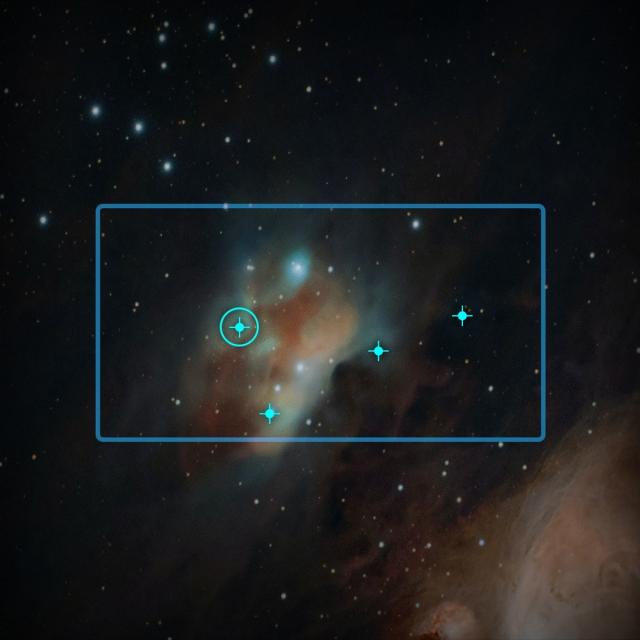
In the first course of the Computer Vision for Engineering and Science specialization, you’ll be introduced to computer vision. You'll learn and use the most common algorithms for feature detection, extraction, and matching to align satellite images and stitch images together to create a single image of a larger scene.

Class Deals by MOOC List - Click here and see Coursera's Active Discounts, Deals, and Promo Codes.

Features are used in applications like motion estimation, object tracking, and machine learning. You’ll use features to estimate geometric transformations between images and perform image registration. Registration is important whenever you need to compare images of the same scene taken at different times or combine images acquired from different scientific instruments, as is common with hyperspectral and medical images.
You will use MATLAB throughout this course. MATLAB is the go-to choice for millions of people working in engineering and science, and provides the capabilities you need to accomplish your computer vision tasks. You will be provided free access to MATLAB for the course duration to complete your work.
To be successful in this course, it will help to have some prior image processing experience. If you are new to image data, it’s recommended to first complete the Image Processing for Engineering and Science specialization.
This course is part of the following programs:

What you'll learn

  • Use common algorithms for feature detection, extraction, & matching
  • Perform image registration by identifying control points & estimating geometric transformations
  • Complete a final project where you stitch together images from NASA’s Mars Curiosity Rover
  • Combine images with image stitching to create panorama images

Syllabus

WEEK 1: Introduction to Features
WEEK 2: Working With Features
WEEK 3: Image Registration
WEEK 4: Image Stitching
Go to Class
MOOC List is learner-supported. When you buy through links on our site, we may earn an affiliate commission.

Related Courses

Introduction to Programming with MATLAB (Coursera) Coursera
Vanderbilt University

Introduction to Programming with MATLAB (Coursera)

This course teaches computer programming to those with little to no previous experience. It uses the programming system and language called MATLAB to do so because it is easy to learn, versatile and very useful for engineers and other professionals. MATLAB is a special-purpose language that is an excellent choice for writing moderate-size programs that solve problems involving the manipulation of numbers.

Sep 28th 2026
5-12 Weeks
Visual Perception for Self-Driving Cars (Coursera) Coursera
University of Toronto

Visual Perception for Self-Driving Cars (Coursera)

Welcome to Visual Perception for Self-Driving Cars, the third course in University of Toronto’s Self-Driving Cars Specialization. This course will introduce you to the main perception tasks in autonomous driving, static and dynamic object detection, and will survey common computer vision methods for robotic perception. By the end of this course, you will be able to work with the pinhole camera model, perform intrinsic and extrinsic camera calibration, detect, describe and match image features and design your own convolutional neural networks.

Sep 21st 2026
5-12 Weeks
Computational Neuroscience (Coursera) Coursera
University of Washington

Computational Neuroscience (Coursera)

This course provides an introduction to basic computational methods for understanding what nervous systems do and for determining how they function. We will explore the computational principles governing various aspects of vision, sensory-motor control, learning, and memory. Specific topics that will be covered include representation of information by spiking neurons, processing of information in neural networks, and algorithms for adaptation and learning.

Oct 12th 2026
5-12 Weeks
Deep Learning Applications for Computer Vision (Coursera) Coursera
University of Colorado Boulder

Deep Learning Applications for Computer Vision (Coursera)

This course can be taken for academic credit as part of CU Boulder’s Master of Science in Data Science (MS-DS) degree offered on the Coursera platform. The MS-DS is an interdisciplinary degree that brings together faculty from CU Boulder’s departments of Applied Mathematics, Computer Science, Information Science, and others. With performance-based admissions and no application process, the MS-DS is ideal for individuals with a broad range of undergraduate education and/or professional experience in computer science, information science, mathematics, and statistics.

Oct 12th 2026
5-12 Weeks
Internet of Things: Multimedia Technologies (Coursera) Coursera
University of California, San Diego

Internet of Things: Multimedia Technologies (Coursera)

Content is an eminent example of the features that contributed to the success of wireless Internet. Mobile platforms such as the Snapdragon™ processor have special hardware and software capabilities to make acquisition, processing and rendering of multimedia content efficient and cost-effective.

Oct 12th 2026
3 Weeks
Object Localization with TensorFlow (Coursera) Coursera
Coursera Project Network

Object Localization with TensorFlow (Coursera)

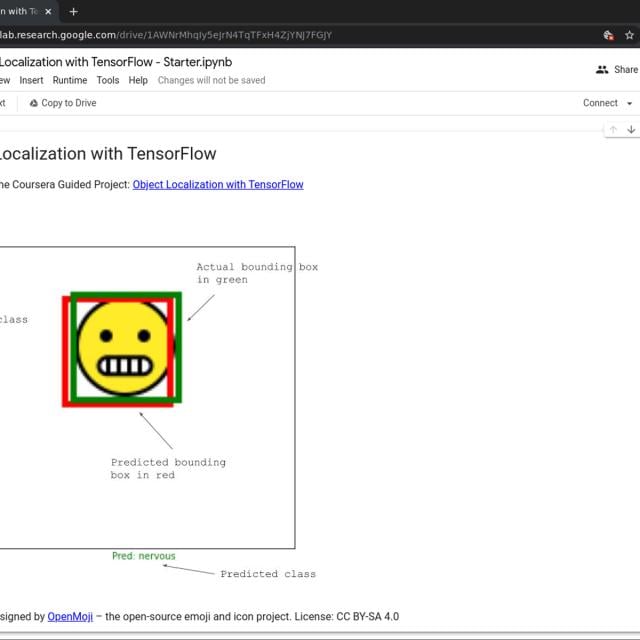
Welcome to this 2 hour long guided project on creating and training an Object Localization model with TensorFlow. In this guided project, we are going to use TensorFlow's Keras API to create a convolutional neural network which will be trained to classify as well as localize emojis in images. Localization, in this context, means the position of the emojis in the images. This means that the network will have one input and two outputs.

Sep 21st 2026
Self-Paced
Image and video processing: From Mars to Hollywood with a stop at the hospital (Coursera) Coursera
Duke University

Image and video processing: From Mars to Hollywood with a stop at the hospital (Coursera)

In this course, you will learn the science behind how digital images and video are made, altered, stored, and used. We will look at the vast world of digital imaging, from how computers and digital cameras form images to how digital special effects are used in Hollywood movies to how the Mars Rover was able to send photographs across millions of miles of space.

Oct 5th 2026
5-12 Weeks
Mastering Programming with MATLAB (Coursera) Coursera
Vanderbilt University

Mastering Programming with MATLAB (Coursera)

The course builds on the foundation laid by the first course of the Specialization called “Introduction to Programming with MATLAB.” It covers more advanced programming concepts such as recursion, vectorization, function handles, algorithm efficiency and others. At the same time, it presents many features that make MATLAB a powerful programming environment for engineering and scientific computing, such as its support for object oriented programming, the new user interface design environment and Live Scripts.

Sep 28th 2026
5-12 Weeks
Exploratory Data Analysis with MATLAB (Coursera) Coursera
MathWorks

Exploratory Data Analysis with MATLAB (Coursera)

In this course, you will learn to think like a data scientist and ask questions of your data. You will use interactive features in MATLAB to extract subsets of data and to compute statistics on groups of related data. You will learn to use MATLAB to automatically generate code so you can learn syntax as you explore. You will also use interactive documents, called live scripts, to capture the steps of your analysis, communicate the results, and provide interactive controls allowing others to experiment by selecting groups of data.

Sep 21st 2026
5-12 Weeks
Data Analysis and Visualization (Coursera) Coursera
University at Buffalo,The State University of New York

Data Analysis and Visualization (Coursera)

By the end of this course, learners are provided a high-level overview of data analysis and visualization tools, and are prepared to discuss best practices and develop an ensuing action plan that addresses key discoveries. It begins with common hurdles that obstruct adoption of a data-driven culture before introducing data analysis tools (R software, Minitab, MATLAB, and Python). Deeper examination is spent on statistical process control (SPC), which is a method for studying variation over time. The course also addresses do’s and don’ts of presenting data visually, visualization software (Tableau, Excel, Power BI), and creating a data story.

Sep 28th 2026
4 Weeks