EdX

Introduction to Cognitive Psychology and Neuropsychology (edX)

Introduction to Cognitive Psychology and Neuropsychology (edX)

This course is an introduction to human cognition and how it is explored. You will explore how Psychology was born as a separate discipline and how we began to study the nervous system in terms of functions, abilities and traits linking brain, mind, behavior and relationship with the environment. With this course we will also explore the main cognitive functions, such as memory, language, attention and perception and look at how they are investigated.

Class Deals by MOOC List - Click here and see EdX's Active Discounts, Deals, and Promo Codes.

Psychology is the study of how we feel, see, hear, speak, learn and narrate our story in the world. Cognitive psychologists primarily focus on how our mind works and how it develops from the moment we are born and through childhood to reach its full capability. This course is intended for anyone with an interest in Psychology, it does not require any previous expertise or knowledge of the subject.
Learners will explore the key ideas, models and findings of the main cognitive functions, including memory, language, attention and perception.
The course will also provide insights into the core research methods used to study the mind, brain and behaviour (from behavioural experiments to the study of patients with brain damage, and the use of neuroimaging techniques). In doing so, learners will understand the main methods and materials used to explore human feelings, sensations and thinking as well as the way humans learn and interact with their own selves and others.
This course will give learners an understanding of the historical development of modern Psychology, and a familiarity with what we now know about our own mind-body system through an exciting journey inside our mind and how it evolves throughout our lives with the help of brain plasticity.

What you'll learn

  • An introduction to the history and key debates in Psychology and Neuropsychology exploring the main different cognitive functions and how they interact with one another.
  • The key techniques and methods to study the mind.
  • The main theories, models and concepts of attention, memory, language, perception and emotional processing

Syllabus

Unit 1: What is Cognitive Psychology: history and current core debates

  • To learn about the key findings and assumptions of Cognitive Psychology.
  • To familiarise learners with some of the central debates in Cognitive Psychology.
  • To understand the relationship between the mind and the brain, as well as the role of genes and experience in shaping human behaviour.

Unit 2: How do we measure the mind? Introduction to Psychology’s main research methods

  • To provide an understanding of the main methods in Cognitive Psychology.
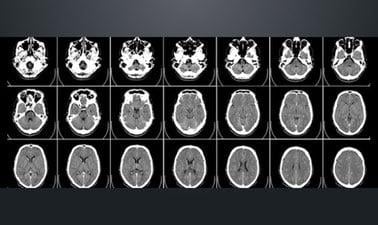
  • To learn about neuroimaging techniques and neuropsychological findings and how they contribute to our knowledge of the human brain.
  • To develop a critical approach to methods and how each of them helps answer specific research questions

Unit 3: Introduction to the psychology of human language

  • To learn the main theories and models related to human language acquisition and to critically evaluate the extent to which empirical studies support different theoretical claims
  • To understand the main models accounting for the development of different components of language.
  • To develop a critical approach to theories highlighting the crucial role of learning context during language acquisition (shared attentional orienting).

Unit 4: Introduction to memory, perception and cross-modal interactions

  • To learn the main ideas and models of working memory and its role in relation with short- and long-term memory.
  • To understand how language and memory interact with perception to facilitate aspects of our daily life.
  • To develop a critical approach to the modular understanding of the mind and appreciate how sensory modalities greatly influence each other.

Unit 5: Introduction to attention, consciousness and free will

  • To learn the psychological concept of attention and how it shapes thinking.
  • To understand the contribution of neuropsychology to our understanding of human attention.
  • To develop a critical approach to literature on the relationship between attention and consciousness.

Go to Class
MOOC List is learner-supported. When you buy through links on our site, we may earn an affiliate commission.

Related Courses

Autonomous Mobile Robots (edX) EdX
ETH Zurich,ETHx

Autonomous Mobile Robots (edX)

Basic concepts and algorithms for locomotion, perception, and intelligent navigation. Robots are rapidly evolving from factory workhorses, which are physically bound to their work-cells, to increasingly complex machines capable of performing challenging tasks in our daily environment. The objective of this course is to provide the basic concepts and algorithms required to develop mobile robots that act autonomously in complex environments.

Self Paced
Self-Paced
Learning Through Cognitive Psychology (edX) EdX
American Psychological Association,APA

Learning Through Cognitive Psychology (edX)

Many people report engaging in study habits that are not very effective or very efficient. How do we know what strategies are best? Cognitive psychologists have been doing research to ask this very question for multiple decades. It turns out that many strategies that people use extensively are not the ones that cognitive psychology research shows to be the most effective or efficient for learning. In this course, you will learn how to apply research-based principles from cognitive psychology to become a more effective and efficient learner.

Self Paced
Self-Paced
La percepción del paisaje (edX) EdX
Universidad Autonoma de Madrid,UAMx

La percepción del paisaje (edX)

En este MOOC nos proponemos dos objetivos: recrear la historia del paisaje y percibirlo no sólo por la vista, sino por los cinco sentidos. De forma que veremos cómo se ha ido pasando de una percepción frontal del paisaje (la del caminante y el navegante), a una lateral (la de las ventanillas del ferrocarril) y a otra vertical (la de los submarinos y los satélites espaciales). Y desde la aparición de internet ha surgido otra dimensión: el paisaje virtual.

Self Paced
Self-Paced
Fundamentals of Neuroscience, Part 3: The Brain (edX) EdX
HarvardX,Harvard University

Fundamentals of Neuroscience, Part 3: The Brain (edX)

Discover what makes your brain tick in this third part of a four-part introductory series in Neuroscience. The human brain is a fantastically complex system, capable of transforming a torrent of incoming information into thought and action. In this course, we will look at how the various subsystems of the brain work together to enable us to survive and thrive in a changing world.

Self Paced
Self-Paced
Psychology of Personal Growth (edX) EdX
The Hong Kong University of Science and Technology - HKUST,HKUSTx

Psychology of Personal Growth (edX)

Learn to understand personal growth from a comparative perspective. Want to learn about how you become who you are, but not sure where to kick off that journey? This is a fantastic course for you. This course covers important factors influencing your growing up. We discuss personality and emotion, romantic and intimate relationships, as well as the interplay between culture and these factors on your personal growth journey.

Self Paced
Self-Paced
Psicologia dell'apprendimento (edX) EdX
University of Naples Federico II,FedericaX

Psicologia dell'apprendimento (edX)

Un’analisi delle diverse forme dell’apprendimento per comprendere come operiamo le nostre scelte, la natura profondamente esperienziale dei processi di apprendimento e lo stretto legame che questi hanno con il contesto in cui l’individuo è inserito.

Self Paced
Self-Paced
Organizational Change & Innovation (edX) EdX
University of Canterbury,UCx

Organizational Change & Innovation (edX)

Learn about the psychology and processes of organizational change, creativity, and innovation as part of the UCx Organizational Psychology MicroMasters. One thing is certain in today’s uncertain working world; the need to change and be innovative. People have different reactions to change in their organization, from firm resistance to enthusiastic engagement. Importantly, how people respond to change has a huge impact on organizational outcomes, and understanding these responses provides change leaders with an edge.

Self Paced
Self-Paced
Autism and Mental Health (edX) EdX
Curtin University,CurtinX

Autism and Mental Health (edX)

Learn to promote your own good mental health, celebrate individuality, strengths, and skills associated with autism, and recognise when you may need extra support. This course provides autistic people and those around them with the knowledge and skills to navigate the relationship between autism and positive mental health outcomes.

May 23rd 2023
4 Weeks
Introduction to Developmental Psychology (edX) EdX
University of Queensland,UQx

Introduction to Developmental Psychology (edX)

Learn how we develop over our lifetime, including our ability to think, communicate, and form social attachments. Have you ever wondered what babies are capable of from the moment they’re born? Developmental psychology is the study of an individual’s social, emotional, cognitive, and biological development through his or her lifespan. The focus of this course will be from infancy to later life.

Self Paced
Self-Paced
AP® Psychology - Course 3: How the Mind Works (edX) EdX
The University of British Columbia,UBCx

AP® Psychology - Course 3: How the Mind Works (edX)

Learn about the neuroscience and psychology of the mind including memory, thinking, reasoning, and language. In this psychology course, you will learn about the mind and the psychology of learning, including coverage of classical conditioning, operant conditioning, and social learning. We will look at the psychology and neuroscience of cognition — including memory, thinking and reasoning. The course will conclude with the coverage of language.

Self Paced
Self-Paced