FUN

Introduction aux méthodes d’évaluation d’impact des politiques publiques (FUN)

Introduction aux méthodes d’évaluation d’impact des politiques publiques (FUN)

Ce MOOC francophone présente les différentes méthodes d’évaluation d’impact des politiques publiques qui se sont développées de manière très significative au niveau académique au cours des 10 dernières années. Ces méthodes sont aujourd’hui mobilisées par de nombreuses institutions pour évaluer l’impact de politiques ou des projets qu’elles promeuvent et financent.

Dans un contexte marqué par une exigence croissante de rendre des comptes sur l’efficacité des dépenses publiques, il apparaît important de sensibiliser tant les décideurs politiques que les agents en charge de la mise en œuvre des politiques aux problèmes posés par la mesure de l’impact des politiques publiques et aux méthodes développées pour les résoudre. Ce besoin est manifeste dans les pays en développement où l'atteinte des Objectifs du Développement Durable (ODD) suppose de sensibiliser tant les experts nationaux et internationaux, acteurs des politiques publiques ou de l'aide internationale, ainsi que les chercheurs en économie ou en sciences sociales, aux techniques d'évaluation d’impact moderne et à leurs exigences.

Ce MOOC s’appuiera sur 6 modules constitués de séquences vidéos et de quiz qui présenteront les aspects techniques de mise en œuvre ainsi que les conditions de validité des différentes méthodes d’évaluation d’impact, tant expérimentales que non expérimentales.

Plan du cours

Le cours se déroule sur six semaines :
Semaine 1 : Le problème de l’évaluation d’impact
Semaine 2 : Les méthodes expérimentales (Randomized Controlled Trials)
Semaine 3 : Variables instrumentales
Semaine 4 : Régressions sur discontinuités
Semaine 5 : Double différence
Semaine 6 : Appariement


Go to Class
MOOC List is learner-supported. When you buy through links on our site, we may earn an affiliate commission.

Related Courses

Ciudades en crisis y nuevas políticas urbanas (Coursera) Coursera
Universitat Autònoma de Barcelona

Ciudades en crisis y nuevas políticas urbanas (Coursera)

Las ciudades se han convertido en un foco de interés preferente para el análisis de políticas públicas. Con una concentración de personas cada vez mayor viviendo en contextos urbanos, las ciudades son hoy el escenario de un apasionante cambio de época que afecta la esfera social, política, económica y tecnológica.

Sep 28th 2026
4 Weeks
Regression Models (Coursera) Coursera
Johns Hopkins University

Regression Models (Coursera)

Linear models, as their name implies, relates an outcome to a set of predictors of interest using linear assumptions. Regression models, a subset of linear models, are the most important statistical analysis tool in a data scientist’s toolkit. This course covers regression analysis, least squares and inference using regression models.

Sep 14th 2026
4 Weeks
Introductory Statistics : Analyzing Data Using Graphs and Statistics (edX) EdX
Seoul National University,SNUx

Introductory Statistics : Analyzing Data Using Graphs and Statistics (edX)

This course teaches basic statistical concepts and explores many compelling applications of statistical methods using real-life applications of Statistics. Why do we study statistics? The field of statistics provides professionals and scientists withconceptual foundations and useful techniques for evaluating ideas, testing theories, and - ultimately -uncovering the truth in any situation.

Self Paced
Self-Paced
Introduction to Randomised Controlled Trials (FutureLearn) FutureLearn
University of Birmingham

Introduction to Randomised Controlled Trials (FutureLearn)

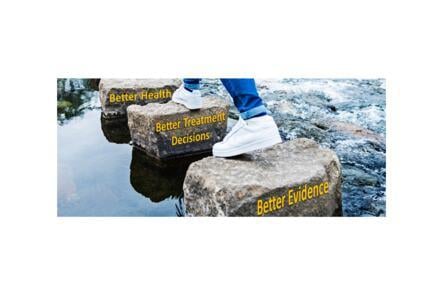
Discover the importance of trials in evidence-based medicine and learn about the trial lifecycle from conception to publication. Explore how successful clinical trials are designed and delivered Randomised controlled trials have a huge impact on society by providing evidence of the effectiveness of healthcare, social care, and public health interventions.

Self Paced
3 Weeks
Multilevel Modeling (Coursera) Coursera
Erasmus University Rotterdam

Multilevel Modeling (Coursera)

In this course, PhD candidates will get an introduction into the theory of multilevel modelling, focusing on two level multilevel models with a 'continuous' response variable. In addition, participants will learn how to run basic two-level model in R. The objective of this course is to get participants acquainted with multilevel models. These models are often used for the analysis of ‘hierarchical’ data, in which observations are nested within higher level units (e.g. repeated measures nested within individuals, or pupils nested within schools).

Sep 28th 2026
4 Weeks
Machine Learning with Python (Coursera) Coursera
IBM

Machine Learning with Python (Coursera)

This course dives into the basics of machine learning using an approachable, and well-known programming language, Python. In this course, we will be reviewing two main components: First, you will be learning about the purpose of Machine Learning and where it applies to the real world. Second, you will get a general overview of Machine Learning topics such as supervised vs unsupervised learning, model evaluation, and Machine Learning algorithms.

Sep 14th 2026
5-12 Weeks
Build Regression, Classification, and Clustering Models (Coursera) Coursera
CertNexus

Build Regression, Classification, and Clustering Models (Coursera)

In most cases, the ultimate goal of a machine learning project is to produce a model. Models make decisions, predictions—anything that can help the business understand itself, its customers, and its environment better than a human could. Models are constructed using algorithms, and in the world of machine learning, there are many different algorithms to choose from. You need to know how to select the best algorithm for a given job, and how to use that algorithm to produce a working model that provides value to the business. This third course within the Certified Artificial Intelligence Practitioner (CAIP) professional certificate introduces you to some of the major machine learning algorithms that are used to solve the two most common supervised problems: regression and classification, and one of the most common unsupervised problems: clustering.

Sep 21st 2026
5-12 Weeks
Foundations of Sports Analytics: Data, Representation, and Models in Sports (Coursera) Coursera
University of Michigan

Foundations of Sports Analytics: Data, Representation, and Models in Sports (Coursera)

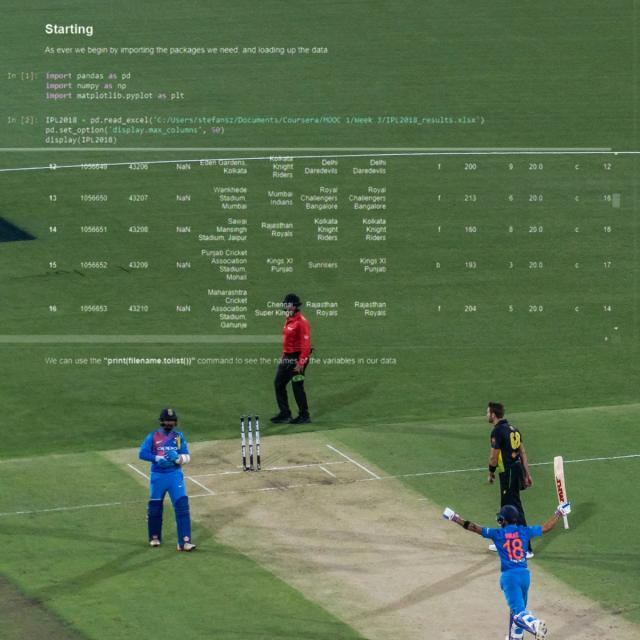
This course provides an introduction to using Python to analyze team performance in sports. Learners will discover a variety of techniques that can be used to represent sports data and how to extract narratives based on these analytical techniques. The main focus of the introduction will be on the use of regression analysis to analyze team and player performance data, using examples drawn from the National Football League (NFL), the National Basketball Association (NBA), the National Hockey League (NHL), the English Premier LEague (EPL, soccer) and the Indian Premier League (IPL, cricket).

Sep 14th 2026
5-12 Weeks
Machine Learning Foundations: A Case Study Approach (Coursera) Coursera
University of Washington

Machine Learning Foundations: A Case Study Approach (Coursera)

Do you have data and wonder what it can tell you? Do you need a deeper understanding of the core ways in which machine learning can improve your business? Do you want to be able to converse with specialists about anything from regression and classification to deep learning and recommender systems? In this course, you will get hands-on experience with machine learning from a series of practical case-studies.

Sep 14th 2026
5-12 Weeks
Using R for Regression and Machine Learning in Investment (Coursera) Coursera
Sungkyunkwan University - SKKU

Using R for Regression and Machine Learning in Investment (Coursera)

In this course, the instructor will discuss various uses of regression in investment problems, and she will extend the discussion to logistic, Lasso, and Ridge regressions. At the same time, the instructor will introduce various concepts of machine learning. You can consider this course as the first step toward using machine learning methodologies in solving investment problems. The course will cover investment analysis topics, but at the same time, make you practice it using R programming. This course's focus is to train you to use various regression methodologies for investment management that you might need to do in your job every day and make you ready for more advanced topics in machine learning.

Sep 21st 2026
2 Weeks