Intro to Backend (Udacity)

Offered by Udacity,
Intro to Backend (Udacity)

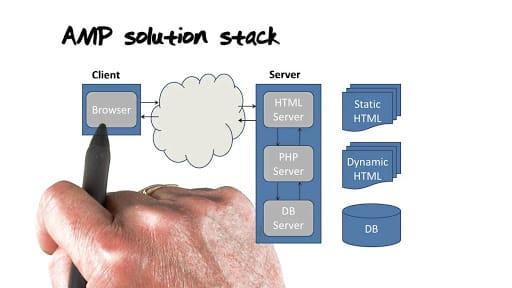
Starting Out with Web Serving Technology. This course is a selection of material from our larger Web Development course. This course presents an overview of a variety of Web backend topics: handling user input, producing templated output, storing information in databases and data stores, and building systems with secure user accounts.

Class Deals by MOOC List - Click here and see Udacity's Active Discounts, Deals, and Promo Codes.

You want to build Web services and want a place to start. This course gives you the foundational knowledge to do just that.

What you will learn

Forms and Inputs

  • How do web sites handle user input?
  • Build HTML forms and the validation and escaping logic needed to handle user input correctly.

Templates

  • How do web sites produce neatly formatted output for users to see?

Databases

  • How do web sites store data?
  • Use both SQL databases and the Google App Engine datastore in this program.

User Accounts & Security

  • What's a cookie and what does it have to do with logging in a user?
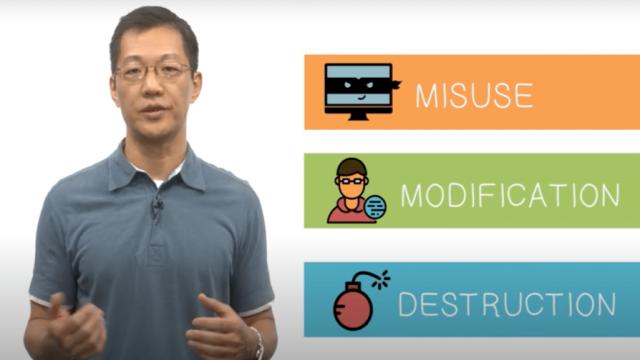
  • How do web sites use cookies, passwords, and other components to provide security?

Prerequisites and requirements
You have a basic working knowledge of the Python programming language, which will be used in this course.
If you're looking to learn or refresh your knowledge of Python and programming, take a look at our courses Introduction to Computer Science and Programming Foundations with Python.


Go to Class
MOOC List is learner-supported. When you buy through links on our site, we may earn an affiliate commission.

Related Courses

Intro to Relational Databases (Udacity) Udacity
Udacity

Intro to Relational Databases (Udacity)

SQL, DB-API, and More! This course is a quick, fun introduction to using a relational database from your code, using examples in Python. You'll learn the basics of SQL (the Structured Query Language) and database design, as well as the Python API for connecting Python code to a database. You'll also learn a bit about protecting your database-backed web apps from common security problems. After taking this course, you'll be able to write code using a database as a backend to store application data reliably and safely.

Self Paced
Self-Paced
Introduction to MongoDB (Coursera) Coursera
MongoDB University

Introduction to MongoDB (Coursera)

"Introduction to MongoDB" guides you through the foundational skills and knowledge you need to get started with MongoDB. Get an introduction to MongoDB Atlas, the developer data platform, and how to create and deploy an Atlas cluster. Discover how MongoDB structures data in documents similar to JSON objects, making it flexible and developer friendly.

Aug 17th 2026
4 Weeks
Tencent Cloud Solutions Architect Associate (Coursera) Coursera
Tencent Cloud

Tencent Cloud Solutions Architect Associate (Coursera)

This course is primarily aimed at cloud professionals that are interested in learning about Tencent Cloud‘s cloud architectures. The course equips learners with a foundational knowledge in cloud architecture design and prepares them to take the Tencent Cloud Solutions Architect Associate examination. After completing this course, learners will be able to design cloud solutions that incorporate the principles of high availability, high security, high scalability, and cost optimization.

Aug 17th 2026
5-12 Weeks
Computing for Data Analysis (edX) EdX
Georgia Institute of Technology,GTx

Computing for Data Analysis (edX)

A hands-on introduction to basic programming principles and practice relevant to modern data analysis, data mining, and machine learning. The modern data analysis pipeline involves collection, preprocessing, storage, analysis, and interactive visualization of data. In the course, you’ll see how computing and mathematics come together.

Aug 24th 2026
13-24 Weeks
Cybersecurity Risk Management (edX) EdX
Rochester Institute of Technology,RITx

Cybersecurity Risk Management (edX)

Learn key principles of risk analysis, risk assessment and risk mitigation for information security using both qualitative and quantitative methodologies. Cybersecurity risk management guides a growing number of IT decisions. Cybersecurity risks continue to have critical impacts on overall IT risk modeling, assessment and mitigation.

Aug 17th 2026
5-12 Weeks
WeChat Mini Program Development (Udacity) Udacity
Udacity

WeChat Mini Program Development (Udacity)

Build your first Mini Program with Tencent WeChat. WeChat Mini Programs are “sub-applications” within the WeChat ecosystem; you can find and use any Mini Program instantly without needing to install anything from the App Store. With more than one billion active daily users globally, it’s almost impossible to overestimate WeChat’s importance, and the potential reach of a Mini Program of your design! This program is built in collaboration with Tencent WeChat and leading industry professionals who have developed a world-class curriculum. In this course, students will learn about data queries, parsing, Mini Program interfaces, and then go on to complete their very first Mini Program all within 4 weeks.

Self Paced
Self-Paced
C++ For Programmers (Udacity) Udacity
Udacity

C++ For Programmers (Udacity)

Learn features and constructs for C++. C++ for Programmers is designed for students who are familiar with a programming language and wish to learn C++. This course focuses on 'how' as opposed to 'what'. For example, in the lesson on functions, we do not teach what a function is, but rather how to create a function in C++. The lessons are taught by several different instructors who have used C++ in their professional careers, so students get to experience different perspectives.

Self Paced
Self-Paced
Big Data Analysis with Scala and Spark (Scala 2 version) (Coursera) Coursera
École Polytechnique Fédérale de Lausanne

Big Data Analysis with Scala and Spark (Scala 2 version) (Coursera)

Manipulating big data distributed over a cluster using functional concepts is rampant in industry, and is arguably one of the first widespread industrial uses of functional ideas. This is evidenced by the popularity of MapReduce and Hadoop, and most recently Apache Spark, a fast, in-memory distributed collections framework written in Scala. In this course, we'll see how the data parallel paradigm can be extended to the distributed case, using Spark throughout.

Aug 17th 2026
4 Weeks