Database Systems Concepts & Design (Udacity)

Database Systems Concepts & Design (Udacity)

This course presents an example of applying a database application development methodology to a major real-world project.

Class Deals by MOOC List - Click here and see Udacity's Active Discounts, Deals, and Promo Codes.

At the end of this course the learner will:
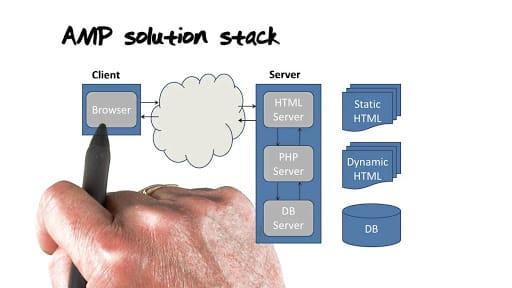
• Understand and apply the concepts of data independence, database and database management system architecture, and the role and placement of a database management system the application stack
• Understand and apply the theoretical foundation of relational databases and query languages to create SQL data structure definitions and queries that meet identified requirements
• Create a relational database application, including the requirement analysis, specification, design and implementation of relational database applications
• Evaluate alternative internal schema structures and create indices for efficient database operation
• Understand the concepts of database access control and SQL injection

What You Will Learn

Lesson 1
Database Concepts

  • Database ConceptsTechniques and tools needed to develop database applications.
  • Database application development methodologies.

Lesson 2
Database Models

  • Extended Entity Relationship Models.
  • Relational Models.
  • Relational Algebra
  • Calculus and SQL.

Lesson 3
Database Management

  • Database normalization.
  • Database efficiency and indexing
  • Metadata management and archiving.

Prerequisites and Requirements
Learners should be familiar with at least one scripting or programming language, e.g. PHP, Python, Java. Some familiarity with software engineering concepts would be helpful. Flexibility to work remotely with team members.
Required text:
Elmasri & Navathe: Fundamentals of Database Systems. 7th Edition. Pearson 2016.Additional course material will be available online.
Additional Resources: WAMP installation guide, and more will be posted online.

Go to Class
MOOC List is learner-supported. When you buy through links on our site, we may earn an affiliate commission.

Related Courses

Database Design and Basic SQL in PostgreSQL (Coursera) Coursera
University of Michigan

Database Design and Basic SQL in PostgreSQL (Coursera)

In this course you will learn more about the historical design of databases and the use of SQL in the PostgreSQL environment. Using SQL techniques and common commands (INSERT INTO, WHERE, ORDER BY, ON DELETE CASCADE, etc) will enable you to create tables, column types and define the schema of your data in PostgreSQL. You will learn about data modeling and how to represent one-to-many and many-to-many relationships in PostgreSQL.

Sep 28th 2026
Self-Paced
Intro to Relational Databases (Udacity) Udacity
Udacity

Intro to Relational Databases (Udacity)

SQL, DB-API, and More! This course is a quick, fun introduction to using a relational database from your code, using examples in Python. You'll learn the basics of SQL (the Structured Query Language) and database design, as well as the Python API for connecting Python code to a database. You'll also learn a bit about protecting your database-backed web apps from common security problems. After taking this course, you'll be able to write code using a database as a backend to store application data reliably and safely.

Self Paced
Self-Paced
Intro to Backend (Udacity) Udacity
Udacity

Intro to Backend (Udacity)

Starting Out with Web Serving Technology. This course is a selection of material from our larger Web Development course. This course presents an overview of a variety of Web backend topics: handling user input, producing templated output, storing information in databases and data stores, and building systems with secure user accounts.

Self Paced
Self-Paced
Using Databases with Python (Coursera) Coursera
University of Michigan

Using Databases with Python (Coursera)

This course will introduce students to the basics of the Structured Query Language (SQL) as well as basic database design for storing data as part of a multi-step data gathering, analysis, and processing effort. The course will use SQLite3 as its database. We will also build web crawlers and multi-step data gathering and visualization processes. We will use the D3.js library to do basic data visualization.

Sep 28th 2026
5-12 Weeks
SQL for Security Specialist (Coursera) Coursera
Codio

SQL for Security Specialist (Coursera)

This course is designed specifically for SQL Security Specialists with a focus on PostgreSQL. It assumes a solid foundation in SQL and guides learners through advanced topics specific to PostgreSQL. You'll explore crucial concepts, such as complex queries, performance optimization, and database administration tasks unique to PostgreSQL.

Oct 12th 2026
3 Weeks
Building Database Applications in PHP (Coursera) Coursera
University of Michigan

Building Database Applications in PHP (Coursera)

In this course, we'll look at the object oriented patterns available in PHP. You'll learn how to connect to a MySQL using the Portable Data Objects (PDO) library and issue SQL commands in the the PHP language. We'll also look at how PHP uses cookies and manages session data. You'll learn how PHP avoids double posting data, how flash messages are implemented, and how to use a session to log in users in web applications.

Sep 28th 2026
5-12 Weeks
Data Manipulation at Scale: Systems and Algorithms (Coursera) Coursera
University of Washington

Data Manipulation at Scale: Systems and Algorithms (Coursera)

Data analysis has replaced data acquisition as the bottleneck to evidence-based decision making --- we are drowning in it. Extracting knowledge from large, heterogeneous, and noisy datasets requires not only powerful computing resources, but the programming abstractions to use them effectively. The abstractions that emerged in the last decade blend ideas from parallel databases, distributed systems, and programming languages to create a new class of scalable data analytics platforms that form the foundation for data science at realistic scales.

Sep 28th 2026
4 Weeks
Web Application Development: Basic Concepts (Coursera) Coursera
University of New Mexico

Web Application Development: Basic Concepts (Coursera)

This is the first course in a Coursera Specialization track involving Web Application Architectures. This course will give you the basic background, terminology and fundamental concepts that you need to understand in order to build modern full stack web applications. A full stack web developer is familiar with each "layer" of the software technologies involved in a web application, including data modeling and database technologies, the web server environment and middleware components, network protocols, the user interface and basic visual design and user interaction concepts.

Oct 12th 2026
5-12 Weeks