Introduction to Software, Programming, and Databases (Coursera)

Offered by IBM,
Introduction to Software, Programming, and Databases (Coursera)

There are many types of software and understanding software can be overwhelming. This course aims to help you understand more about the types of software and how to manage software from an information technology (IT) perspective. This course will help you understand the basics of software, cloud computing, web browsers, development and concepts of software, programming languages, and database basics.

Class Deals by MOOC List - Click here and see Coursera's Active Discounts, Deals, and Promo Codes.

After completing this course, you will have a better understanding of software processes, and you'll be more confident in your understanding of using and securing your applications.
In this course, you'll learn about software that ranges from the operating system running on your mobile phone to the applications that run databases on your computer at work. You'll also begin to understand more about installing and managing web browsers, using extensions and plug-ins, and keeping web browsers secure and updated.
Additionally, you'll see how cloud-based technologies can help businesses create and deploy applications more quickly. This course will also teach you about the development and delivery of software and applications. By the end of the course, you'll understand simple programming concepts and types, and you'll become more familiar with the fundamentals of database management.
Course 2 of 5 in the Information Technology (IT) and Cloud Fundamentals Specialization.

What You Will Learn

  • Identify types of software, software applications, and software management.
  • Discuss cloud computing and web browser concepts.
  • Explain software development models, techniques, and concepts.
  • Describe fundamental concepts in database management.

Syllabus

WEEK 1
Computing Platforms and Software Applications
Do you know which computing platform is on your device? Are you using the right software for the task you're tackling? Are your software versions updated? This course will help you answer these questions by giving you a better understanding of the essentials of software and by showing you how to effectively manage programs and applications.
In this module, you will learn about computing platforms, single- and cross-platform software, compatibility across platforms, and software versioning. You will learn about the differences between commercial and open source software, while also learning about different types of software and file formats.

WEEK 2
Fundamentals of Web Browsers, Applications, and Cloud Computing
Do you know which web browser to use and how to configure it to work best for you? Is your web browser as secure as it might be, and do you need to use browser extensions or plug-ins? Do you want to know what the cloud is really all about, and do you understand how applications that you develop might be used and deployed by your users?
This week, you will learn about common web browsers and browser settings, browser security, and browser extensions and plug-ins. You will learn about cloud computing, and you will also learn about application architecture models, application delivery methods, and the software development lifecycle (or SDLC).

WEEK 3
Basics of Programming
Understanding programming basics and the software development cycle is a crucial part of working with the software. Software developers must know how to code and understand how to identify and fix software problems. When writing code, software creators need to select the right data types, choose the best programming language for the software, and organize code most effectively.
This week, you will learn about basic programming concepts and programming language categories. You will learn about programming logic components and organizational techniques.

WEEK 4
Database Fundamentals
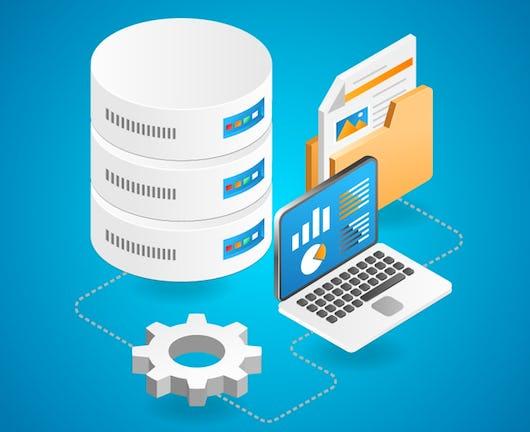
This week you will learn about database fundamentals. During this module, you will learn about the different types of databases as well as the basics concepts of what makes a database a database. Next, you will be taught how to use and manage a database. Finally, you will learn how to interface with a database and know how and why backing up a database is important.

WEEK 5
Final Quiz
In this module, you’ll assess your course knowledge through a final quiz based on the previous four modules.

Go to Class
MOOC List is learner-supported. When you buy through links on our site, we may earn an affiliate commission.

Related Courses

Laboratório de Programação Orientada a Objetos - Parte 2 (Coursera) Coursera
Universidade de São Paulo, Brasil

Laboratório de Programação Orientada a Objetos - Parte 2 (Coursera)

Esta é a segunda parte do curso avançado de Programação Orientada a Objetos oferecido pelo Departamento de Ciência da Computação do IME-USP. O curso é voltado para profissionais ou estudantes interessados em Desenvolvimento de Software Avançado e que já dominam uma linguagem de programação e já conhecem os fundamentos básicos da orientação a objetos.

Aug 17th 2026
5-12 Weeks
Programming and Application Foundations (Coursera) Coursera
Illinois Tech

Programming and Application Foundations (Coursera)

This course introduces the students to the creation and deployment of modern, standards-compliant web pages written in HTML, CSS, and JavaScript in the context of the client-server architecture of the web. The course also covers the fundamentals of programming in a modern programming language, basic data modeling, database design, implementation, and administration of single-user and shared multi-user database applications using a contemporary relational database management system.

Aug 17th 2026
5-12 Weeks
Applied Text Mining in Python (Coursera) Coursera
University of Michigan

Applied Text Mining in Python (Coursera)

This course will introduce the learner to text mining and text manipulation basics. The course begins with an understanding of how text is handled by python, the structure of text both to the machine and to humans, and an overview of the nltk framework for manipulating text. The second week focuses on common manipulation needs, including regular expressions (searching for text), cleaning text, and preparing text for use by machine learning processes. The third week will apply basic natural language processing methods to text, and demonstrate how text classification is accomplished. The final week will explore more advanced methods for detecting the topics in documents and grouping them by similarity (topic modelling).

Aug 17th 2026
4 Weeks
Amazon Aurora Service Introduction (Coursera) Coursera
Edureka

Amazon Aurora Service Introduction (Coursera)

Welcome to the Amazon Aurora Service Introduction course, where you'll embark on a journey to acquire practical expertise in Aurora databases and harness the power of Amazon Web Services (AWS) for efficient data management. Throughout this short course, you'll explore the industry-specific applications of Aurora and delve into database fundamentals.

Aug 17th 2026
1 Week
Big Data Analysis with Scala and Spark (Coursera) Coursera
École Polytechnique Fédérale de Lausanne

Big Data Analysis with Scala and Spark (Coursera)

Manipulating big data distributed over a cluster using functional concepts is rampant in industry, and is arguably one of the first widespread industrial uses of functional ideas. This is evidenced by the popularity of MapReduce and Hadoop, and most recently Apache Spark, a fast, in-memory distributed collections framework written in Scala. In this course, we'll see how the data parallel paradigm can be extended to the distributed case, using Spark throughout.

Aug 17th 2026
4 Weeks
Uso de bases de datos con Python (Coursera) Coursera
University of Michigan

Uso de bases de datos con Python (Coursera)

Este curso presentará a los estudiantes los conceptos básicos del lenguaje de consulta estructurado (Structured Query Language, SQL), así como el diseño básico de bases de datos para almacenar datos como parte de una iniciativa de varios pasos para recopilar, analizar y procesar datos. El curso utilizará SQLite3 como base de datos. También crearemos rastreadores web y procesos de visualización y recopilación de datos de varios pasos. Utilizaremos la biblioteca D3.js para realizar la visualización básica de datos.

Aug 17th 2026
5-12 Weeks
Problem Solving Using Computational Thinking (Coursera) Coursera
University of Michigan

Problem Solving Using Computational Thinking (Coursera)

Have you ever heard that computers "think"? Believe it or not, computers really do not think. Instead, they do exactly what we tell them to do. Programming is, "telling the computer what to do and how to do it." Before you can think about programming a computer, you need to work out exactly what it is you want to tell the computer to do. Thinking through problems this way is Computational Thinking. Computational Thinking allows us to take complex problems, understand what the problem is, and develop solutions. We can present these solutions in a way that both computers and people can understand.

Aug 17th 2026
5-12 Weeks
Basic Modeling for Discrete Optimization (Coursera) Coursera
University of Melbourne,The Chinese University of Hong Kong

Basic Modeling for Discrete Optimization (Coursera)

Optimization is a common form of decision making, and is ubiquitous in our society. Its applications range from solving Sudoku puzzles to arranging seating in a wedding banquet. The same technology can schedule planes and their crews, coordinate the production of steel, and organize the transportation of iron ore from the mines to the ports. Good decisions in manpower and material resources management also allow corporations to improve profit by millions of dollars.

Aug 17th 2026
4 Weeks
Tencent Cloud Solutions Architect Associate (Coursera) Coursera
Tencent Cloud

Tencent Cloud Solutions Architect Associate (Coursera)

This course is primarily aimed at cloud professionals that are interested in learning about Tencent Cloud‘s cloud architectures. The course equips learners with a foundational knowledge in cloud architecture design and prepares them to take the Tencent Cloud Solutions Architect Associate examination. After completing this course, learners will be able to design cloud solutions that incorporate the principles of high availability, high security, high scalability, and cost optimization.

Aug 17th 2026
5-12 Weeks