EdX

Industria 4.0: fundamentos y alcances en el sistema eléctrico (edX)

Industria 4.0: fundamentos y alcances en el sistema eléctrico (edX)

En este curso en línea estudiarás las nuevas tecnologías emergentes rectoras de la Cuarta Revolución Industrial y las arquitecturas propuestas que benefician en términos operativos y económicos a las empresas y al sector eléctrico. Crecer en un contexto económico capitalista es producir más bienes y servicios. Esto significa generar más riqueza, la cual crea mayor cantidad de empleos, prosperidad y calidad de vida en las sociedades.

Class Deals by MOOC List - Click here and see EdX's Active Discounts, Deals, and Promo Codes.

Contar con mayor riqueza suele darles más bienestar a las sociedades de los países que logran generarla; por ello los países con un PIB (Producto Interno Bruto) superior suelen tener más peso en el mundo y los países con menor PIB están ligados con los indicadores de desarrollo humano más bajos.
Algunos países como Alemania lanzaron desde hace una década estrategias como la “Industrie 4.0” para lograr una posición de liderazgo en el mundo, Japón con el “National Network for Manufacturing Innovation”, China con “Made in China 2025”, lo mismo otras naciones como EUA, Corea del Sur y Taiwán. Todas estas estrategias encaminadas a elevar la productividad y mantener una posición de ventaja en el mercado mundial para generar más riquezas y beneficios a sus países.
Todas estas estrategias están encaminadas a elevar la productividad y mantener una posición de ventaja en el mercado mundial; asimismo, dichas estrategias se conforman de diversos principios rectores para hacer más eficientes y flexibles los procesos de producción de las empresas tomando ventaja de los últimos avances tecnológicos.
Hoy en día, las economías emergentes se encuentran ante la disyuntiva de seguir basando sus sistemas de producción en una mano de obra barata y en el futuro ser engullidas por las empresas pertenecientes a la llamada Cuarta Revolución Industrial, o bien, invertir en tecnología y la generación de capital humano para modernizar los procesos productivos y con ello seguir siendo competitivos en el futuro.
Por esta razón, vale la pena inspeccionar este curso de ingeniería y conocer que es la “Industria 4.0”, reflexionar si realmente nos encontramos viviendo la Cuarta Revolución Industrial, y darle respuesta a las siguientes preguntas ¿La Industria 4.0 es un neologismo de moda? ¿Cuáles son los cambios necesarios para mantenerse avante en esta nueva revolución? ¿Qué son los sistemas ciberfísicos?

What you'll learn

  • Identificar los procesos transformadores de la Cuarta Revolución Industrial
  • Conocer los principios teóricos de la arquitectura en la industria 3.0 y 4.0
  • Identificar situaciones de argucia con términos como industria 4.0 para la promoción de productos
  • Examinar las tecnologías convergentes en la industria 4.0Reconocer las nuevas transformaciones en el sector eléctrico

Syllabus

Tema 1. La industria 4.0

  1. La Industria 4.0 y su contexto histórico. Parte 1
  2. La Industria 4.0 y su contexto histórico. Parte 2
  3. Arquitectura de la Industria 3.0 y la Industria 4.0. Parte 1
  4. Arquitectura de la Industria 3.0 y la Industria 4.0. Parte 2

Tema 2. Inteligencia artificial de las cosas

  1. Inteligencia artificial.
  2. Inteligencia artificial y su uso.
  3. Sistemas ciberfísicos.
  4. Sistemas ciberfísicos y su relación con la inteligencia artificial.

Tema 3. Las nuevas demandas del sector eléctrico

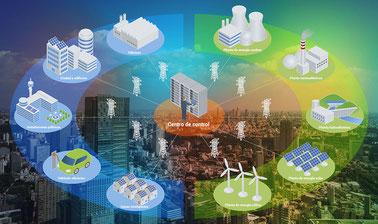
  1. Esquema tradicional del sistema eléctrico.
  2. Sistemas de generación distribuidos.
  3. Redes eléctricas inteligentes y la aplicación de sistemas ciberfísicos y la Industria 4.0.

Go to Class
MOOC List is learner-supported. When you buy through links on our site, we may earn an affiliate commission.

Related Courses

Essentials of Genomics and Biomedical Informatics (edX) EdX
IsraelX

Essentials of Genomics and Biomedical Informatics (edX)

This course presents clinicians and digital health enthusiasts with an overview of the data revolution in medicine and how to exploit it for research and in the clinic. The course will not make you a bioinformatician but will introduce the main concepts, tools, algorithms, and databases in this field.

No sessions available
5-12 Weeks
Introduction to Watson AI (edX) EdX
IBM

Introduction to Watson AI (edX)

Learn how to quickly and easily get started with Artificial Intelligence using IBM Watson. In this course, you will learn how to quickly and easily get started with Artificial Intelligence using IBM Watson. You will understand how Watson works, become familiar with its use cases and real-life client examples, and be introduced to several Watson AI services from IBM that enable anyone to easily apply AI and build smart apps.

Self Paced
Self-Paced
Understanding Artificial Intelligence through Algorithmic Information Theory (edX) EdX
Institut Mines-Telecom,IMTx

Understanding Artificial Intelligence through Algorithmic Information Theory (edX)

Can we characterize intelligent behavior? Are there theoretical foundations on which Artificial Intelligence can be grounded? This course on Algorithmic Information will offer you such a theoretical framework. You will be able to see machine learning, reasoning, mathematics, and even human intelligence as abstract computations aiming at compressing information. This new power of yours will not only help you understand what AI does (or can’t do!) but also serve as a guide to design AI systems.

Self Paced
Self-Paced
Artificial Intelligence (AI) (edX) EdX
Columbia University,ColumbiaX

Artificial Intelligence (AI) (edX)

Learn the fundamentals of Artificial Intelligence (AI), and apply them. Design intelligent agents to solve real-world problems including, search, games, machine learning, logic, and constraint satisfaction problems. What do self-driving cars, face recognition, web search, industrial robots, missile guidance, and tumor detection have in common? They are all complex real world problems being solved with applications of intelligence (AI).

This course is archived
5-12 Weeks
Electricity and Magnetism: Maxwell’s Equations (edX) EdX
MIT,MITx

Electricity and Magnetism: Maxwell’s Equations (edX)

In this final part of 8.02, we will cover Faraday’s Law, Circuits with Inductors, Maxwell’s equations, and electromagnetic radiation. This introductory Electromagnetism physics course will require the use of calculus. Electricity and Magnetism dominate much of the world around us – from the most fundamental processes in nature to cutting edge electronic devices.

Self Paced
Self-Paced
Foundations of Data Science (edX) EdX
Indian Institute of Management, Bangalore,IIMBx

Foundations of Data Science (edX)

Learn the fundamental concepts in probability, statistics, optimization and linear algebra which form the foundations for data science. Data Science along with artificial intelligence (AI) and its various components such as statistical learning (SL), machine learning (ML) and deep learning algorithms (DL) are recognized as main drivers of organizational value creation. According to Dr Jim Gray, Data Science is the fourth paradigm which drives innovative solutions to organizational problems.

This course is archived
5-12 Weeks
Computer Applications of Artificial Intelligence and e-Construction (edX) EdX
Purdue University,PurdueX

Computer Applications of Artificial Intelligence and e-Construction (edX)

Learn the fundamentals of artificial intelligence, machine learning, natural language processing and their applications in e-Construction. This course is the third in a sequence of interrelated courses of the current computer applications in the construction industry. The emphasis of this course is the advanced computational tools including artificial intelligence, machine learning, and natural language processing, and their applications in e-Construction.

Mar 28th 2022
5-12 Weeks
Robotic process and intelligent automation for finance (edX) EdX
ACCA

Robotic process and intelligent automation for finance (edX)

In this course we explain how automation can play a key role in delivering the requirement to have robust processes and clean data. By using automation tools and machine learning, finance leaders can identify, implement and configure the right solutions for their organisation. It also shows how tools, such as Python, can be applied to finance processes and the benefits this will bring.

Self Paced
Self-Paced
Introduction to Computer Science and Programming (edX) EdX
Tokyo Institute of Technology,TokyoTechX

Introduction to Computer Science and Programming (edX)

The term “Computation” refers to the action performed by a computer. A computation can be a basic operation and it can also be a sophisticated computer simultation requiring a large amount of data and substantial resources. This course aims at introducing learners with no prior knowledge to basics and key concepts of computer science. By following the lectures and exercises of this course you will have an understanding of algorithms and you will get a real experience of programming using the language Ruby.

Self Paced
Self-Paced
Leading Digital and Data Decision Making (edX) EdX
Arizona State University,ASUx

Leading Digital and Data Decision Making (edX)

In this course, you will learn how leaders make managerial and relevant decisions based on data across multiple global industries. You will also explore how companies benefit from a digital ecosystem including sensors (IoT), Blockchain, artificial intelligence (AI), and augmented reality (AR) that move data-driven insights from the data scientist to the boardroom.

This course is archived
5-12 Weeks
Computer Vision Fundamentals with Watson and OpenCV (edX) EdX
IBM

Computer Vision Fundamentals with Watson and OpenCV (edX)

Learn about computer vision, one of the most exciting fields in machine learning. artificial intelligence and computer science. Computer Vision is one of the most exciting fields in Machine Learning, computer science and AI. It has applications in many industries such as self-driving cars, robotics, augmented reality, face detection in law enforcement agencies.

Self Paced
Self-Paced