How The Wealthy Create Tax-Exempt Wealth (Skillshare)

Offered by Skillshare,
How The Wealthy Create Tax-Exempt Wealth (Skillshare)

I believe the IRS tries really hard to take the fun out of being successful. If you believe the same, then I have a question for you: if it were up to you, how much of your retirement income would you want to share with the IRS? I hope you said "None of it!"

Our current tax code allows you to make this possible and I demonstrate how the wealthy have done it for years...and all I need is a notepad to show you.
Yep, I'm a financial guy...but so what? This information is typically reserved for individual clients; however, I believe you deserve the opportunity to get what you want (which is to keep the IRS off your money).
Doesn't matter if you ever meet me or not...just educate yourself!
Determine your capability to create tax-exempt wealth, regardless of your income level and regardless of the state you reside in.
Go to Class
MOOC List is learner-supported. When you buy through links on our site, we may earn an affiliate commission.

Related Courses

Financial Reporting: Ledgers, Taxes, Auditing Best Practices (Coursera) Coursera
Coursera Instructor Network

Financial Reporting: Ledgers, Taxes, Auditing Best Practices (Coursera)

This course offers detailed insights into the critical aspects of financial management that can significantly impact a business's bottom line. Participants will explore the intricacies of ledger maintenance, discover cutting-edge tax planning strategies, and learn the auditing best practices that safeguard a company's financial integrity.

Nov 23rd 2026
1 Week
Principles of Sustainable Finance (Coursera) Coursera
Erasmus University Rotterdam

Principles of Sustainable Finance (Coursera)

Finance is widely seen as an obstacle to a better world. Principles of Sustainable Finance explains how the financial sector can be mobilized to counter this. Using finance as a means to achieve social goals we can divert the planet and its economy from its current path to a world that is sustainable for all. Throughout this course, you will learn about the UN Sustainable Development Goals, how social and environmental factors should not be regarded as externalities, you will learn more about sustainable banking and asset management, about effective engagement, sustainable scenario analysis and long-term value creation.

Nov 23rd 2026
5-12 Weeks
8 Steps to Wealth through Real Estate Microdegree (Skillshare) Skillshare
Skillshare

8 Steps to Wealth through Real Estate Microdegree (Skillshare)

Welcome to 8 Steps to Wealth through Real Estate microdegree. Congrats on taking your first steps towards creating & protecting your wealth for you and your family. Learn how to change your mindset from a scarcity mindset to abundance mindset to a global mindset. This 8 steps to Wealth through Real Estate Microdegree will focus on teaching you how you can use the 5 pillars of Wealth to overcome barriers such as lack of knowledge, trust and access to the right expertise.

Self Paced
Self-Paced
Demystifying Cryptocurrency: Understanding Bitcoin and Beyond  (Skillshare) Skillshare
Skillshare

Demystifying Cryptocurrency: Understanding Bitcoin and Beyond (Skillshare)

Curious about bitcoin and blockchain? Start here with a straightforward, accessible class all about cryptocurrency — what it is, how it works, and where it's going next. Join CoinShares' Meltem Demirors for a fascinating class all about the world of cryptocurrency. From how it all began to how the digital currency ecosystem works, you'll learn the ins and outs of how bitcoin has transformed our financial ecosystem.

Self Paced
Self-Paced
Economics of Money and Banking (Coursera) Coursera
Columbia University

Economics of Money and Banking (Coursera)

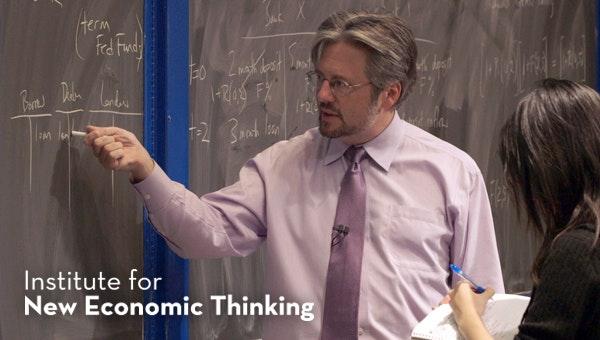
The last three or four decades have seen a remarkable evolution in the institutions that comprise the modern monetary system. The financial crisis of 2007-2009 is a wakeup call that we need a similar evolution in the analytical apparatus and theories that we use to understand that system. Produced and sponsored by the Institute for New Economic Thinking, this course is an attempt to begin the process of new economic thinking by reviving and updating some forgotten traditions in monetary thought that have become newly relevant.

Nov 23rd 2026
13-24 Weeks
Interest Rate Models (Coursera) Coursera
École Polytechnique Fédérale de Lausanne

Interest Rate Models (Coursera)

This course gives you an easy introduction to interest rates and related contracts. These include the LIBOR, bonds, forward rate agreements, swaps, interest rate futures, caps, floors, and swaptions. We will learn how to apply the basic tools duration and convexity for managing the interest rate risk of a bond portfolio. We will gain practice in estimating the term structure from market data. We will learn the basic facts from stochastic calculus that will enable you to engineer a large variety of stochastic interest rate models. In this context, we will also review the arbitrage pricing theorem that provides the foundation for pricing financial derivatives.

Nov 16th 2026
5-12 Weeks
Finance for Non-Finance Professionals (Coursera) Coursera
Rice University

Finance for Non-Finance Professionals (Coursera)

This short course surveys all the major topics covered in a full semester MBA level finance course, but with a more intuitive approach on a very high conceptual level. The goal here is give you a roadmap and framework for how financial professional make decisions. We will cover the basics of financial valuation, the time value of money, compounding returns, and discounting the future. You will understand discounted cash flow (DCF) valuation and how it compares to other methods. We also step inside the mind of a corporate financial manager and develop the basic tools of capital budgeting. We will survey the how, when, and where to spend money, make tradeoffs about investment, growth, dividends, and how to ensure sound fiscal discipline.

Nov 23rd 2026
5-12 Weeks
Alternative Approaches to Valuation and Investment (Coursera) Coursera
University of Melbourne

Alternative Approaches to Valuation and Investment (Coursera)

In this course, participants will develop an understanding of the intuitive foundations of asset and investment valuation, and how alternative valuation techniques may be used in practice. This is part of a Specialization in corporate finance created in partnership between the University of Melbourne and Bank of New York Mellon (BNY Mellon).

Nov 16th 2026
4 Weeks
Banking and Financial Institutions (Coursera) Coursera
University of Illinois at Urbana-Champaign

Banking and Financial Institutions (Coursera)

The purpose of this course is to provide you with a basic understanding of the connections between money, the financial system, and the broader macroeconomy. We will examine the economics of modern financial institutions (e.g. banks), including how they are organized, the products and financial services they offer, the risks they take, why and how they are regulated, and how this has changed over time.

Nov 23rd 2026
4 Weeks
Innovative Finance: Hacking finance to change the world (Coursera) Coursera
University of Cape Town

Innovative Finance: Hacking finance to change the world (Coursera)

To address global poverty - do we really not have enough resources or do we not have the right tools to allocate our resources? The tools of finance, when applied correctly, can be an enabler of social and environmental outcomes. This course is designed to give you the ability to build innovative financing strategies that work towards outcomes such as financial inclusion, access to energy and access to education.

Nov 23rd 2026
5-12 Weeks
Calculating Intrinsic Value using Discounted Cash Flow (DCF) Analysis (Skillshare) Skillshare
Skillshare

Calculating Intrinsic Value using Discounted Cash Flow (DCF) Analysis (Skillshare)

In this course I will teach you how to calculate intrinsic value using DCF analysis. This is one of the most powerful stock and asset valuation methods in the world. It is a cornerstone tool for value investing, and it has for many years remained the method of choice for the best investors, including the likes of Warren Buffett. I made this course as I myself couldn't find a comprehensive guide as to how to actually perform an intrinsic value calculation.

Self Paced
Self-Paced