How to Modernize applications with IBM CICS (Coursera)

Offered by IBM,
How to Modernize applications with IBM CICS (Coursera)

This course explains why CICS is perfect for powering the next generation of enterprise applications and how you can help build them. IBM CICS is the trusted core of enterprise applications and transaction processing. You will experience writing, updating and running CICS applications as well as the new APIs, capabilities and functions that will allow you to modernize these applications to run as part of a hybrid cloud application.

Class Deals by MOOC List - Click here and see Coursera's Active Discounts, Deals, and Promo Codes.

What You Will Learn

  • Understand why CICS is perfect for powering the next generation of enterprise applications
  • Experience writing, updating and running CICS applications
  • Modernize these applications to run as part of a hybrid cloud application

Syllabus

WEEK 1: CICS Application Programming Fundamentals
WEEK 2: Programming and Modernizing CICS COBOL Applications
WEEK 3: Additional Modernization Technologies and Techniques
WEEK 4: Final Quiz, Successfully complete the quiz to earn your badge

Go to Class
MOOC List is learner-supported. When you buy through links on our site, we may earn an affiliate commission.


Related Courses

Intro to AJAX (Udacity) Udacity
Udacity

Intro to AJAX (Udacity)

Making Asynchronous Requests with jQuery. In this course you will learn how to make asynchronous requests with JavaScript (using jQuery’s AJAX functionality), and gain a better understanding of what’s actually happening when you do so. You will also learn how to use data APIs so you can take advantage of freely accessible data in your applications, including photo results, news articles and up-to-date data about the world around us.

Self Paced
Self-Paced
Using APIs for Network Automation (Coursera) Coursera
Cisco Learning and Certifications

Using APIs for Network Automation (Coursera)

This course will provide a solid foundation for understanding how APIs are utilized in network automation by discussing important topics such as data encoding formats, REST APIs, and the Python Requests library. Upon completion of the course, you will be equipped with the necessary skills to utilize APIs in your network automation solution and be able to describe the usefulness of APIs in this context.

Sep 28th 2026
3 Weeks
Programming Applications with Python: Libraries and Web Scraping (FutureLearn) FutureLearn
FutureLearn

Programming Applications with Python: Libraries and Web Scraping (FutureLearn)

Consider applications for APIs and Python, and explore the purpose of web scraping. Examine Python libraries for web development. This course will introduce you to the popular Requests library in Python. You’ll study how to install the Requests library and get to know how it works. Learning via videos, interactive exercises, and quizzes, you’ll also explore what HTTP requests are and what each of the status codes in HTTP mean.

May 23rd 2022
4 Weeks
SAP Cloud Platform API Management (openSAP) OpenSAP
SAP

SAP Cloud Platform API Management (openSAP)

Join this free online course to gain expertise in SAP Cloud Platform API Management, which is available as a service on SAP Cloud Platform. You’ll begin by learning API management basics, and gradually progress to master advanced SAP API Management topics. After completing this course, you’ll understand what the API management components are, how to manage the API lifecycle, ways to integrate API management with tools like SAP Web IDE, and how to build and manage APIs ground-up, treat them as products, and monetize them.

Self Paced
Self-Paced
iOS Networking with Swift (Udacity) Udacity
Udacity

iOS Networking with Swift (Udacity)

Web Services, APIs, and JSON. In this course, you’ll learn how to incorporate networking into your apps, so they can access data from around the world. You’ll learn how to harness the power of APIs to display images and retrieve movie data. At the end of the course, you’ll build the "On the Map" app which allows you to share interesting links, projects, or other information with fellow Udacity students.

Self Paced
Self-Paced
Python for Data Engineering Project (edX) EdX
IBM

Python for Data Engineering Project (edX)

An opportunity to apply your foundational Python skills via a project, using various techniques to collect and work with data. Journey into the realm of becoming a Data Engineer and apply your basic Python knowledge of working with data. You will exercise various techniques in Python to extract data in multiple file formats from different sources, transform it into specific datatypes, and then prepare it for loading it into a database.

Self Paced
Self-Paced
WebAssembly Actors: From Cloud to Edge (edX) EdX
Linux Foundation,LinuxFoundationX

WebAssembly Actors: From Cloud to Edge (edX)

Embrace the actor model to build portable, secure, lightweight WebAssembly modules that thrive in the cloud, at the edge, and anywhere in between. This course is designed for developers who have built or are building microservices and have experienced a high degree of friction in cloud native application development. Developers looking to embrace the simplicity of Functions as a Service (FaaS) without the overhead of cloud providers or sacrificing the ability to experiment and test locally and in any other environment will gain significant value from this course.

Self Paced
Self-Paced
Complete Course of JDBC API Implementation (Skillshare) Skillshare
Skillshare

Complete Course of JDBC API Implementation (Skillshare)

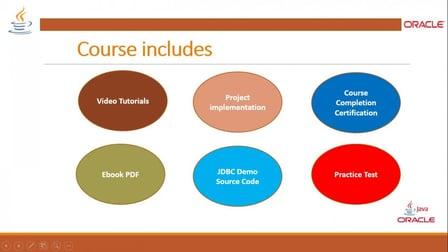
JDBC API tutorial will help developer to make JAVA application to access Oracle 11g Database. This course is divided into two parts , BASIC and ADVANCE. This course is the Basic where we are going to learn all about JDBC API in detail. Here, we will show you demonstration, execution, examples and practice projects for HOMEWORK for hands-on experience.

Self Paced
Self-Paced
Social Media Data Analytics (Coursera) Coursera
University of Washington

Social Media Data Analytics (Coursera)

Learner Outcomes: After taking this course, you will be able to: utilize various Application Programming Interface (API) services to collect data from different social media sources such as YouTube, Twitter, and Flickr; process the collected data - primarily structured - using methods involving correlation, regression, and classification to derive insights about the sources and people who generated that data; analyze unstructured data - primarily textual comments - for sentiments expressed in them; use different tools for collecting, analyzing, and exploring social media data for research and development purposes.

Sep 21st 2026
4 Weeks