EdX

Global Housing Design (edX)

Global Housing Design (edX)

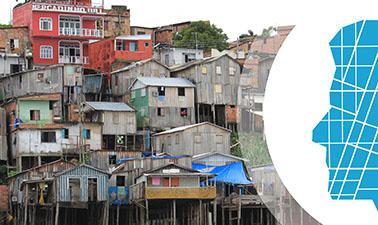
Learn about the key design strategies required to develop adequate housing and inclusive dwelling environments for sustainable urban development. Building adequate housing is a pressing issue worldwide. With close to a billion people currently living in slums, accommodating a growing population, and improving dwelling conditions is a critical issue for society.

Class Deals by MOOC List - Click here and see EdX's Active Discounts, Deals, and Promo Codes.

This challenge cannot be solved with a one-size-fits-all approach. Every city, region and country demand their own housing models and prototypes. That’s why housing design needs to negotiate many aspects simultaneously to achieve sustainable urban environments and inclusive dwelling communities.
This course uncovers how social, economic and environmental factors are interrelated in the design of housing settlements. For this, the course dives into three key aspects that anyone involved in housing design should take into consideration: time, environment, and community. Each of these aspects will be examined through a specific design approach, respectively:

  • Incrementality : how dwelling environments should be able to accommodate growth and change through time.
  • Typological mix : how design can be responsive to different patterns of inhabitation, aspirations and cultural backgrounds, creating inclusive dwelling environments.
  • Clustering : what methods and strategies can shape the association of dwelling units in order to create meaningful communities.

In this course, each of these themes will be discussed in detail and exemplified by a new analytical approach to award-winning housing projects developed in different historical periods.
While each of these themes will examine aspects related to the design decision-making process, the course aims at addressing concerns that go beyond the design disciplines. Hence, regardless of background or level of expertise, this course will introduce learners to the core issues and challenges of global housing design, using examples from different regions.
This course is part of the Inclusive and Sustainable Cities Professional Certificate.

What you'll learn

  • Identify social practices and spatial configurations that determine the qualities of existing dwelling communities.
  • Understand how incrementality, typological mix and clustering can become key design approaches in enhancing the living conditions of urban communities.
  • Recognize design approaches that can contribute to the development of adequate housing in low- and middle-income countries.
  • Compare the characteristics of housing schemes designed by different architects taking account of different social, political and geographical contexts.
  • Evaluate the performance of dwelling communities taking into consideration the relation between social, economic and environmental factors.
  • Formulate a design hypothesis and/or a managerial strategy to develop an inclusive housing cluster located in a city of a low- or middle- income country.

Prerequisites

  • Undergraduate-level education in architecture, urban design, or planning;

or

  • Previous knowledge in disciplines that deal with the built environment in general, and the development of housing in particular in social sciences (e.g. art and architectural history, anthropology, sociology) or applied sciences (e.g. civil engineering).

Syllabus

Week 1:
The course begins with an introduction to the main design themes, course structure and some other more practical matters. This week also provides opportunities for you to introduce yourself to all the other participants.
In the following weeks, the themes will be discussed in detail and exemplified by a new analytical approach to housing projects that have won the prestigious Aga Khan Award for Architecture, and that were developed in the 1970s and 1980s, a period of intense advancement in housing design and theory.

Week 2:
This module focuses on incrementality. We will discuss how housing can be designed to accommodate growth and change through time. This approach to housing design has been widely discussed and debated over the last century, and it is usually associated with a period of resource scarcity and economic austerity. The Indian architect, B.V. Doshi’s Aranya Low-Cost Housing project in Indore is a very good example of allowing people to build and mould their own houses, and best demonstrates his ideas for low-income housing and incrementality – that architecture must allow for growth and change. Designed for a population of about 60,000 people across some 85 hectares, Aranya, today, has grown to resemble a typical Indian town where narrow streets are shaded by a variety of houses, ranging from ground story dwellings to even three-floor high urban townhouses.

Week 3:
This module will discuss the importance of creating a typological mix in housing settlements. This design approach will be discussed through a close look to Shushtar New Town, a project designed by the Iranian architect, Kamran Diba. Shushtar was designed to house 30,000 industrial workers along the principles of traditional urban patterns typically found in old Iranian towns and cities. In this project, an interwoven urban fabric built in (mud) brick construction houses a diverse set of dwelling types that at the same time are carefully orchestrated in a master plan consisting of gardens, paved squares, covered and shaded resting places, arcades and bazaars.

Week 4:
This module focuses on clustering as a design strategy to create meaningful communities. We will study in-depth the Dar Lamane Housing project in Casablanca, Morocco. We will analyse how a low-income residential community built for 25,000 people, and consisting of over 4,000 units, makes use of an ingenious clustering of four-and five-story apartment blocks, organized around a large central square in which the mosque, markets and festival hall are located.

Week 5:
We will introduce the final assignment in which you will develop a critical stance towards the housing challenges in your own context, using the theories and tools presented during the course.

Week 6:
Review and final feedback.
Go to Class
MOOC List is learner-supported. When you buy through links on our site, we may earn an affiliate commission.

Related Courses

Machine Learning (Coursera) Coursera
Stanford University

Machine Learning (Coursera)

Machine learning is the science of getting computers to act without being explicitly programmed. In the past decade, machine learning has given us self-driving cars, practical speech recognition, effective web search, and a vastly improved understanding of the human genome. Machine learning is so pervasive today that you probably use it dozens of times a day without knowing it. Many researchers also think it is the best way to make progress towards human-level AI. In this class, you will learn about the most effective machine learning techniques, and gain practice implementing them and getting them to work for yourself. More importantly, you'll learn about not only the theoretical underpinnings of learning, but also gain the practical know-how needed to quickly and powerfully apply these techniques to new problems.

Jul 27th 2026
5-12 Weeks
Machine Learning Foundations: A Case Study Approach (Coursera) Coursera
University of Washington

Machine Learning Foundations: A Case Study Approach (Coursera)

Do you have data and wonder what it can tell you? Do you need a deeper understanding of the core ways in which machine learning can improve your business? Do you want to be able to converse with specialists about anything from regression and classification to deep learning and recommender systems? In this course, you will get hands-on experience with machine learning from a series of practical case-studies.

Jul 27th 2026
5-12 Weeks
The Analytics Edge (edX) EdX
MIT,MITx

The Analytics Edge (edX)

Through inspiring examples and stories, discover the power of data and use analytics to provide an edge to your career and your life. In the last decade, the amount of data available to organizations has reached unprecedented levels. Data is transforming business, social interactions, and the future of our society. In this course, you will learn how to use data and analytics to give an edge to your career and your life.

This course is archived
13-24 Weeks
Big Data Science with the BD2K-LINCS Data Coordination and Integration Center (Coursera) Coursera
Icahn School of Medicine at Mount Sinai

Big Data Science with the BD2K-LINCS Data Coordination and Integration Center (Coursera)

In this course we briefly introduce the DCIC and the various Centers that collect data for LINCS. We then cover metadata and how metadata is linked to ontologies. We then present data processing and normalization methods to clean and harmonize LINCS data. This follow discussions about how data is served as RESTful APIs. Most importantly, the course covers computational methods including: data clustering, gene-set enrichment analysis, interactive data visualization, and supervised learning. Finally, we introduce crowdsourcing/citizen-science projects where students can work together in teams to extract expression signatures from public databases and then query such collections of signatures against LINCS data for predicting small molecules as potential therapeutics.

Jul 27th 2026
5-12 Weeks
Unsupervised Learning and Its Applications in Marketing (Coursera) Coursera
O.P. Jindal Global University

Unsupervised Learning and Its Applications in Marketing (Coursera)

Welcome to the Unsupervised Learning and Its Applications in Marketing course! In this course, you will delve into the fascinating world of unsupervised machine learning and its relevance to the field of marketing. Unsupervised learning is a powerful approach that allows us to uncover hidden patterns and insights from vast amounts of historical data without the need for explicit labels or human intervention. Through hands-on exercises and real-world examples, you will learn how to leverage the Python programming language to apply unsupervised learning algorithms in marketing contexts.

Aug 3rd 2026
4 Weeks
Machine Learning Foundations for Product Managers (Coursera) Coursera
Duke University

Machine Learning Foundations for Product Managers (Coursera)

In this first course of the AI Product Management Specialization offered by Duke University's Pratt School of Engineering, you will build a foundational understanding of what machine learning is, how it works and when and why it is applied. To successfully manage an AI team or product and work collaboratively with data scientists, software engineers, and customers you need to understand the basics of machine learning technology.

Aug 3rd 2026
5-12 Weeks
Applied Data Science Capstone (Coursera) Coursera
IBM

Applied Data Science Capstone (Coursera)

This capstone project course will give you a taste of what data scientists go through in real life when working with data. You will learn about location data and different location data providers, such as Foursquare. You will learn how to make RESTful API calls to the Foursquare API to retrieve data about venues in different neighborhoods around the world. You will also learn how to be creative in situations where data are not readily available by scraping web data and parsing HTML code. You will utilize Python and its pandas library to manipulate data, which will help you refine your skills for exploring and analyzing data. Finally, you will be required to use the Folium library to great maps of geospatial data and to communicate your results and findings.

Aug 3rd 2026
5-12 Weeks
Cluster Analysis in Data Mining (Coursera) Coursera
University of Illinois at Urbana-Champaign

Cluster Analysis in Data Mining (Coursera)

Discover the basic concepts of cluster analysis, and then study a set of typical clustering methodologies, algorithms, and applications. This includes partitioning methods such as k-means, hierarchical methods such as BIRCH, and density-based methods such as DBSCAN/OPTICS. Moreover, learn methods for clustering validation and evaluation of clustering quality. Finally, see examples of cluster analysis in applications.

Jul 27th 2026
4 Weeks
Big Data for Agri-Food: Principles and Tools (edX) EdX
Wageningen University,WageningenX

Big Data for Agri-Food: Principles and Tools (edX)

As the big data era unfolds, developments in sensor and information technologies are evolving quickly. As a result, science and businesses are yielding enormous amounts of data. Yet, to reap the actionable business solutions data can unveil, we must learn to ask the right questions. Join Wageningen Wageningen University & Research as the data team bridges the gap between the complexity of computer science and its practical application. Decipher your unsampled big data set.

Self Paced
Self-Paced
Data Science for Smart Cities (edX) EdX
Purdue University,PurdueX

Data Science for Smart Cities (edX)

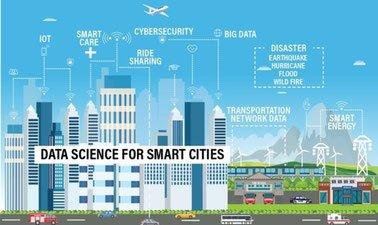
Learn various scientific techniques that will allow the analysis, inference and prediction of large-scale data (e.g. GPS vehicular data, social media data, mobile phone data, individual social network data etc.) that are present in city networks. The availability of low cost and ubiquitous sensors in city infrastructure provides high granular data at unprecedented spatiotemporal scales. “Smart Cities” envision to utilize this data to provide a healthy, happy and sustainable urban ecosystem by integrating the information and communication technology (ICT), Internet of things (IoT) and citizen participation to effectively manage and utilize city infrastructure and services.

No sessions available
13-24 Weeks
Data Analytics Foundations for Accountancy II (Coursera) Coursera
University of Illinois at Urbana-Champaign

Data Analytics Foundations for Accountancy II (Coursera)

Welcome to Data Analytics Foundations for Accountancy II! I'm excited to have you in the class and look forward to your contributions to the learning community. To begin, I recommend taking a few minutes to explore the course site. Review the material we’ll cover each week, and preview the assignments you’ll need to complete to pass the course. Click Discussions to see forums where you can discuss the course material with fellow students taking the class.

Jul 27th 2026
5-12 Weeks