Getting Started with Machine Learning at the Edge on Arm (Coursera)

Offered by Arm,
Getting Started with Machine Learning at the Edge on Arm (Coursera)

The age of machine learning has arrived! Arm technology is powering a new generation of connected devices with sophisticated sensors that can collect a vast range of environmental, spatial and audio/visual data. Typically this data is processed in the cloud using advanced machine learning tools that are enabling new applications reshaping the way we work, travel, live and play.

Class Deals by MOOC List - Click here and see Coursera's Active Discounts, Deals, and Promo Codes.

To improve efficiency and performance, developers are now looking to analyze this data directly on the source device – usually a microcontroller (we call this ‘the Edge’). But with this approach comes the challenge of implementing machine learning on devices that have constrained computing resources.
This is where our course can help!
By enrolling in Machine Learning at the Edge on Arm: A Practical Introduction you’ll learn how to train machine learning models and implement them on industry relevant Arm-based microcontrollers.
We’ll start your learning journey by taking you through the basics of artificial intelligence , machine learning and machine learning at the edge , and illustrate why businesses now need this technology to be available on connected devices. We’ll then introduce you to the concept of datasets and how to train algorithms using tools like Anaconda and Python. We'll then go on to explore advanced topics in machine learning such as artificial neural networks and computer vision.
Along the way, our practical lab exercises will show you how you can address real-world design problems in deploying machine learning applications, such as speech and pattern recognition, as well as image processing, using actual sensor data obtained from the microcontroller. We'll also introduce you to the open source TensorFlow Python library, which is useful in the training and inference of deep neural networks.
In the final module you’ll be able to apply what you’ve learned by implementing machine learning algorithms on a dataset of your choice.
Through our vast ecosystem, Arm already powers a wide range of devices and applications that rely on machine learning at the edge. Be a part of this vibrant community of developers and start your machine learning journey by enrolling in our course today!

Syllabus

Module 1: An Overview of Machine Learning at the Edge
In this module, you will be introduced to key concepts in Machine Learning and learn why businesses now need this technology to be available on low-power devices.

Module 2: Introduction to Machine Learning on Constrained Devices
In this module, you will explore some of the key concepts in machine learning, such as feature extraction and classification models, in the context of signal processing. You will understand the importance of training and evaluation in the machine learning workflow, and the constraints involved when using microcontrollers for this. At the end of the module, you will complete a practical lab exercise, to implement some simple machine learning models for activity recognition, using accelerometer data. To do so, you will be shown how to use Anaconda and Python to work with datasets.

Module 3: Explain Artificial Neural Networks
This module dives deeper into a powerful and widely used model in Machine Learning: the artificial neural network. These can analyze large quantities of input data in complex ways, in order to solve classification problems, such as identifying objects in an image. In order to run neural networks on small microprocessors, these models need to be as streamlined as possible. So you will also look at the complexity of a typical neural network, and see some techniques to reduce this complexity, such as quantization. In the lab, you will continue building a classifier for activity recognition, but this time using a neural network on an Arm STM32 microprocessor. For this, you will be introduced to the TensorFlow Python library, which is also popular for many applications in machine learning.

Module 4: Convolutional Neural Networks
Neural networks can be used to solve complex classification problems, as you have already seen. In this module, you’ll discover a more advanced model: the convolutional neural network. These are important for image processing, as they can interpret relationships between adjacent pixels, but they are also used in other applications such as financial modeling. This is a new and modern technique so you’ll be learning about the cutting edge of machine learning, and the recent trends in this field. In the lab, you’ll develop a convolutional neural network for audio processing, and optimize it for both accuracy and performance. This would allow it to give good results on a small device without draining the battery or delaying the response.

Module 5: Computer Vision and Models
The algorithms used in modern machine learning can be very complex, and require many iterations of innovation and testing by computer scientists. This is especially true for the optimized algorithms required by microprocessors! Thankfully, you do not need to implement these algorithms yourself, as they are available in libraries, such as CMSIS-NN, developed by Arm. This module shows you how this library can be used for machine learning—for example for image processing using convolutional neural networks. In the lab exercise, you also have the opportunity to use CMSIS-NN to develop a simple model for the CIFAR-10 dataset, using CUBE AI.

Module 6: Optimizing Machine Learning on Constrained Devices
For machine learning to perform well, even on the smallest devices, it is essential to optimize the models to minimize their memory footprint and the number of operations required to perform inference tasks. In practice, this allows portable devices to be more responsive, and extends their battery life. In this last module, you’ll explore some of the cutting-edge techniques used to optimize neural networks, such as using fixed-point arithmetic in place of floating-point arithmetic. To consolidate your learning, you will develop the best machine learning model that you can, that would be able to run on an ArmCortex-M microprocessor, using a toolkit such as CMSIS-NN.

Go to Class
MOOC List is learner-supported. When you buy through links on our site, we may earn an affiliate commission.

Related Courses

Foundations of Data Science: K-Means Clustering in Python (Coursera) Coursera
University of London,Goldsmiths, University of London

Foundations of Data Science: K-Means Clustering in Python (Coursera)

This MOOC, designed by an academic team from Goldsmiths, University of London, will quickly introduce you to the core concepts of Data Science to prepare you for intermediate and advanced Data Science courses. It focuses on the basic mathematics, statistics and programming skills that are necessary for typical data analysis tasks.

Oct 5th 2026
5-12 Weeks
Machine Translation (Coursera) Coursera
Karlsruhe Institute of Technology - KIT

Machine Translation (Coursera)

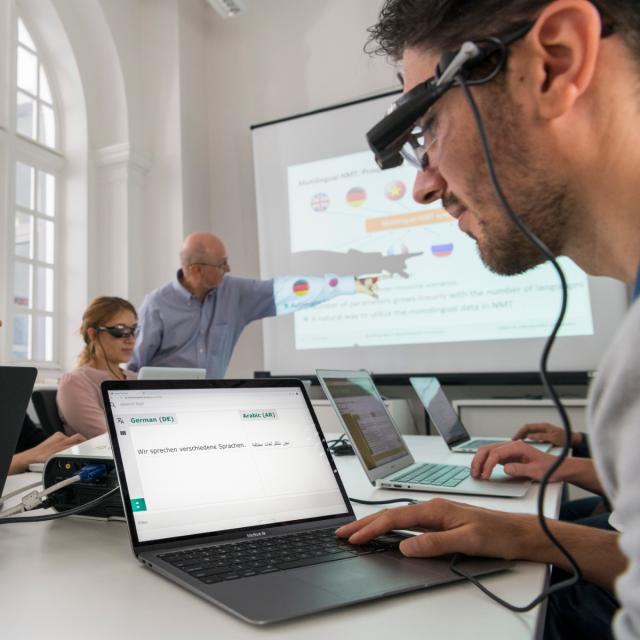
Welcome to the CLICS-Machine Translation MOOC. This MOOC explains the basic principles of machine translation. Machine translation is the task of translating from one natural language to another natural language. Therefore, these algorithms can help people communicate in different languages. Such algorithms are used in common applications, from Google Translate to apps on your mobile device.

Sep 28th 2026
5-12 Weeks
Internet of Things: Communication Technologies (Coursera) Coursera
University of California, San Diego

Internet of Things: Communication Technologies (Coursera)

Have you wondered how “Things” talk to each other and the cloud? Do you understand the alternatives for conveying latency-sensitive real time data versus reliable signaling data? Building on the skills from the Sensing and Actuation course, we will explore protocols to exchange information between processors.

Oct 5th 2026
4 Weeks
Preparing for the Google Cloud Professional Data Engineer Exam en Español (Coursera) Coursera
Google Cloud

Preparing for the Google Cloud Professional Data Engineer Exam en Español (Coursera)

En este curso, se emplea un enfoque descendente a fin de identificar las habilidades y los conocimientos adquiridos, así como poner en evidencia la información y las áreas de habilidades que requieren una preparación adicional. Puede aprovechar este curso para crear su propio plan de preparación personalizado. Lo ayudará a distinguir lo que sabe de lo que no. Además, le permitirá desarrollar y practicar las habilidades que se les exigen a los profesionales que realizan este trabajo.

Oct 5th 2026
1 Week
Energy Management for IoT Devices (Coursera) Coursera
Starweaver

Energy Management for IoT Devices (Coursera)

Energy Management for IoT Devices is a comprehensive course designed to introduce participants to the integration of energy management techniques within IoT systems. Through a blend of theoretical insights and practical applications, the course equips current and aspiring professionals with a deep understanding of the pivotal role energy management plays in the IoT landscape. Over 4.0 hours, participants will explore various thematic aspects of energy management in IoT, emphasizing real-world applications and skill-building exercises.

Sep 28th 2026
4 Weeks
Probabilistic Graphical Models 3: Learning (Coursera) Coursera
Stanford University

Probabilistic Graphical Models 3: Learning (Coursera)

Probabilistic graphical models (PGMs) are a rich framework for encoding probability distributions over complex domains: joint (multivariate) distributions over large numbers of random variables that interact with each other. These representations sit at the intersection of statistics and computer science, relying on concepts from probability theory, graph algorithms, machine learning, and more. They are the basis for the state-of-the-art methods in a wide variety of applications, such as medical diagnosis, image understanding, speech recognition, natural language processing, and many, many more. They are also a foundational tool in formulating many machine learning problems.

Sep 28th 2026
5-12 Weeks
Practical Python for AI Coding 2 (Coursera) Coursera
Korea Advanced Institute of Science and Technology - KAIST

Practical Python for AI Coding 2 (Coursera)

This course is for a complete novice of Python coding, so no prior knowledge or experience in software coding is required. This course selects, introduces and explains Python syntaxes, functions and libraries that were frequently used in AI coding. In addition, this course introduces vital syntaxes, and functions often used in AI coding and explains the complementary relationship among NumPy, Pandas and TensorFlow, so this course is helpful for even seasoned python users.

Sep 28th 2026
5-12 Weeks
Machine Learning Basics (Coursera) Coursera
Sungkyunkwan University - SKKU

Machine Learning Basics (Coursera)

In this course, you will: understand the basic concepts of machine learning; understand a typical memory-based method, the K nearest neighbor method; understand linear regression; understand model analysis. Please make sure that you’re comfortable programming in Python and have a basic knowledge of mathematics including matrix multiplications, and conditional probability.

Sep 28th 2026
4 Weeks
Introduction to Vertex AI (Coursera) Coursera
Fractal Analytics

Introduction to Vertex AI (Coursera)

Welcome to "Introduction to Vertex AI"! In this concise yet impactful microlearning course spanning around 4 hours, we're diving into the world of Vertex AI to equip you with fundamental insights and practical skills. We'll unravel the essentials of Vertex AI, guiding you through the interface to empower you to navigate this powerful platform seamlessly. Get ready to grasp strategic insights that will enable you to effectively harness the capabilities of Vertex AI in your projects.

Sep 28th 2026
2 Weeks
Software Architecture for the Internet of Things (Coursera) Coursera
EIT Digital

Software Architecture for the Internet of Things (Coursera)

This course will teach you how to design futureproof systems that meet the requirements of IoT systems: systems that are secure, interoperable, modifiable and scalable. Moreover, you'll learn to apply best-in-class software architecture methods to help you design complex IoT and other applications. Lastly, you'll come to understand the business impact of the technical decisions that you make as an IoT system architect.

Sep 28th 2026
5-12 Weeks