A foundational course on microgrid systems design with an emphasis on community-based projects and non-grid connected remote systems. The electric grid of the future will need to be more resilient, decentralized, and capable of integrating more distributed energy resources including on-site renewable energy technologies, energy storage and even electric vehicle (EV) charging. Microgrids are an important building block in designing this sustainable grid architecture of the future. This course covers fundamental concepts of microgrid design from a community-centric perspective and emphasizes a holistic approach to energy systems management.
Class Deals by MOOC List - Click here and see EdX's Active Discounts, Deals, and Promo Codes.
A newer version of this course is available here:
The Resilient and Renewable Grid: How Microgrids are Revolutionizing Energy Systems
This course:
- Provides knowledge and insights to critically evaluate microgrid systems design and related topics such as distributed renewable energy systems, energy storage demand response, and other load management techniques.
- Prioritizes a community-centric approach with a holistic approach to energy services, including not only electricity supply but also heating, cooling, and transportation applications.
- Emphasizes resilience and sustainability with a strong focus on strategies for economically integrating high levels of distributed renewable energy generation such as solar photovoltaic, wind, and small hydroelectric.
- Explores concepts and best practices through extensive real-world examples, including site visits to numerous operational microgrid systems.
- Provides insights from experts who design, build, and operate some of the most innovative and advanced microgrids in the world.
- Establishes a strong foundation of what to consider at all stages of developing a microgrid project, including flexible and iterative approaches to project conceptualization, data collection, design, and modeling.
Alaska is an early adopter of microgrids that integrate renewable energy due to economic necessity, with over 100 systems representing the largest installed capacity of any U.S. state. Alaska is home to microgrids that are constantly evolving to take advantage of new technologies and integration approaches. The University of Alaska Fairbanks works closely with communities, utilities, and developers across the state – and around the world – in designing and developing robust, cost-effective, and resilient energy solutions based on distributed energy resources (DER) and microgrid system architectures.
Specific real-world systems that will be explored include:
- Kodiak Island, Alaska is a community of approximately 10,000 residents that has systematically transitioned to 100% renewable energy from a combination of resources including wind turbines and hydroelectric power coupled with a flywheel and battery (Li-ion) storage system.
- Cordova, Alaska is a fishing community with highly variable and seasonal industrial loads striving to transition to 100% renewable energy using a combination of run-of-river hydroelectric, energy storage, EVs, and hierarchical control strategies using smart grid enabling technologies.
- Kongiganak, Alaska is a small Yupik Eskimo community that has developed an innovative wind-based microgrid system that uses real-time response algorithms to manage dispatchable thermal loads to achieve 100% wind energy penetration for significant periods of time.
- Kotzebue, Alaska is an Inupiat Eskimo community that has over two decades of experience in wind and solar PV development. Kotzebue has taken a holistic approach to energy management that extends from investment in EVs to making ice for local fishermen using absorption refrigeration.
- King Island, Australia is home to a highly innovative microgrid system, owned and operated by Hydro Tasmania. The system combines nearly 3 MW of solar and wind with a range of innovative supporting technologies. The system is capable of 100% renewable operation, and supplies over 65% of King Island’s annual energy needs using renewable energy.
- Hawaii is a U.S. leader in the integration of variable renewable energy, with a goal to generate 100 percent clean energy by 2045. While some of Hawaii’s individual island grids are too big to typically be categorized as microgrids, several microgrids have been installed at military bases and commercial and industrial sites. There are many lessons learned from Hawaii’s experience with both microgrids and regional grids that are transferable to similar small grid architectures.
- Fairbanks, Alaska is our hometown, but also home to some unique energy systems that support a very large multi-community microgrid operated by Golden Valley Electric Association with some unique features, including a very large battery energy storage system coupled with a flywheel.
What you'll learn
- Types of microgrids and the energy and infrastructure services they provide.
- Non-grid connected/off-grid or islanded microgrid projects and systems, systems sometimes also labeled as “mini-grids”
- Strategies for low, medium, and high contribution renewable energy systems integration
- Dispatchable and non-dispatchable power sources
- System control, regulation, and optimization
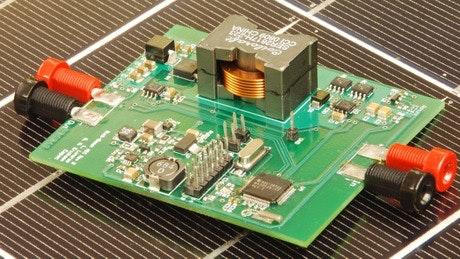
- Power electronics advances with inverters and energy storage devices to enable increasing proportions of variable renewable resources into microgrids.
- Learn about different system designs as well as control and optimization strategies for converter-dominated power systems ranging from simple droop frequency (or voltage) control to advanced smart grid enabling technologies.
- Explore the role of energy storage technologies such as batteries and flywheels coupled with the importance of inverter technologies and other power electronics in enabling very high penetration levels of renewable resources such as wind, and photovoltaics.
- Strategies and best practices for designing a microgrid system with a focus on scoping, data collection, and modeling.
Syllabus
Week 1: Introduction to Microgrids
- Getting started
- Defining what is and what is not a microgrid
- Types and use cases of microgrids
- Comparison of microgrids to other grid architectures
- Community perspectives on microgrids
Week 2: Microgrid System Design
- Design methodology and metrics
- Planning and scoping out a project
- Data collection and management
- Conceptual design and modeling
- Project development and implementation considerations
Week 3: Renewable Energy Integration
- Types of distributed energy resources (dispatchable versus non-dispatchable)
- Impacts of resource variability on small grids
- Load/grid demand considerations
- Renewable energy penetration
- Strategies for incorporating high levels of variable renewables
Week 4: Storage and Power Electronics
- Energy storage technology overview
- Services provided by energy storage
- Sizing storage solutions
- Battery technologies and safety
- Power storage
- Thermal storage
- The changing economics of energy storage