Explorations in Confucian Philosophy (Coursera)

Explorations in Confucian Philosophy (Coursera)

Is Confucianism synonymous with Chinese culture? While it may be an overstatement to equate the two, there is little doubt that Confucianism pervades every level of Chinese culture and society. To be sure, other traditions such as Daoism and Buddhism have also left an indelible mark; nevertheless, Confucianism remains central to the shaping of the Chinese imagination.

Class Deals by MOOC List - Click here and see Coursera's Active Discounts, Deals, and Promo Codes.

The influence of Confucianism extends beyond China to East Asia and through migration and cultural diffusion, other parts of the world. Confucianism traces its origins to the teachings of Confucius. What makes Confucius so special and what did he teach? This course will explore some of the key concepts in Confucian philosophy. Much of the discussion will centre on the Analects of Confucius, the foundational text of Confucian wisdom, although attention will also be given to the subsequent unfolding of the Confucian tradition. We will attempt to situate Confucian philosophy in its own context and to bring out its contemporary significance. Confucianism is a living tradition. Its vitality hinges on not only its continuing relevance in Chinese society but also its contribution to meeting the global challenges confronting the world today. There are no prerequisites for this course, other than a keen interest in Chinese tradition and culture, and the willingness to engage the Analects of Confucius.

Course Syllabus

Week 1 - Introduction: The World of Confucius
Part 1 - The World of Confucius
Meaningful engagement with Confucian philosophy requires a disciplined and informed imagination. Confucius (or Kongzi, in Chinese) flourished in a time of considerable change and political instability. Some understanding of the world of early China would be critical, as Confucian ideas did not grow out of a historical vacuum. In this context, we will examine the Analects—known in Chinese as Lunyu—a compilation of sayings and conversations attributed to Confucius that is essential to our understanding of Confucian philosophy.

Week 2 - Part 2A - The Vision of Confucius
The teachings of Confucius are perhaps best understood as a major philosophical renovation of the early Chinese intellectual scene. We will start with the cardinal concept of the junzi, the moral and cultural exemplar that stands at the heart of the Confucian vision. What are the characteristics of the ideal junzi? Can one become a junzi and if so, how can that be accomplished? In this context, some of the key Confucian ethical concepts such as ren (humaneness or humanity), li (propriety), and yi (rightness) will be introduced.

Week 3 - Part 2B - The Vision of Confucius (cont'd)
In this same context (refer to week 2), as we continue our guided tour, as it were, of the rich intellectual landscape that is Confucianism, we examine briefly the concept of “filial piety” (xiao), the key concern with learning and education (xue), which extends far beyond academic interests, and other related concepts. In addition, I would like to raise the question as to whether there is a religious or spiritual dimension to Confucian philosophy, and if so, how does it relate to ethics and political philosophy. There is much to discuss here, and we will return to the question of the impact of the Confucian vision on Chinese culture towards the end of this course.

Week 4 - Part 3A - The Unfolding of Confucianism
“Confucianism” is an abstract generalization. While it may serve as a convenient label, it must be used with care. What needs to be made clear is that the Confucian tradition is dynamic, interacting with different currents of thought as well as harbouring rich internal differences. In this part of the course, some of the main rivals to Confucian philosophy in early China will be introduced. These concern what have come to be called “Mohism,” “Daoism,” and “Legalism” in classical Chinese philosophy.

Week 5 - Part 3B - The Unfolding of Confucianism (cont'd)
The major landmarks in the development of Confucian philosophy itself will be considered next. These include Mengzi (or more commonly, in English, Mencius) and Xunzi, and particularly the debate between them on human nature, which is philosophically significant and also sets the stage for the subsequent unfolding of Confucian philosophy. As Confucianism developed, interaction with the ideas of Daoism and Buddhism became increasingly important. Consequently, a new interpretation of Confucian philosophy came to dominate the Chinese scene from roughly the 12th century C.E. This has come to be known as “Neo-Confucianism.” We will discuss briefly some of its principal tenets.

Week 6 - Part 4 - Confucianism in the World Today
The influence of Confucianism on Chinese culture is one important issue, but equally important would be the potential contribution of Confucian philosophy to global dialogue. Is Confucianism still relevant today? What does Confucianism have to offer to contemporary society, which must confront a host of complex challenges? What can we learn from it? Rather than presenting a single point of view, this part of the course will be based on a series of interviews, with scholars of Confucianism, as well as students and alumni of NTU Singapore.

Note: This course is currently not available.

Related Courses

Philosophy and the Sciences: Introduction to the Philosophy of Cognitive Sciences (Coursera) Coursera
University of Edinburgh

Philosophy and the Sciences: Introduction to the Philosophy of Cognitive Sciences (Coursera)

What is our role in the universe as human agents capable of knowledge? What makes us intelligent cognitive agents seemingly endowed with consciousness? This is the second part of the course 'Philosophy and the Sciences', dedicated to Philosophy of the Cognitive Sciences. Scientific research across the cognitive sciences has raised pressing questions for philosophers. The goal of this course is to introduce you to some of the main areas and topics at the key juncture between philosophy and the cognitive sciences. Each week we will introduce you to some of these important questions at the forefront of scientific research. We will explain the science behind each topic in a simple, non-technical way, while also addressing the philosophical and conceptual questions arising from it.

Nov 16th 2026
4 Weeks
Introduction to Korean Philosophy and Culture (Coursera) Coursera
Sungkyunkwan University - SKKU

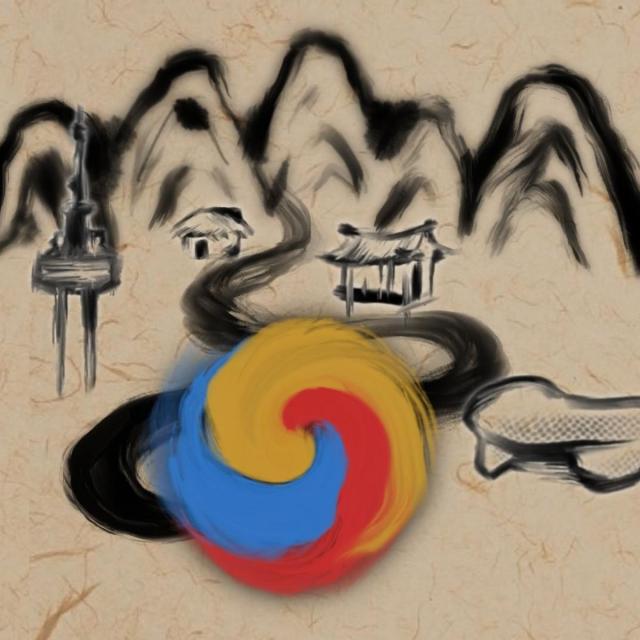
Introduction to Korean Philosophy and Culture (Coursera)

This course will give you the cultural and historical background to begin your journey into Korean philosophy, and there is no prerequisite knowledge on philosophy required. Anybody who either has an interest in Korean culture, maybe through K-Dramas or K-pop, or an interest in philosophy from a cross-cultural perspective, are all welcome.

Nov 23rd 2026
4 Weeks
Introduction to Philosophy (Coursera) Coursera
University of Edinburgh

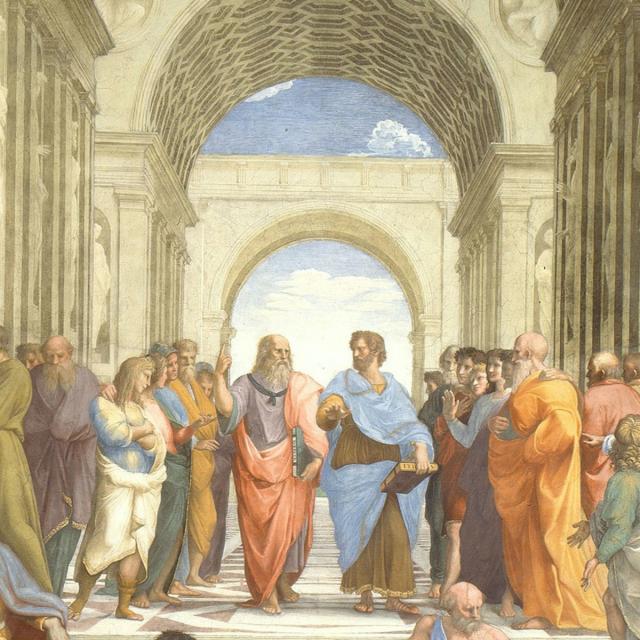
Introduction to Philosophy (Coursera)

This course will introduce you to some of the main areas of research in contemporary philosophy. Each module a different philosopher will talk you through some of the most important questions and issues in their area of expertise. We’ll begin by trying to understand what philosophy is – what are its characteristic aims and methods, and how does it differ from other subjects? Then we’ll spend the rest of the course gaining an introductory overview of several different areas of philosophy.

Nov 30th 2026
5-12 Weeks
中國人文經典導讀 (Coursera) Coursera
The Chinese University of Hong Kong

中國人文經典導讀 (Coursera)

本課程對象為對中國文化有興趣的同學。 課程目的為通過四個不同特色的主題,討論中國文化的四個主要面向。每個主題選取兩篇經典文本作為核心閱讀,並與延伸閱讀做互文探討,以新角度解讀經典文本的意義,展現中國文化的複雜性、多元性。文本難度與大學一年級國文程度相當。

Nov 16th 2026
5-12 Weeks
The Beauty of Kunqu Opera (Coursera) Coursera
The Chinese University of Hong Kong

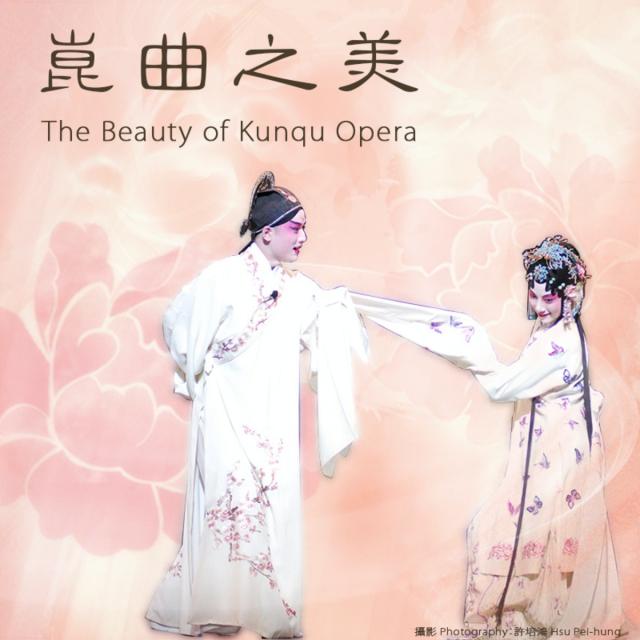
The Beauty of Kunqu Opera (Coursera)

This course will focus on the historical and cultural background, literary aesthetics, music, and performance of Kunqu, China’s classical opera. After viewing the lecture videos presented by scholars and renowned maestros in the field of Kunqu, students’ understanding and appreciation of Chinese performing arts, classical literature and traditional culture will be enhanced.

Nov 23rd 2026
5-12 Weeks
Søren Kierkegaard - Subjectivity, Irony and the Crisis of Modernity (Coursera) Coursera
University of Copenhagen

Søren Kierkegaard - Subjectivity, Irony and the Crisis of Modernity (Coursera)

In this course created by former associate professor at the Søren Kierkegaard Research Centre, Jon Stewart, we will explore how Kierkegaard deals with the problems associated with relativism, the lack of meaning and the undermining of religious faith that are typical of modern life. His penetrating analyses are still highly relevant today and have been seen as insightful for the leading figures of Existentialism, Post-Structuralism and Post-Modernism.

Nov 9th 2026
5-12 Weeks
The History of Medicine: Philosophy, Science, and Psychology (Coursera) Coursera
University of California, Santa Cruz

The History of Medicine: Philosophy, Science, and Psychology (Coursera)

"History of Medicine" provides an accessible historical and interdisciplinary perspective on medicine, focused primarily upon therapy and practice, to achieve better understanding of the scope, practice, and limits of medicine. Medicine is defined as the treatment of disease. Human attempts to understand and treat disease will be seen as evolving from the spiritual and mystical practices of the distant past, to the rational approach of the Classical World, and finally to the scientific thinking of the Renaissance and beyond.

Nov 23rd 2026
5-12 Weeks
Alfabetização Midiática, Informacional e Diálogo Intercultural - UNESCO e UNICAMP (Coursera) Coursera
Universidade Estadual de Campinas - UNICAMP

Alfabetização Midiática, Informacional e Diálogo Intercultural - UNESCO e UNICAMP (Coursera)

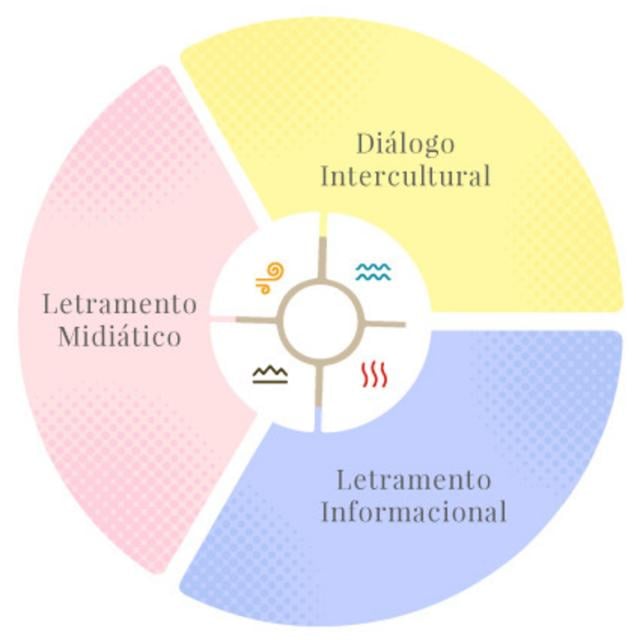
Este curso quer pensar junto com você sobre um fenômeno recente no Brasil, que é a presença de uma grande quantidade de informação via mundo digital. Vamos mostrar diferentes caminhos do que podemos fazer com essa quantidade incrível de midias e como participar da construção de conteúdo digital de maneira sóbria e segura.

Nov 23rd 2026
5-12 Weeks
Know Thyself - The Value and Limits of Self-Knowledge: The Examined Life (Coursera) Coursera
University of Edinburgh

Know Thyself - The Value and Limits of Self-Knowledge: The Examined Life (Coursera)

According to legend, inscribed on walls of the temple on the sacred site of Delphi in Ancient Greece were two premier injunctions: NOTHING IN EXCESS, and KNOW THYSELF. This course will be an examination of the latter injunction in an effort to discover what self-knowledge is, why it might be valuable, and what, if any, limitations it might face.

Nov 16th 2026
4 Weeks
Religious Transformation in Early China: the Period of Division (Coursera) Coursera
The Chinese University of Hong Kong

Religious Transformation in Early China: the Period of Division (Coursera)

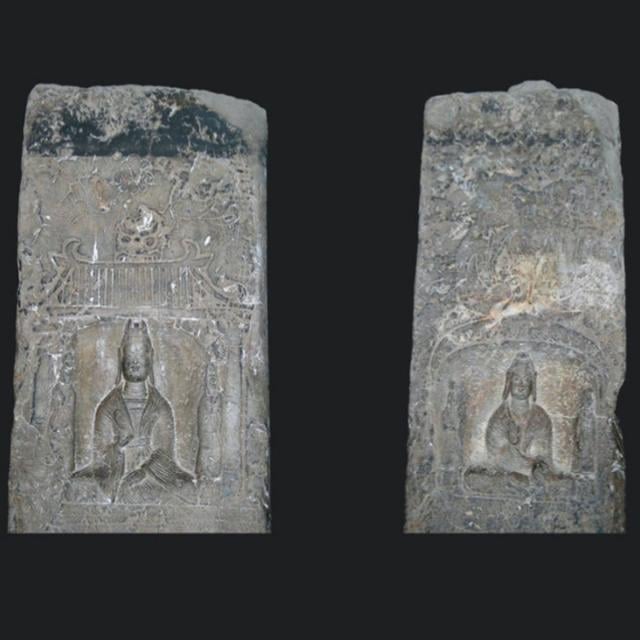
This sequence of four courses will propose a multi-disciplinary approach to the study of Chinese cultural history conceived of as a succession of modes of rationality (philosophical, bureaucratic, and economic). The focus will be on the moments of paradigm shift from one mode of rationality to another. For each of these moments, cultural facts and artifacts—thought, literature, ritual—will be examined in relationship to changing social, political, and economic systems.

Nov 30th 2026
5-12 Weeks
Intellectual Humility: Practice (Coursera) Coursera
University of Edinburgh

Intellectual Humility: Practice (Coursera)

We live in a polarised world where all too often people talk past each other. But do you know when to believe what others say? For example, how quick should we be to accept something that someone else tells us is true, and what should we be looking out for when assessing a person's trustworthiness? Meanwhile, what should we do when we encounter disagreements with people who seem to be our equals? How and when should we adjust our beliefs, and how does the appropriate response vary depending on the evidence? These challenges may be especially important in the arena of religious disagreements. How should we weigh the evidence for and against various theistic and atheistic stances?

Nov 16th 2026
4 Weeks