Energy and Environment (Coursera)

Offered by Dartmouth College,
Energy and Environment (Coursera)

This course deals with both renewable and non-renewable energy. By applying scientific principles and considering real-world examples, you will examine: 1. Non-renewable fossil fuels with a focus on coal, petroleum and natural gas and the benefits and consequences of using each. 2. Renewable fuels such as wind and solar and identify that even renewable “green” energy sources have impacts as well as benefits.

  1. Biodiversity and global change, which are the integrating units of environmental science.

Class Deals by MOOC List - Click here and see Coursera's Active Discounts, Deals, and Promo Codes.

Additionally, you will explore answers to the following questions:

  1. How do we evaluate coal, oil, and natural gas from an environmental science perspective?
  2. What regulates energy conversions and losses in human-built systems?
  3. How much energy “flows through your fingertips?”
  4. How do we evaluate hydro, solar, wind, and biomass from an environmental science perspective?
  5. How can we increase efficiency and conservation?

You also take a tour of the Dartmouth Powerplant and listen to a conversation with Dartmouth Sustainability Director, Rosi Kerr. Furthermore, you will take a field trip to a PV tracker solar system, visit a straw bale house, and have a conversation about waste vegetable oil as an energy source in India.

Course 3 of 3 in the Introduction to Environmental Science Specialization.

Syllabus

WEEK 1
Module 1: An Overview of Non-renewable Energy
This module explores some concepts related to energy such as its forms, conservation with a special stress on non-renewable energy.

WEEK 2
Module 2: Fossil Fuel and Future of Energy
This module describes how energy use and energy resources, specifically coal, oil, and natural gas, have varied over time.

WEEK 3
Module 3: The World of Renewable Energy
This module explores the patterns of renewable energy use and explains the hydro, solar, wind, and biomass energy. It also discusses how energy use can be decreased and efficiency can be increased.

WEEK 4
Module 4: Effects of Global Change
This module explores the impacts of global environmental changes including feedback loops, ocean acidification, sea level rise, and human equity issues.
Go to Class
MOOC List is learner-supported. When you buy through links on our site, we may earn an affiliate commission.

Related Courses

From the Big Bang to Dark Energy (Coursera) Coursera
The University of Tokyo

From the Big Bang to Dark Energy (Coursera)

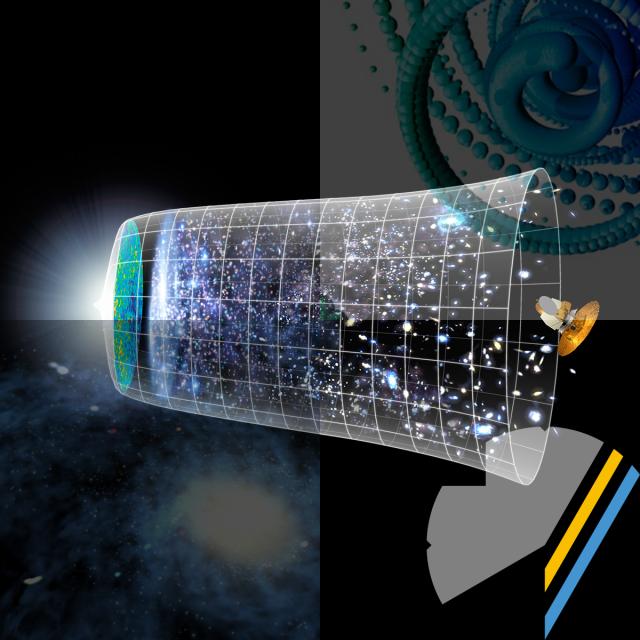
We have learned a lot recently about how the Universe evolved in 13.7 billion years since the Big Bang. More than 80% of matter in the Universe is mysterious Dark Matter, which made stars and galaxies to form. The newly discovered Higgs-boson became frozen into the Universe a trillionth of a second after the Big Bang and brought order to the Universe.

Oct 5th 2026
4 Weeks
Mastering bitumen for better roads and innovative applications (Coursera) Coursera
École des Ponts ParisTech

Mastering bitumen for better roads and innovative applications (Coursera)

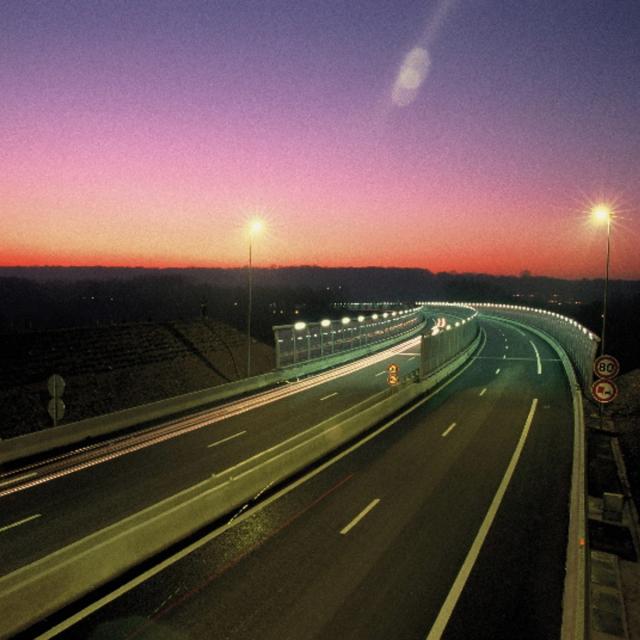
During the four coming weeks, best experts in bitumen will bring you their knowledge and experience to build a strong understanding of today’s realities and new perspectives on the future of bitumen. Total is the European leader on bitumen markets. Innovation has always been the key to sustainability and durability in the products they develop. Their main objective here is to share technical knowledge and experience to insure bitumen are being used in the most effective and efficient ways for their different applications in road works.

Oct 5th 2026
4 Weeks
Energy Harvesting (Coursera) Coursera
Sungkyunkwan University - SKKU

Energy Harvesting (Coursera)

Joining this course presents opportunity to learn about energy harvesting that refers to a technology that converts the energy discarded in our daily lives into useful electrical energy that we can use. As we all know, most of low-power electronics, such as remote sensors, are driven by batteries. However, even when it comes to long-lasting batteries, they face an issue that is a regular replacement. It can turn out to be costly as there are hundreds of sensors in remote locations.

Oct 5th 2026
4 Weeks
Planning for Climate Change in African Cities (Coursera) Coursera
Erasmus University Rotterdam,United Cities and Local Governments of Africa,African Local Government Academy,Institute for Housing and Urban Development

Planning for Climate Change in African Cities (Coursera)

Climate change poses a threat to economic growth and long-term prosperity of many countries around the world. Africa is not an exception, considering the actual and potential impacts of climate change and climate variability that will threaten its vulnerable sectors and human populations. African countries are projected to experience changing rainfall patterns, rising sea levels, and higher temperatures that will affect food security, agricultural production, water availability, and public health, among others. These climate change impacts and climate variability can further produce social and political problems, such as rural-urban migration and water resource disputes.

Oct 12th 2026
5-12 Weeks
Arctic Development (Coursera) Coursera
University of Alberta

Arctic Development (Coursera)

Welcome to Arctic: Development! In this third in a series of Arctic MOOCs, brought to you by a unique partnership between the University of Alberta and UiT The Arctic University of Norway, we will be exploring regional development in a changing arctic. In this 4-week course, you will investigate the role that natural resources play across the Indigenous, Nordic, Russian and North American Arctics, different strategies for resource management in different regions, and how these affect community planning and development efforts in an increasingly populated part of the world.

Oct 5th 2026
4 Weeks
Drones for Environmental Science (Coursera) Coursera
Duke University

Drones for Environmental Science (Coursera)

Duke Environment+ will be hosting a virtual informational session on Drones for Environmental Science on July 25 at 7 p.m. ET. For more details and to register for the Zoom webinar, see the related FAQ at the bottom of this page. How can drones be used for good in environmental science? What types of data can scientists collect, and how should they go about collecting it using drones? Why should someone integrate drones into their existing career or pursue this field?

Oct 12th 2026
4 Weeks
Mechanics: Motion, Forces, Energy and Gravity, from Particles to Planets (Coursera) Coursera
UNSW Sydney - University of New South Wales

Mechanics: Motion, Forces, Energy and Gravity, from Particles to Planets (Coursera)

Most of the phenomena in the world around you are, at the fundamental level, based on physics, and much of physics is based on mechanics. Mechanics begins by quantifying motion, and then explaining it in terms of forces, energy and momentum. This allows us to analyse the operation of many familiar phenomena around us, but also the mechanics of planets, stars and galaxies.

Oct 12th 2026
5-12 Weeks
Silicon Thin Film Solar Cells (Coursera) Coursera
École Polytechnique

Silicon Thin Film Solar Cells (Coursera)

This course consists of a general presentation of solar cells based on silicon thin films. It is the third MOOC of the photovoltaic series of Ecole polytechnique on Coursera. The general aspects of the photovoltaic field are treated in "Photovoltaic Solar Energy". And the detailed description of the crystalline silicon solar cells can be found in "Physics of Silicon Solar Cells".

Oct 5th 2026
3 Weeks
Working for a sustainable future: concepts and approaches (Coursera) Coursera
Lund University

Working for a sustainable future: concepts and approaches (Coursera)

In this course, participants are introduced to key notions and concepts evolving in sustainability science that are relevant to all, independent to one's work or field of interest. After having completed the course, participants will have a better understanding of the vocabulary used today and should demonstrate the ability to reflect critically to integrate different perspectives of environmental, social, and economic sustainability to their specific area of interest or research.

Oct 5th 2026
5-12 Weeks