Electrical Power Generation - An Industrial Outlook (Coursera)

Offered by L&T EduTech,
Electrical Power Generation - An Industrial Outlook (Coursera)

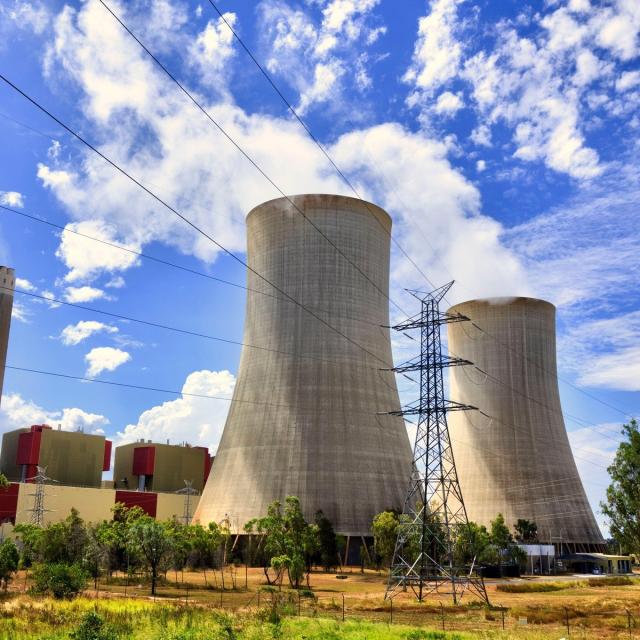
This course explains the complete Power Generation, extensively detailing about the various electrical equipment along with the process of power generation.

Class Deals by MOOC List - Click here and see Coursera's Active Discounts, Deals, and Promo Codes.

Course 1 of 3 in the Power System: Generation, Transmission and Protection Specialization.

Syllabus

WEEK 1
An Introduction to Power Sector Scenario - Generation, Transmission & Distribution of Power
By the end of this module on Distribution Substations, learners will be: history of power generation, methods of power generation, and its various types like sola, wind and nuclear.

WEEK 2
Overview of Electrical Generator and its Auxiliary Systems
Ability to understand and define electrical generator operation and components of various generator auxiliary systems.

WEEK 3
Overview of Electrical System for Power plant
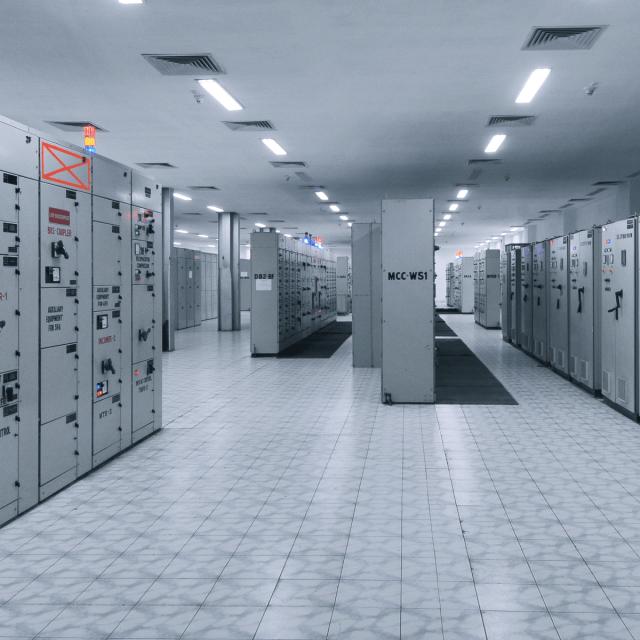
Ability to understand and define components of electrical power generation, power evacuation and power distribution in a typical electrical distribution in a power plant. Students will also get an idea about emergency power.

WEEK 4
Power Plant Control System
To be able to decide right type of control system and other network components and be able to design the complete control system architecture for a power plant
• Able to understand various types of control system used in power plants and their applications. • Able to understand level of automation and control system hierarchy.
Go to Class
MOOC List is learner-supported. When you buy through links on our site, we may earn an affiliate commission.

Related Courses

Introduction to Physical Chemistry (Coursera) Coursera
University of Manchester

Introduction to Physical Chemistry (Coursera)

Chemical reactions underpin the production of pretty much everything in our modern world. But, what is the driving force behind reactions? Why do some reactions occur over geological time scales whilst others are so fast that we need femtosecond-pulsed lasers to study them? Ultimately, what is going on at the atomic level? Discover the answers to such fundamental questions and more on this course in introductory physical chemistry.

Jun 1st 2026
5-12 Weeks
Understanding Research Methods (Coursera) Coursera
University of London,SOAS University of London

Understanding Research Methods (Coursera)

This MOOC is about demystifying research and research methods. It will outline the fundamentals of doing research, aimed primarily, but not exclusively, at the postgraduate level. It places the student experience at the centre of our endeavours by engaging learners in a range of robust and challenging discussions and exercises befitting SOAS, University of London's status as a research-intensive university and its rich research heritage.

Jun 1st 2026
4 Weeks
Advanced Manufacturing Enterprise (Coursera) Coursera
University at Buffalo,The State University of New York

Advanced Manufacturing Enterprise (Coursera)

Enterprises that seek to become proficient in advanced manufacturing must incorporate manufacturing management tools and integrate data throughout the supply chain to be successful. This course will make students aware of what a digitally connected enterprise is, as they learn about the operational complexity of enterprises, business process optimization and the concept of an integrated product-process-value chain.

Jun 1st 2026
4 Weeks
Introduction to Advanced Vibrations (Coursera) Coursera
Korea Advanced Institute of Science and Technology - KAIST

Introduction to Advanced Vibrations (Coursera)

Introduction to Advanced Vibrations starts with a review of single and double degree of freedom systems. After that, multiple degrees of freedom systems are introduced to explain the vibrations of string and beam. These vibration systems provide to apply or use them into practical problems.

Jun 1st 2026
5-12 Weeks
MRI Fundamentals (Coursera) Coursera
Korea Advanced Institute of Science and Technology - KAIST

MRI Fundamentals (Coursera)

Welcome! In this course learners will develop expertise in basic magnetic resonance imaging (MRI) physics and principles and gain knowledge of many different data acquisition strategies in MRI. In particular, learners will get to know what is magnetic resonance phenomenon, how magnetic resonance signals are generated, how an image can be formulated using MRI, how soft tissue contrast can change with imaging parameters.

Jun 1st 2026
5-12 Weeks
Introduction to Engineering Mechanics (Coursera) Coursera
Georgia Institute of Technology

Introduction to Engineering Mechanics (Coursera)

This course is an introduction to learning and applying the principles required to solve engineering mechanics problems. Concepts will be applied in this course from previous courses you have taken in basic math and physics. The course addresses the modeling and analysis of static equilibrium problems with an emphasis on real world engineering applications and problem solving.

Jun 1st 2026
5-12 Weeks
Introduction to Indoor Air Quality (Coursera) Coursera
The Hong Kong University of Science and Technology - HKUST

Introduction to Indoor Air Quality (Coursera)

This course provides a basic knowledge of an emerging area – Indoor Air Quality (IAQ) in buildings. Learners will realize the importance of maintaining proper IAQ. Safe exposure levels, resulting health effects, measurement techniques, mitigate and control measures of these IAC are discussed. Other important areas related to IAQ such as building ventilation systems, indoor flow characteristics, sick building syndrome, and thermal comfort are also covered in this course.

Jun 1st 2026
4 Weeks
Introduction to FPGA Design for Embedded Systems (Coursera) Coursera
University of Colorado Boulder

Introduction to FPGA Design for Embedded Systems (Coursera)

Programmable Logic has become more and more common as a core technology used to build electronic systems. By integrating soft-core or hardcore processors, these devices have become complete systems on a chip, steadily displacing general purpose processors and ASICs. In particular, high performance systems are now almost always implemented with FPGAs. This course will give you the foundation for FPGA design in Embedded Systems along with practical design skills.

Jun 1st 2026
4 Weeks