The course gives an introduction to discrete mathematical techniques and their applications.
More info:http://www.uninettunouniversity.net/en/mooc-program.aspx?lf=fr&courseid=3004&degree=164&planid=228&faculty=0
The course gives an introduction to discrete mathematical techniques and their applications.
More info:http://www.uninettunouniversity.net/en/mooc-program.aspx?lf=fr&courseid=3004&degree=164&planid=228&faculty=0
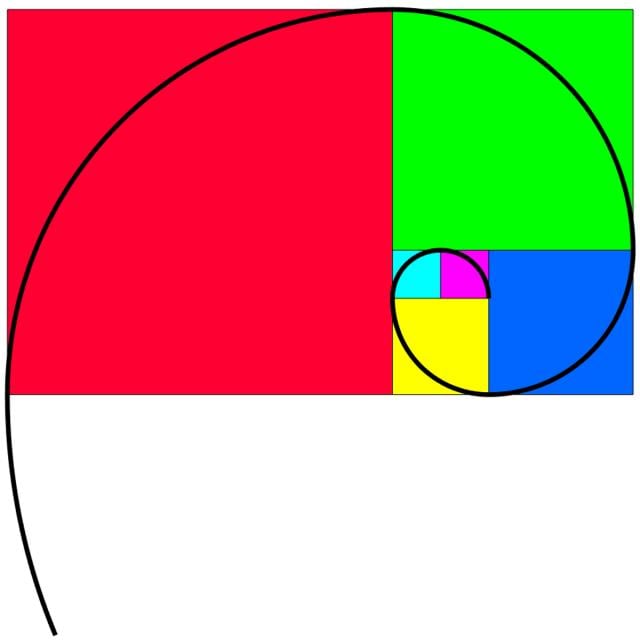
Learn the mathematics behind the Fibonacci numbers, the golden ratio, and how they are related. These topics are not usually taught in a typical math curriculum, yet contain many fascinating results that are still accessible to an advanced high school student. The course culminates in an explanation of why the Fibonacci numbers appear unexpectedly in nature, such as the number of spirals in the head of a sunflower.
En este tercer curso de acceso gratuito* del programa especializado Educación Matemática para profesores de primaria, conocerás los conceptos y técnicas para planificar e implementar tus clases. El curso tiene una duración aproximada de seis semanas, con una dedicación promedio de 4 horas semanales. Todas las evaluaciones tienen retroalimentación y podrás descargar la mayoría de los recursos del curso.
The course gives an introduction to discrete mathematical techniques and their applications.
Il corso di Complementi di Matematica è il completamento dei due corsi di carattere analitico-matematico e geometrico-algebrico, svolti nel primo anno del corso di studi.
Calculus is one of the grandest achievements of human thought, explaining everything from planetary orbits to the optimal size of a city to the periodicity of a heartbeat. This brisk course covers the core ideas of single-variable Calculus with emphases on conceptual understanding and applications. The course is ideal for students beginning in the engineering, physical, and social sciences.
This class presents the fundamental probability and statistical concepts used in elementary data analysis. It will be taught at an introductory level for students with junior or senior college-level mathematical training including a working knowledge of calculus. A small amount of linear algebra and programming are useful for the class, but not required.
Líneas rectas, círculos, parábolas, elipses e hipérbolas son figuras geométricas que encontramos en nuestro derredor. Por ejemplo, mucha gente sabe que los planetas en nuestro sistema solar se mueven en órbitas elípticas teniendo al astro rey en un foco de esta figura. Sin embargo, pocos saben que la plaza de San Pedro en el Vaticano está construída sobre elipses donde sus focos se encuentran sobre las fuentes donde mucha gente se toma fotos. Estos son dos ejemplos que muestran la importancia de las figuras geométricas en nuestra vida.
Discrete mathematics forms the mathematical foundation of computer and information science. It is also a fascinating subject in itself. Learners will become familiar with a broad range of mathematical objects like sets, functions, relations, graphs, that are omnipresent in computer science. Perhaps more importantly, they will reach a certain level of mathematical maturity - being able to understand formal statements and their proofs; coming up with rigorous proofs themselves; and coming up with interesting results.
At the completion of this course, the student should be able to: demonstrate knowledge and understanding of the fundamentals of information theory; appreciate the notion of fundamental limits in communication systems and more generally all systems; develop deeper understanding of communication systems; apply the concepts of information theory to various disciplines in information science.
Learn fundamental concepts in data analysis and statistical inference, focusing on one and two independent samples.
Calculus is one of the grandest achievements of human thought, explaining everything from planetary orbits to the optimal size of a city to the periodicity of a heartbeat. This brisk course covers the core ideas of single-variable Calculus with emphases on conceptual understanding and applications. The course is ideal for students beginning in the engineering, physical, and social sciences. Distinguishing features of the course include: 1) the introduction and use of Taylor series and approximations from the beginning; 2) a novel synthesis of discrete and continuous forms of Calculus; 3) an emphasis on the conceptual over the computational; and 4) a clear, dynamic, unified approach.
Le cours expose la théorie de Galois, du classique critère de non-résolubilité des équations polynomiales aux méthodes plus avancées de calcul de groupes de Galois par réduction modulo un nombre premier. Le thème général de cette théorie est l'étude des racines d'un polynôme et concerne en particulier la possibilité de les exprimer à partir des coefficients de ce polynôme. Evariste Galois considère les symétries de ces racines et associe ainsi à ce polynôme un groupe de permutations de ses racines, que l'on appelle maintenant son groupe de Galois.