EdX

Data Analysis for Life Sciences 1: Statistics and R (edX)

Data Analysis for Life Sciences 1: Statistics and R (edX)

An introduction to basic statistical concepts and R programming skills necessary for analyzing data in the life sciences.

Class Deals by MOOC List - Click here and see EdX's Active Discounts, Deals, and Promo Codes.

A newer version of this course is available here:
Statistics and R

We will learn the basics of statistical inference in order to understand and compute p-values and confidence intervals, all while analyzing data with R. We provide R programming examples in a way that will help make the connection between concepts and implementation. Problem sets requiring R programming will be used to test understanding and ability to implement basic data analyses. We will use visualization techniques to explore new data sets and determine the most appropriate approach. We will describe robust statistical techniques as alternatives when data do not fit assumptions required by the standard approaches. By using R scripts to analyze data, you will learn the basics of conducting reproducible research.
Given the diversity in educational background of our students we have divided the series into seven parts. You can take the entire series or individual courses that interest you. If you are a statistician you should consider skipping the first two or three courses, similarly, if you are biologists you should consider skipping some of the introductory biology lectures. Note that the statistics and programming aspects of the class ramp up in difficulty relatively quickly across the first three courses. By the third course will be teaching advanced statistical concepts such as hierarchical models and by the fourth advanced software engineering skills, such as parallel computing and reproducible research concepts.

The courses in this series will be released sequentially each month and are self-paced:
PH525.1x: Statistics and R for the Life Sciences
PH525.2x: Introduction to Linear Models and Matrix Algebra
PH525.3x: Statistical Inference and Modeling for High-throughput Experiments
PH525.4x: High-Dimensional Data Analysis
PH525.5x: Introduction to Bioconductor: annotation and analysis of genomes and genomic assays
PH525.6x: High-performance computing for reproducible genomics
PH525.7x: Case studies in functional genomics
Note: This course is currently not available.

Related Courses

Probability and Statistics I: A Gentle Introduction to Probability (edX) EdX
Georgia Institute of Technology,GTx

Probability and Statistics I: A Gentle Introduction to Probability (edX)

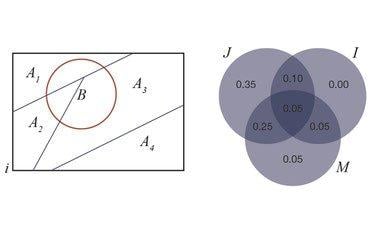
This course provides an introduction to basic probability concepts. Our emphasis is on applications in science and engineering, with the goal of enhancing modeling and analysis skills for a variety of real-world problems. In order to make the course completely self-contained (and to bring back long-lost memories), we’ll start off with Bootcamp lessons to review concepts from set theory and calculus.

Self Paced
Self-Paced
Observation Theory: Estimating the Unknown (edX) EdX
Delft University of Technology,DelftX

Observation Theory: Estimating the Unknown (edX)

Learn how to estimate parameters from observational data for real-world engineering applications and assess the quality of the results. Are you an engineer, scientist or technician? Are you dealing with measurements or big data, but are you unsure about how to proceed? This is the course that teaches you how to find the best estimates of the unknown parameters from noisy observations. You will also learn how to assess the quality of your results.

Self Paced
Self-Paced
Introductory Statistics : Sample Survey and Instruments for Statistical Inference (edX) EdX
Seoul National University,SNUx

Introductory Statistics : Sample Survey and Instruments for Statistical Inference (edX)

The purpose of this course is to introduce basic concepts of sample surveys and to teach statistical inference process using real-life examples. In this course, you will learn about sample surveys with the concepts of samples and populations. In addition, we will discuss possible problems(bias) of the surveys based on practical examples and concept of probability errors in sampling.

Self Paced
Self-Paced
Biospecimen Research Methods (edX) EdX
The University of British Columbia,UBCx

Biospecimen Research Methods (edX)

Improve the quality of your research by learning and applying best practices to collect, store and use biospecimens in your laboratory. The success of your research depends on the quality of the biospecimens you use. Get ahead of the competition, increase your chances of being published in high impact journals, and open doors to opportunities for working in leading biomedical research laboratories or biobanks.

Self Paced
Self-Paced
MathTrackX: Statistics (edX) EdX
University of Adelaide,AdelaideX

MathTrackX: Statistics (edX)

Understand fundamental concepts relating to statistical inference and how they can be applied to solve real world problems. This course will build on probability and random variable knowledge gained from previous courses in the MathTrackX XSeries with the study of statistical inference, one of the most important parts of statistics.

Self Paced
Self-Paced
Técnicas Cuantitativas y Cualitativas para la Investigación (edX) EdX
Universitat Politècnica de València,UPValenciaX

Técnicas Cuantitativas y Cualitativas para la Investigación (edX)

El curso pretende acercar al alumno al método científico y, en concreto, cómo éste se aplica al estudio y análisis de los métodos de casos. El curso que se propone es ideal para investigadores y alumnos que se encuentren cursando trabajos de fin de grado, trabajos de fin de máster o realizando tesis, así como todos aquellos del área de la administración que quieran realizar un análisis cuantitativo o cualitativo en sus estudios.

Self Paced
Self-Paced
Predictive Analytics (edX) EdX
Indian Institute of Management, Bangalore,IIMBx

Predictive Analytics (edX)

Master the tools of predictive analytics in this statistics based analytics course. Decision makers often struggle with questions such as: What should be the right price for a product? Which customer is likely to default in his/her loan repayment? Which products should be recommended to an existing customer? Finding right answers to these questions can be challenging yet rewarding.

Self Paced
5-12 Weeks
Estadística Aplicada a los Negocios (edX) EdX
Galileo University,GalileoX

Estadística Aplicada a los Negocios (edX)

Aprende las principales herramientas y técnicas de la estadística descriptiva y la estadística inferencial para analizar e interpretar datos desde la perspectiva de negocios facilitando la toma de decisiones. Este curso proporciona una introducción al análisis de datos en base a las principales herramientas estadísticas, enfocándose en la estadística descriptiva y la estadística inferencial.

Self Paced
Self-Paced
Introduction to Data Science and Basic Statistics for Business (edX) EdX
Tecnológico de Monterrey,TecdeMonterreyX

Introduction to Data Science and Basic Statistics for Business (edX)

In this course you will acquire statistical methods for decision making in business, as well as technological tools to develop quantitative skills. Areas such as " big data" require very clear knowledge of statistics and business, technology provides us various applications that require solid training in statistics for proper use and interpretation .

Self Paced
Self-Paced
Basics of Statistical Inference and Modelling Using R (edX) EdX
University of Canterbury,UCx

Basics of Statistical Inference and Modelling Using R (edX)

Learn why a statistical method works, how to implement it using R and when to apply it and where to look if the particular statistical method is not applicable in the specific situation. Basics of Statistical Inference and Modelling Using R is part one of the Statistical Analysis in R professional certificate.

Self Paced
Self-Paced
RShiny for Everyone (edX) EdX
Davidson College,DavidsonX

RShiny for Everyone (edX)

Use R’s Shiny package to create data-driven, interactive web applications. In this course, you will use R Shiny to create an interactive web application that highlights the biodiversity of America’s National Parks. Your application will feature an interactive map, biodiversity calculator, trail journal and species images. Using R Shiny, you will expand your data analysis and visualization skills while developing your workflow through web application deployment.

Self Paced
Self-Paced