Computational Thinking for K-12 Educators: Sequences and Loops (Coursera)

Computational Thinking for K-12 Educators: Sequences and Loops (Coursera)

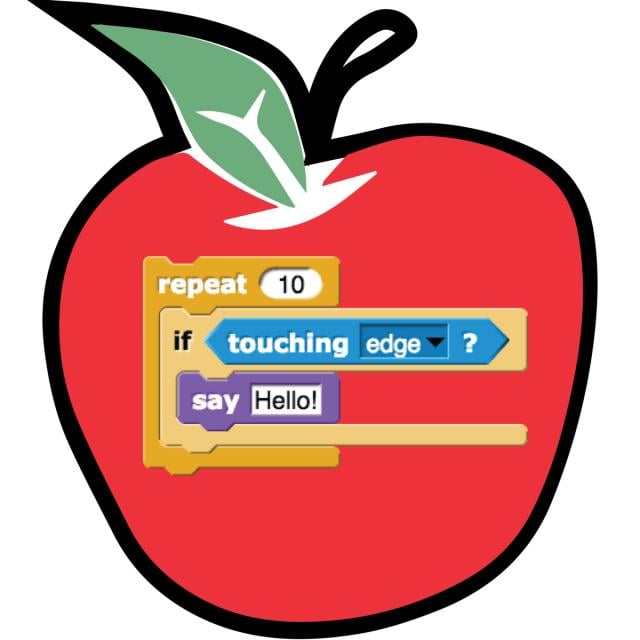
How do we give instructions to a computer? Isn't programming hard? Not really! Whether it's giving someone directions to a nearby store or writing out some dance moves we frequently exhibit aspects of computational thinking in our everyday lives! This class teaches the first key concepts of programming -- sequences of instructions and basic counted repetition of instructions.

Class Deals by MOOC List - Click here and see Coursera's Active Discounts, Deals, and Promo Codes.

For each concept, we'll start by helping you connect real-world experiences you are already familiar with to the programming concept you are about to learn. Next, through a cognitively scaffolded process we'll engage you in developing your fluency with problem solving with sequences and repeated instructions in a way that keeps frustration at a minimum.
Along the way you will learn about the common challenges or "bugs" students have with these concepts as well as ways to help them find and fix those concepts. You'll also be guided in running classroom discussions to help students develop deeper understanding of these concepts.
Finally, you'll learn about a recommended pedagogical practice, Pair Programming, and find out why research recommends teaching block-based programming first.
Course 1 of 6 in the Computational Thinking & Block Programming in K-12 Education Specialization.

Syllabus

WEEK 1
Course Orientation
Meet Dr. Simon and fellow learners in this class! Find out what you’ll be doing and learning.
Computational Thinking and Sequences
Is computational thinking everywhere? Reflect on computational thinking in your life and brainstorm instructions for real world tasks. Discuss the process by which we become better computing teachers and create a block-based program in Snap by reordering a set of provided instructions.

WEEK 2
More Sequences
Get ready to do some programming puzzles! Create a Snap program and reflect on what aspects of the program students might struggle with. Work on challenge questions and reflect on how to discuss sequences in a classroom setting. Take a break from Snap and explore the code.org curriculums to create an assessment question!

WEEK 3
Repeats
Invent a faster way to write instructions for your robotic friend! Get started solving programming puzzles that use repeats and reflect on what areas students might struggle with. Reinforce your knowledge as you complete a set of programs on google slides -- this time without using Snap to check your work!

WEEK 4
More Repeats
More programming with repeats - except with a bit of a challenge! Explore the free curriculum on code.org’s platform analyzing the feedback and hints they provide for their activities. Work closely in their artist environment and examine the difference between code.org block-based programming and your work in Snap.

WEEK 5
Equity & Pedagogy
Who is learning CS? How is CS being taught? Learn about the state of CS standards and teacher credentialing. Evaluate pedagogy techniques such as pair and buddy programing -- how effective are they in teaching CS?


Go to Class
MOOC List is learner-supported. When you buy through links on our site, we may earn an affiliate commission.

Related Courses

Computational Thinking for K-12 Educators: Abstraction, Methods, and Lists (Coursera) Coursera
University of California, San Diego

Computational Thinking for K-12 Educators: Abstraction, Methods, and Lists (Coursera)

How do gamers cause things to happen when they hit buttons on their controller? How does the computer keep track of gamer's scores? This class teaches the concepts of nested loops, events, and variables. For each concept, we'll start by helping you connect real-world experiences you are already familiar with to the programming concept you are about to learn. Next, through a cognitively scaffolded process we'll engage you in developing your fluency with problem solving with nested loops, events, and variables in a way that keeps frustration at a minimum.

Jul 15th 2026
5-12 Weeks
Custom and Distributed Training with TensorFlow (Coursera) Coursera
DeepLearning.AI

Custom and Distributed Training with TensorFlow (Coursera)

In this course, you will: • Learn about Tensor objects, the fundamental building blocks of TensorFlow, understand the difference between the eager and graph modes in TensorFlow, and learn how to use a TensorFlow tool to calculate gradients; • Build your own custom training loops using GradientTape and TensorFlow Datasets to gain more flexibility and visibility with your model training; • Learn about the benefits of generating code that runs in graph mode, take a peek at what graph code looks like, and practice generating this more efficient code automatically with TensorFlow’s tools; • Harness the power of distributed training to process more data and train larger models, faster, get an overview of various distributed training strategies, and practice working with a strategy that trains on multiple GPU cores, and another that trains on multiple TPU cores.

Jul 13th 2026
4 Weeks
Simulation, Algorithm Analysis, and Pointers (Coursera) Coursera
University of Colorado System

Simulation, Algorithm Analysis, and Pointers (Coursera)

This course is the fourth and final course in the specialization exploring both computational thinking and beginning C programming. Rather than trying to define computational thinking, we’ll just say it’s a problem-solving process that includes lots of different components. Most people have a better understanding of what beginning C programming means!

Jul 20th 2026
4 Weeks
Modeling and Control of Single-Phase Rectifiers and Inverters (Coursera) Coursera
University of Colorado Boulder

Modeling and Control of Single-Phase Rectifiers and Inverters (Coursera)

This is Course #5 in the Modeling and Control of Power Electronics Specialization. The course is focused on modeling and control of grid-tied power electronics. Upon completion of the course, you will be able to understand, analyze, model, and design low-harmonic rectifiers and inverters interfacing dc loads or dc power sources, such as photovoltaic arrays, to the single-phase ac power grid.

Jul 20th 2026
3 Weeks
Introduction to Python Scripting for DevOps (Coursera) Coursera
LearnQuest

Introduction to Python Scripting for DevOps (Coursera)

This course is the first course in a series that aims to prepare you for a role working as a programmer. In this course, you will be introduced to the five main concepts in procedural programming: user input, console output, variable declaration and assignment, decision branching and iteration. Labs will allow you to apply the material in the lectures in simple computer programs designed to re-enforce the material in the lesson.

Jul 20th 2026
4 Weeks
Introduction to Python Programming (Coursera) Coursera
University of Pennsylvania

Introduction to Python Programming (Coursera)

This course provides an introduction to programming and the Python language. Students are introduced to core programming concepts like data structures, conditionals, loops, variables, and functions. This course includes an overview of the various tools available for writing and running Python, and gets students coding quickly. It also provides hands-on coding exercises using commonly used data structures, writing custom functions, and reading and writing to files.

Jul 20th 2026
4 Weeks
Big Ideas in Programming: Expressing Yourself with Python (Coursera) Coursera
University of Michigan

Big Ideas in Programming: Expressing Yourself with Python (Coursera)

Harness the power of Python and its programming concepts to express yourself and refine all the work you do with this online course from the University of Michigan. This course is designed for anyone interested in learning Python. Whether you want to discuss programming with other professionals, teaching others to code or use the language to do your own creative coding, this is the Python course for you!

Jul 20th 2026
4 Weeks
Computational Thinking with Javascript 1: Draw & Animate (Coursera) Coursera
University of Glasgow

Computational Thinking with Javascript 1: Draw & Animate (Coursera)

This is the first course in a sequence of four courses that develops essential 21st century computational thinking (CT) skills using the popular JavaScript language as a vehicle. At the end of this first course you will: know a framework for CT to help you learn about it and work with others; be developing your CT skills so that you can more easily work with digital technology of all kinds; be able to read and write programs in JavaScript that involve drawing and animation, using a specialised library; and post your creations on the web so that others can appreciate your skills.

Jul 20th 2026
4 Weeks
C++ Basics: Selection and Iteration (Coursera) Coursera
Codio

C++ Basics: Selection and Iteration (Coursera)

Code and run your first C++ program in minutes without installing anything! This course is designed for learners with no coding experience, providing a solid foundation of not just C++, but core Computer Science topics that can be transferred to other languages. The modules in this course cover printing, operators, iteration (i.e., loops), and selection (i.e., conditionals).

Jul 13th 2026
4 Weeks
Computational Thinking with JavaScript 3:Organise & Interact (Coursera) Coursera
University of Glasgow

Computational Thinking with JavaScript 3:Organise & Interact (Coursera)

This third course in the Computational Thinking with JavaScript specialization applies your developing JavaScript skills learned in the first two courses to the world of the web. You will learn how HTML and JavaScript together support the web pages with which we are so familiar, and develop skills so that you can create your own. As well as text presentation, at the heart of HTML, you will learn how to develop interactive, animated graphics, using JavaScript to dynamically add, remove and adjust the HTML objects on the screen.

Jul 20th 2026
4 Weeks