EdX

Coding for Your Classroom 4 - 10 (edX)

Coding for Your Classroom 4 - 10 (edX)

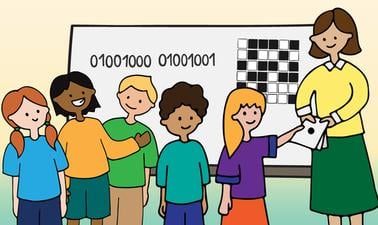
Self-paced, asynchronous course aimed to build educators’ comfortability and confidence in digital literacy. Through hands-on learning activities and demos in a variety of web-based platforms, educators will have the resources and skills they need to introduce coding concepts to their students in the 4-9 classroom.

Class Deals by MOOC List - Click here and see EdX's Active Discounts, Deals, and Promo Codes.

Could we create an opponent that will always beat us in rock paper scissors? How could we educate youth about the climate crisis through a video game? Can a story be interactive?
These are some of the questions that will guide your learning experience in Coding For Your Classroom 4-9!
This course is designed for educators to learn about ways to teach computational thinking logic to their students through fun, hands-on activities. The goal is for teachers to feel more confident with coding concepts and activities and to be able to create their own. This course will explore what computational thinking is and why it is important to teach it and introduce it to students at a young age, so we have more diversity in our technology fields in the future. Educators will leave this course knowing that they will be able to incorporate coding and develop students’ digital literacy through minor changes in their classrooms. Additionally, we aim to break barriers that teachers may face in their classrooms by providing participants with resources that develop these skills without the use of technology. At the end of the course, you will be provided with enough resources to begin to bring coding into your classroom start to feel confident creating your own!
Teachers will explore a variety of web-based platforms throughout the course such as: Microsoft MakeCode Micro:bit, Scratch, Twinery, and more!

What you'll learn

  • What is Computational Thinking
  • Places we see and use computational thinking in our everyday lives.
  • Curriculum Connections
  • Diversity in Computer Science
  • Identify cross curricular connections between computer science and other subject matter.
  • Become familiar with computational thinking through interactive lessons and activities.

Individually develop personal digital literacy; become more comfortable and confident individually in computational thinking.

  • Be able to inspire computational thinking in learners through collaborative and stimulating hands-on activities.
  • Incorporating general strategies for evaluating computational thinking activities.
  • Understanding that technology drives just about everything that defines modern society as we know it.
  • Learn some coding activities (both plugged & unplugged) for your 4-9 class
  • Constraints in teaching coding.
  • How to implement all these in the classroom

Go to Class
MOOC List is learner-supported. When you buy through links on our site, we may earn an affiliate commission.

Related Courses

Introduction to Family Engagement in Education (edX) EdX
HarvardX,Harvard University

Introduction to Family Engagement in Education (edX)

Learn about successful collaborations between families and educators and why they lead to improved outcomes for students and schools. In this education course, you will learn what family engagement is and why it matters to the success of students and schools. We will explore the research linking family engagement to better educational outcomes and speak directly with researchers, educators, students, and families about promising practices in the field.

Self Paced
Self-Paced
Teaching with Physical Computing: Introduction to Project-Based Learning (edX) EdX
Arm Education,ArmEducationX

Teaching with Physical Computing: Introduction to Project-Based Learning (edX)

This course introduces the fundamental concepts underpinning Project-Based Learning, and how you can apply it with programmable devices to bring STEM & Computing to life in the classroom. Arm’s first professional development course introduces you to the core elements of physical computing. This includes common Arm-based hardware platforms such as Arduino, Raspberry Pi and micro:bit, as well as the learning theories and concepts that underpin a Project-Based Learning pedagogy. The course helps you transform your approach to teaching Computer Science in the classroom, sharing best practice and practical guides to give all learners the opportunity to develop and practice a broad range of STEM skills.

Self Paced
Self-Paced
Teaching Computational Thinking (edX) EdX
University of Canterbury,UCx

Teaching Computational Thinking (edX)

This course is for educators who are passionate the future of their 7-12+ year old students and want to learn more about teaching computer science in an engaging and meaningful way. This course is designed to show you how to teach computational thinking to children aged 7-12+. The course will be valuable to you, whether you are new to this approach or an enthusiastic practitioner.

Self Paced
Self-Paced
Reconciliation Through Indigenous Education (edX) EdX
The University of British Columbia,UBCx

Reconciliation Through Indigenous Education (edX)

Advancing reconciliation in classrooms, organizations, and communities through the teaching and learning of Indigenous ways of knowing. This course will help you envision how Indigenous histories, perspectives, worldviews, and approaches to learning can be made part of the work we do in classrooms, organizations, communities, and our everyday experiences in ways that are thoughtful and respectful.

Sep 22nd 2026
5-12 Weeks
Teaching Critical Thinking through Art with the National Gallery of Art (edX) EdX
Smithsonian,SmithsonianX

Teaching Critical Thinking through Art with the National Gallery of Art (edX)

Learn how to integrate works of art using Artful Thinking routines, effective strategies from Project Zero at Harvard University, in this online course for teachers of all levels and subjects. Based on the National Gallery of Art’s popular Art Around the Corner professional development program for teachers in Washington, D.C., this five-part online course provides everything you need to begin creating a culture of critical thinking and collaboration for any classroom, subject, or level.

Self Paced
Self-Paced
HTML5 Coding Essentials and Best Practices (edX) EdX
World Wide Web Consortium - W3C,W3Cx

HTML5 Coding Essentials and Best Practices (edX)

Learn how to write Web pages and Web sites by mastering HTML5 coding techniques and best practices. HTML5 is the standard language of the Web, developed by W3C. For application developers and industry, HTML5 represents a set of features that people will be able to rely on for years to come. HTML5 is supported on a wide variety of devices, lowering the cost of creating rich applications to reach users everywhere.

Self Paced
Self-Paced
The Smithsonian Summer Sessions: Interrogating the Stories We Tell (edX) EdX
Smithsonian,SmithsonianX

The Smithsonian Summer Sessions: Interrogating the Stories We Tell (edX)

Educators from six Smithsonian museums will dive deeply into the objects in their collections to interrogate the stories we know and tell our students. They will explore connections among their collections and model teaching strategies that participants can implement with their students.

Self Paced
Self-Paced
Teaching with Physical Computing: Practical application and classroom strategies for PBL (edX) EdX
Arm Education,ArmEducationX

Teaching with Physical Computing: Practical application and classroom strategies for PBL (edX)

This course guides you in using real-world problems to spark your learners’ creativity and empower them to develop their own solutions using Physical Computing. Brought to you by Arm, this course guides you through the practical application of Project-Based Learning (PBL) theory using a range of tools and techniques.

Self Paced
Self-Paced