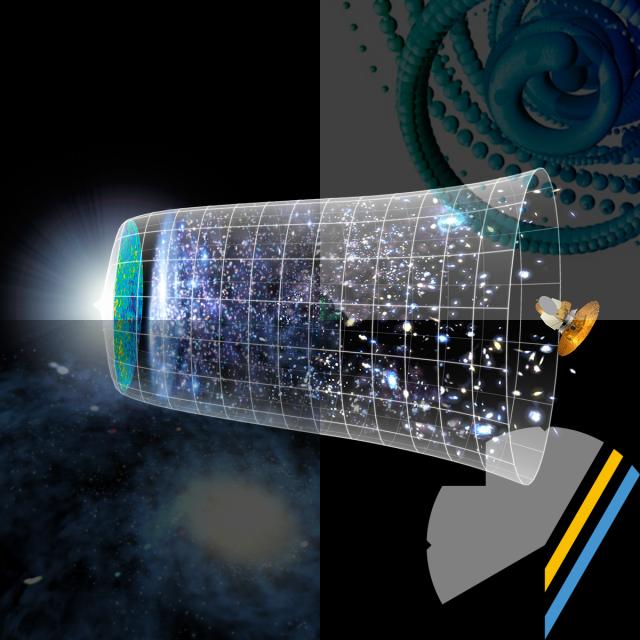
A Brief Guide to Everything (IAI Academy)

Offered by IAI Academy,
A Brief Guide to Everything (IAI Academy)

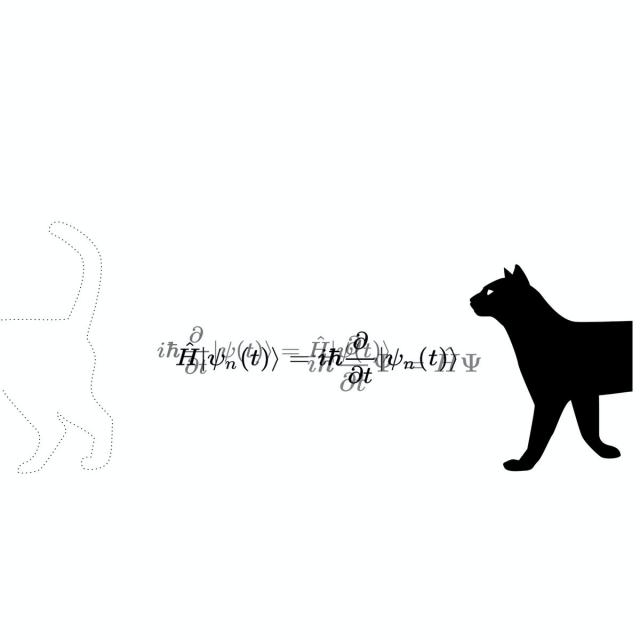
The microscopic quantum world of fermions and bosons is a far cry from the grand expansion of the universe, yet they are connected. CERN’s John Ellis offers an account of what physicists do and don’t know.

The standard model of particle physics is lauded as the most successful scientific theory ever. But from dark energy to antimatter, cosmological inflation to the stability of empty space, contemporary physics is riddled with holes. In this course, Professor John Ellis gives a grand tour of theoretical physics, and offers his account of where we might be heading.
By the end of the course, you will have learned:
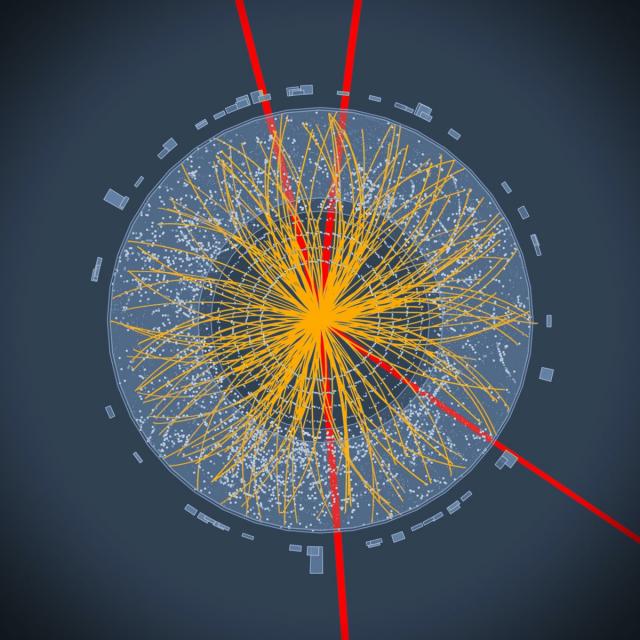
the mechanism of the Higgs boson and how it was found
the evidence and theory behind cosmological expansion
what the Cosmic Microwave Background tells us about our universe
the seven reasons why the standard model is incomplete
how far supersymmetry may help to complete the picture
why the BICEP2 gravitational waves claim may have been ruled out too soon.
As part of the course there are in-video quiz questions to consolidate your learning, suggested further readings to stimulate a deeper exploration of the topic, discussion boards to have your say and an end-of-course assessment set by Professor Ellis.
This course is eligible for official online verification.
Note: This course is currently not available.

Related Courses

Understanding Modern Physics II: Quantum Mechanics and Atoms (Coursera) Coursera
The Hong Kong University of Science and Technology - HKUST

Understanding Modern Physics II: Quantum Mechanics and Atoms (Coursera)

The 20th century was known as the century of physics. In the past 120 years, concepts such as space, time, energy, entropy and particles were understood to much deeper levels. New paradigms of thinking such as relativity and quantum mechanics emerged. This course is the second course in the Understanding Modern Physics series, which covers an introduction to quantum mechanics, atomic physics and quantum information.

Nov 23rd 2026
4 Weeks
AstroTech: The Science and Technology behind Astronomical Discovery (Coursera) Coursera
University of Edinburgh

AstroTech: The Science and Technology behind Astronomical Discovery (Coursera)

Modern astronomy has made some astonishing discoveries - how stars burn and how black holes form; galaxies from the edge of the universe and killer rocks right next door; where the elements come from and how the expanding universe is accelerating. But how do we know all that? The truth is that astronomy would be impossible without technology, and every advance in astronomy is really an advance in technology. But the technology by itself is not enough. We have to apply it critically with a knowledge of physics to unlock the secrets of the Universe.

Nov 16th 2026
5-12 Weeks
Fundamentals of Fluid-Solid Interactions (Coursera) Coursera
École Polytechnique

Fundamentals of Fluid-Solid Interactions (Coursera)

What is fluid-solid interactions ? It is what happens when the motions of a fluid and of a solid are somehow coupled. This happens all the time, around you when leaves flutter in the wind, inside you when your heart beats, above you when wings of a plane vibrate, under the sea... The idea behind this MOOC is to give you the basic tools to be able to predict and eventually mitigate things called flutter, galloping, sloshing, vortex-induced vibrations, added mass, to cite a few. We are going to consider any possible domains of applications such as civil engineering, aerospace engineering, nuclear engineering , ocean engineering, biomechanics and even food processing !

Nov 30th 2026
5-12 Weeks
Foundation of Structural Dynamics (Coursera) Coursera
ISAE-SUPAERO

Foundation of Structural Dynamics (Coursera)

A course with variable geometry where everyone, we hope, will find personal benefits. The parts can be studied sequentially or independently; and inside each part, elementary learning items can be picked up. Globally, this course proposes a deep knowledge of fundamental dynamics, with possible explicit and implicit applications in structural dynamics, but also in physics and control of any dynamic system (automatics, …).

Nov 30th 2026
5-12 Weeks
Big History - From the Big Bang until Today (Coursera) Coursera
University of Amsterdam

Big History - From the Big Bang until Today (Coursera)

Welcome to this Big History course! In this course, renowned scientists and scholars from the University of Amsterdam and beyond will take you on a journey from the Big Bang until today while addressing key questions in their fields. After completing this journey you will have developed a better understanding of how you and everything around you became the way they are today.

Nov 23rd 2026
4 Weeks
Introduction to Particle Accelerators (NPAP MOOC) (Coursera) Coursera
Lund University

Introduction to Particle Accelerators (NPAP MOOC) (Coursera)

Welcome to the Nordic Particle Accelerator Program's (NPAP) Massive Open Online Courses and to the fascinating world of particle accelerators! Did you know that in the year of 2000 there were more than 15 000 particle accelerators in the world? Yet, today it has grown to more than 30 000 of them! A third of the particle accelerators are dedicated to medical applications, such as radio therapy, and a half are used for ion implantation in semiconductor devices.

Nov 23rd 2026
5-12 Weeks
Physics of silicon solar cells (Coursera) Coursera
École Polytechnique

Physics of silicon solar cells (Coursera)

The first MOOC “Photovoltaic solar energy” is a general presentation of the solar photovoltaics technologies in the global energetic context, without extensive details. In particular the description of the solar cell operation is restricted to the ideal case. In contrast this second MOOC allows a deep understanding of the properties of solar cells based on crystalline semiconductors.

Nov 23rd 2026
5-12 Weeks
Introduction to Thermodynamics: Transferring Energy from Here to There (Coursera) Coursera
University of Michigan

Introduction to Thermodynamics: Transferring Energy from Here to There (Coursera)

This course provides an introduction to the most powerful engineering principles you will ever learn - Thermodynamics: the science of transferring energy from one place or form to another place or form. We will introduce the tools you need to analyze energy systems from solar panels, to engines, to insulated coffee mugs. More specifically, we will cover the topics of mass and energy conservation principles; first law analysis of control mass and control volume systems; properties and behavior of pure substances; and applications to thermodynamic systems operating at steady state conditions.

Nov 16th 2026
5-12 Weeks
From the Big Bang to Dark Energy (Coursera) Coursera
The University of Tokyo

From the Big Bang to Dark Energy (Coursera)

We have learned a lot recently about how the Universe evolved in 13.7 billion years since the Big Bang. More than 80% of matter in the Universe is mysterious Dark Matter, which made stars and galaxies to form. The newly discovered Higgs-boson became frozen into the Universe a trillionth of a second after the Big Bang and brought order to the Universe.

Nov 30th 2026
4 Weeks
D'un infini à l'autre (Coursera) Coursera
École Polytechnique

D'un infini à l'autre (Coursera)

Partez à la découverte de l'infiniment petit et de l'infiniment grand, en compagnie de physiciens et de physiciennes qui vont vous faire découvrir les liens entre la structure de la matière aux distances les plus petites et l'organisation de l'Univers aux distances les plus grandes ce jour, et entre les outils scientifiques utilisés pour les étudier. Vous découvrirez que de nombreux messagers venus de notre Univers (le photon, les neutrinos, ou encore les rayons cosmiques) sont aussi des objets d'intérêt pour les physiciens qui étudient la matière aux échelles les plus petites.

Nov 16th 2026
4 Weeks