Bayesian Inference with MCMC (Coursera)

Offered by Databricks,
Bayesian Inference with MCMC (Coursera)

The objective of this course is to introduce Markov Chain Monte Carlo Methods for Bayesian modeling and inference, The attendees will start off by learning the the basics of Monte Carlo methods. This will be augmented by hands-on examples in Python that will be used to illustrate how these algorithms work. This will be the second course in a specialization of three courses .Python and Jupyter notebooks will be used throughout this course to illustrate and perform Bayesian modeling with PyMC3.

Class Deals by MOOC List - Click here and see Coursera's Active Discounts, Deals, and Promo Codes.

What You Will Learn

  1. Markov Chain Monte Carlo algorithms
  2. Implementing the above in Python
  3. Assess the performance of Bayesian models

Course 2 of 3 in the Introduction to Computational Statistics for Data Scientists Specialization

Syllabus

WEEK 1
Topics in Model Performance
This module gives an overview of topics related to assessing the quality of models. While some of these metrics may be familiar to those with a Machine Learning background, the goal is to bring awareness to the concepts rooted in Information Theory.

WEEK 2
The Metropolis Algorithms for MCMC
This module serves as a gentle introduction to Markov-Chain Monte Carlo methods. The general idea behind Markov chains are presented along with their role in sampling from distributions. The Metropolis and Metropolis-Hastings algorithms are introduced and implemented in Python to help illustrate their details.

WEEK 3
Gibbs Sampling and Hamiltonian Monte Carlo Algorithms
This module is a continuation of module 2 and introduces Gibbs sampling and the Hamiltonian Monte Carlo (HMC) algorithms for inferring distributions. The Gibbs sampler algorithm is illustrated in detail, while the HMC receives a more high-level treatment due to the complexity of the algorithm. Finally, some of the properties of MCMC algorithms are presented to set the stage for Course 3 which uses the popular probabilistic framework PyMC3.

Go to Class
MOOC List is learner-supported. When you buy through links on our site, we may earn an affiliate commission.

Related Courses

Introduction to PyMC3 for Bayesian Modeling and Inference (Coursera) Coursera
Databricks

Introduction to PyMC3 for Bayesian Modeling and Inference (Coursera)

The objective of this course is to introduce PyMC3 for Bayesian Modeling and Inference, The attendees will start off by learning the the basics of PyMC3 and learn how to perform scalable inference for a variety of problems. This will be the final course in a specialization of three courses .Python and Jupyter notebooks will be used throughout this course to illustrate and perform Bayesian modeling with PyMC3..

Jan 13th 2025
4 Weeks
Estatística não-paramétrica para a tomada de decisão (Coursera) Coursera
Universidade de São Paulo, Brasil

Estatística não-paramétrica para a tomada de decisão (Coursera)

Os testes estatísticos não-paramétricos são métodos que têm maior relevância nas ciências sociais aplicadas, pois permitem trabalhar com pequenas amostras ou amostras das quais não se tenha certeza de que sejam provenientes de população com distribuição normal, assumindo poucas hipóteses sobre a distribuição de probabilidade da população.

Oct 5th 2026
4 Weeks
Mathematical understanding of uncertainty (edX) EdX
Seoul National University,SNUx

Mathematical understanding of uncertainty (edX)

This lecture series discusses how the concept of probability can be used to handle, control, and exploit uncertainty in the real-world. It is an undergraduate-level lecture series on probability, but is entirely different from the usual courses on probability theory. The lectures cover the basics of probability theory including the relevant mathematics, but instead of focusing on mathematics, the lectures explain how probability theory can help understand real-world uncertainty using various examples.

Self Paced
Self-Paced
Applied Bayesian for Analytics (edX) EdX
Indian Institute of Management, Bangalore,IIMBx

Applied Bayesian for Analytics (edX)

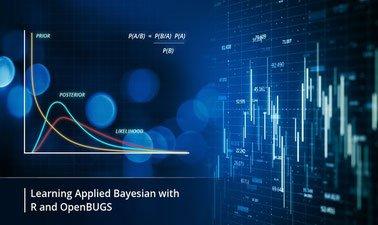
Learn how to construct, fit, estimate and compute Bayesian statistical models with the help of OpenBUGS (freely available software). Bayesian Statistics is a captivating field and is used most prominently in data sciences. In this course we will learn about the foundation of Bayesian concepts, how it differs from Classical Statistics including among others Parametrizations, Priors, Likelihood, Monte Carlo methods and computing Bayesian models with the exploration of Multilevel modelling.

Self Paced
Self-Paced
Functional Programming in Scala Capstone (Coursera) Coursera
École Polytechnique Fédérale de Lausanne

Functional Programming in Scala Capstone (Coursera)

In the final capstone project you will apply the skills you learned by building a large data-intensive application using real-world data. You will implement a complete application processing several gigabytes of data. This application will show interactive visualizations of the evolution of temperatures over time all over the world.

Oct 5th 2026
5-12 Weeks
Data Scientist Career Guide and Interview Preparation (Coursera) Coursera
IBM

Data Scientist Career Guide and Interview Preparation (Coursera)

This course is designed to prepare you to enter the job market as a data scientist. It provides guidance about the regular functions and tasks of data scientists and their place in the data ecosystem, as well as the opportunities of the profession and some options for career development. It explains practical techniques for creating essential job-seeking materials such as a resume and a portfolio, as well as auxiliary tools like a cover letter and an elevator pitch.

Oct 5th 2026
3 Weeks
Documentation and Usability for Cancer Informatics (Coursera) Coursera
Johns Hopkins University

Documentation and Usability for Cancer Informatics (Coursera)

Cancer datasets are plentiful, complicated, and hold information that may be critical for the next research advancements. In order to use these data to their full potential, researchers are dependent on the specialized data tools that are continually being published and developed. Bioinformatics tools can often be unfriendly to their users, who often have little to no background in programming (Bolchini et al. 2008). The usability and quality of the documentation of a tool can be a major factor in how efficiently a researcher is able to obtain useful findings for the next steps of their research.

Oct 5th 2026
4 Weeks
Data Visualization with Tableau Project (Coursera) Coursera
University of California, Davis

Data Visualization with Tableau Project (Coursera)

In this project-based course, you will follow your own interests to create a portfolio worthy single-frame viz or multi-frame data story that will be shared on Tableau Public. You will use all the skills taught in this Specialization to complete this project step-by-step, with guidance from your instructors along the way.

Oct 5th 2026
5-12 Weeks
Visualization for Data Journalism (Coursera) Coursera
University of Illinois at Urbana-Champaign

Visualization for Data Journalism (Coursera)

While telling stories with data has been part of the news practice since its earliest days, it is in the midst of a renaissance. Graphics desks which used to be deemed as “the art department,” a subfield outside the work of newsrooms, are becoming a core part of newsrooms’ operation. Those people (they often have various titles: data journalists, news artists, graphic reporters, developers, etc.) who design news graphics are expected to be full-fledged journalists and work closely with reporters and editors.

Oct 5th 2026
5-12 Weeks
Improving Your Statistical Questions (Coursera) Coursera
Eindhoven University of Technology

Improving Your Statistical Questions (Coursera)

This course aims to help you to ask better statistical questions when performing empirical research. We will discuss how to design informative studies, both when your predictions are correct, as when your predictions are wrong. We will question norms, and reflect on how we can improve research practices to ask more interesting questions.

Oct 5th 2026
5-12 Weeks
Bayesian Statistics: From Concept to Data Analysis (Coursera) Coursera
University of California, Santa Cruz

Bayesian Statistics: From Concept to Data Analysis (Coursera)

This course introduces the Bayesian approach to statistics, starting with the concept of probability and moving to the analysis of data. We will learn about the philosophy of the Bayesian approach as well as how to implement it for common types of data. We will compare the Bayesian approach to the more commonly-taught Frequentist approach, and see some of the benefits of the Bayesian approach.

Jun 22nd 2026
4 Weeks