EdX

Basic Mandarin Chinese - Level 2 (edX)

Offered by MandarinX,
Basic Mandarin Chinese - Level 2 (edX)

Learn Mandarin Chinese with practice in extensive vocabulary, phrases and sentence structures used in daily communication in Mandarin Chinese. In the second course of the Mandarin Chinese language series, you will learn extensive vocabulary for describing people and objects, making comparisons, and stating your own perspectives by using complex and varied sentence structures.

Class Deals by MOOC List - Click here and see EdX's Active Discounts, Deals, and Promo Codes.

Learners will focus on tones and intonation with designed practices and learn to build dialogues for everyday communication. After this Mandarin Chinese language course, you will be able to communicate in Mandarin speaking countries without difficulties.
Supplementary tools or materials are recommended if you would like to learn written language and stroke orders of Chinese characters.

What you'll learn:

  • Basic spoken Mandarin phrases and vocabulary for everyday life
  • Greater insight into Chinese culture
  • The vocabulary differences between China and Taiwan
  • Basic Mandarin Chinese grammar and sentence patterns

Note: This course is currently not available.

Related Courses

Mandarin Chinese Level 1 (edX) EdX
MandarinX

Mandarin Chinese Level 1 (edX)

Mandarin Chinese is rapidly becoming one of the top languages to learn, especially for business. Learnbasic language skills for business scenarios in Mandarin-speaking countries. Chinese is, without a doubt, the most spoken language on the planet. Learning Chinese will help your company or organization break into the biggest market on the planet. Being able to properly and correctly introduce yourself in Chinese will help you open the door to a whole new world.

Self Paced
Self-Paced
Modern China’s Foundations: The Manchus and the Qing (edX) EdX
HarvardX,Harvard University

Modern China’s Foundations: The Manchus and the Qing (edX)

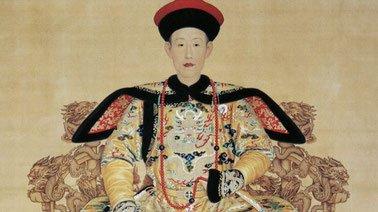
Learn how the Manchus conquered the Qing and established the last of the imperial dynasties. This course, part of a comprehensive series on China, looks at the Qing state in the early 1600s and the challenges that the Manchus faced as minority rulers. While living in Chinese cities and surrounded by Chinese culture — a culture that was far more sophisticated than their own — the Manchus struggled to hold onto their identity as a conquesting people.

Self Paced
Self-Paced
Humanity and Nature in Chinese Thought (edX) EdX
University of Hong Kong,HKUx

Humanity and Nature in Chinese Thought (edX)

We make ethical or behaviour guiding right / wrong judgments all the time but have you ever wondered where Ethics comes from, what it is about and why it is important? This course provides an introduction to traditional Chinese ethical thought and focuses on the pervasive contrast in the way Chinese and Westerners think about ethical guidance or guidance concerning what is right and what is wrong, good or bad.

No sessions available
5-12 Weeks
Chinese History From Warring States to the Tang Dynasty | 资治通鉴 (edX) EdX
Tsinghua University,TsinghuaX

Chinese History From Warring States to the Tang Dynasty | 资治通鉴 (edX)

Guides you through the Chinese masterpiece _Zizhi Tongjian, _an unprecedented work of governance and philosophical thinking spanning from the Warring States Period to the Tang Dynasty. Through the teacher's guided reading, students can go deep into the interior of this classic text, gain an overview of thousands of years of history, and improve their literacy in Chinese studies.

Self Paced
Self-Paced
Will China Rise as a Disruptive Force? The Insiders' Perspective (edX) EdX
Tsinghua University,TsinghuaX

Will China Rise as a Disruptive Force? The Insiders' Perspective (edX)

An insiders’ perspective on the economic, social and political impact of China’s rise on the world stage. China, one of the world’s oldest countries, is currently undergoing massive political, social and economic changes. The rapid emergence of China as a key player in the global political and economic landscape has led many to question how China’s decision makers perceive today’s world.

Self Paced
Self-Paced
History of Chinese Architecture | 中国建筑史 (edX) EdX
Tsinghua University,TsinghuaX

History of Chinese Architecture | 中国建筑史 (edX)

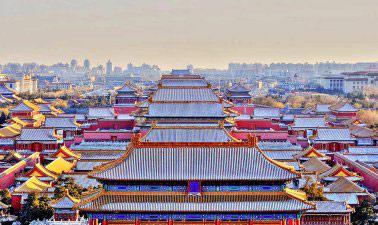
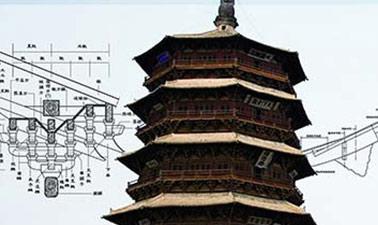
This course explores China's rich and varied architectural history. (In Mandarin with English subtitles.) 体味中国古建筑之美,理解中国建筑的重要内涵 China's architectural history spans thousands of years. In this course, we will explore the ancient cities of Chang'an of Han, Luoyang of Northern Wei, Chang'an and Luoyang of Sui and Tang, Kaifeng of Song and Dadu of Yuan, and delve into the history of the awe-inspiring ancient buildings that still grace the landscape of these bustling cities.

No sessions available
13-24 Weeks
Global China: From the Mongols to the Ming (edX) EdX
HarvardX,Harvard University

Global China: From the Mongols to the Ming (edX)

Explore the impact of the conquest dynasties and the world of the Ming. In the 13th century, by force of arms, the Mongols created the greatest empire in human history. Yet by the end of the Ming dynasty in the late 16th century, a new global economy emerged. New World silver brought together the Americas, Europe, and East Asia, and the intellectuals of East and West began to speak to each other directly.

Self Paced
Self-Paced
China and Communism (edX) EdX
HarvardX,Harvard University

China and Communism (edX)

Explore the Maoist period of China, from the Communist Party to the death of Mao and the reopening of China. How did the Communists conquer China? What role does culture play? What are the successes and failures of the Chinese Communist Party after seizing power in 1949? What constitutes liberation?

Self Paced
Self-Paced
Creating Modern China: The Republican Period to the Present (edX) EdX
HarvardX,Harvard University

Creating Modern China: The Republican Period to the Present (edX)

Explore the birth of modern China with a focus on the time between the fall of the Qing and the end of World War II. What does it mean to be modern? What constitutes modern politics, modern institutions, a modern military, and modern infrastructure? In this period of great excitement and experimentation, the country is asking itself: How do you become modern and remain true to the Chinese national identity?

Self Paced
Self-Paced