EdX

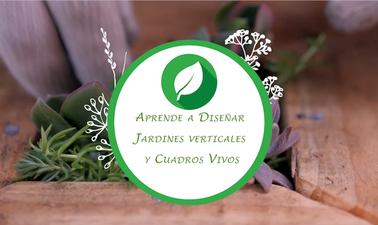
Aprende a diseñar jardines verticales y cuadros vivos (edX)

Aprende a diseñar jardines verticales y cuadros vivos (edX)

Estos son una excelente solución para llenar de vida espacios vacíos de un ambiente. Los jardines verticales son beneficiosos para la armonía del hogar y la salud, ya que, generan oxígeno y a su vez absorben dióxido de carbono. Te damos una cálida bienvenida al Curso de Jardinería Vertical y Cuadros Vivos, donde aprenderemos a realizar 3 tipos de cuadros.

Class Deals by MOOC List - Click here and see EdX's Active Discounts, Deals, and Promo Codes.

Te vamos a introducir en este nuevo mundo de la jardinería vertical.
Los jardines verticales son muros vegetales que pueden ser usados tanto en interior como en exterior, sin necesidad de suelo o sustrato horizontal.

Los cuadros vivos son la mínima expresión del jardín vertical.
Aportan los mismos beneficios de forma compacta y de fácil instalación.
En los jardines la protagonista es la vegetación. La vegetación es el conjunto de plantas, que en éste caso van a componer éste jardín.
Los vamos a estar acompañando a lo largo de éste recorrido, que les permita conectarse nuevamente con la naturaleza, revalorizar la flora en la que ustedes viven, y de alguna manera, volver hacer un uso más eficiente de los recursos naturales.

What you'll learn
En este curso queremos que te inicies en el amplio mundo los CUADROS VIVOS son una excelente solución para llenar de vida espacios vacíos de un ambiente. Y lo mejor de todo es que son beneficiosos para la armonía del hogar y la salud, ya que, generan oxígeno y a su vez absorben dióxido de carbono.
También retienen los gases contaminantes que vienen del exterior por lo cual son ideales para departamentos y casas con poco espacio.
¿Te animas a indagar en este nuevo arte?

Syllabus

Módulo 1: "Introducción a la jardinería vertical"
Explicación básica de plantas posibles a utilizar en los distintos cuadros a realizar en el curso. Detalle de riego. Generalidades.

Módulo 2: “Cuadro vivo decorativo interior”
¿Cómo hacer un cuadro vivo para interior? ¿Qué plantas conviene? Riego. Cuidados.

Módulo 3 “Cuadro vivo exterior”
¿Cómo hacer un cuadro vivo para exterior?
Plantas. Cuidados. Dónde y cómo conviene colocarlos.

Módulo 4: “Huerta de aromáticas vertical”
¿Cómo hacer un cuadro vivo con aromáticas fáciles de conseguir?
¿Qué plantas comestibles se puede tener de acuerdo a cada estación?
Utilización de pallets.

Go to Class
MOOC List is learner-supported. When you buy through links on our site, we may earn an affiliate commission.

Related Courses

Agua en América Latina: Abundancia en medio de la escasez mundial (edX) EdX
Inter-American Development Bank - IDB,IDBx

Agua en América Latina: Abundancia en medio de la escasez mundial (edX)

Un MOOC desarrollado en colaboración con la Universidad de los Andes (Uniandes) de Colombia, donde diferentes visiones y profesiones se unen para construir alternativas que ayudan a comprender la crisis mundial del agua. Si en el mundo existe tanta agua dulce, 35 millones de km3 para ser exactos, ¿cómo es posible que hoy más de 750 millones de personas no tengan acceso al agua? Al mismo tiempo, el continente americano cuenta con el 31% de las reservas de agua dulce del mundo. ¿Es posible que los países que conforman América Latina puedan aprovechar esta situación y transformarla en una gran oportunidad?

Self Paced
Self-Paced
European Paintings: From Leonardo to Rembrandt to Goya (edX) EdX
Universidad Carlos III de Madrid - UC3M,UC3Mx

European Paintings: From Leonardo to Rembrandt to Goya (edX)

Uncover the meaning behind the art of the great painters from 1400 to 1800. Learn about the inspirational work of the leading European painters from approximately 1400 to 1800, and explore the issues expressed through the art of painting. Included in this broad time frame are the works of Leonardo da Vinci, Caravaggio, Velázquez, Rembrandt, Vermeer and Goya.

Self Paced
Self-Paced
Entender el diseño (Coursera) Coursera
Arizona State University

Entender el diseño (Coursera)

¿Qué es el diseño? ¿Qué hacen los diseñadores para practicar su arte y que crean? ¿Qué importancia tiene el diseño de las corporaciones en la sociedad y la cultura? ¿Quiénes son algunos de los diseñadores más importantes de nuestra época y que han hecho? ¿Cómo uno puede convertirse en diseñador? Estas son algunas de las preguntas que exploraremos en este cuso introductorio de diseño.

Jul 27th 2026
5-12 Weeks
Desarrollo rápido de productos innovadores para mercados emergentes (Coursera) Coursera
Tecnológico de Monterrey

Desarrollo rápido de productos innovadores para mercados emergentes (Coursera)

El objetivo del curso es aprender el proceso para el Desarrollo Rápido de Productos Innovadores para mercados emergentes a través de la aplicación de 3 fases. Recordemos siempre que la diferencia entre una invención y una innovación no radica del todo en el grado de novedosidad, sino en la aceptación de dicho producto y/o servicio innovador demostrada a través de su adquisición/compra por el consumidor/mercado meta.

Aug 17th 2026
5-12 Weeks
Introduction to Linear Models and Matrix Algebra (edX) EdX
HarvardX,Harvard University

Introduction to Linear Models and Matrix Algebra (edX)

Learn to use R programming to apply linear models to analyze data in life sciences. Matrix Algebra underlies many of the current tools for experimental design and the analysis of high-dimensional data. In this introductory data analysis course, we will use matrix algebra to represent the linear models that commonly used to model differences between experimental units. We perform statistical inference on these differences. Throughout the course we will use the R programming language.

Self Paced
Self-Paced
Tropical Coastal Ecosystems (edX) EdX
University of Queensland,UQx

Tropical Coastal Ecosystems (edX)

Take the challenge and understand problems and solutions to managing tropical coastal ecosystems. Do you want to develop the skills and knowledge needed to help preserve tropical coastal ecosystems? These habitats provide goods and services for hundreds of millions of people but human activities have led to their global decline.

Self Paced
Self-Paced
Cellular Mechanisms of Brain Function (edX) EdX
École Polytechnique Fédérale de Lausanne,EPFLx

Cellular Mechanisms of Brain Function (edX)

This course aims for a mechanistic description of mammalian brain function at the level of individual nerve cells and their synaptic interactions. Brain and behavior are inextricably linked in neuroscience. The function of the brain is to govern behavior, and the aim of this course is to causally link biophysical mechanisms with simple behaviors studied in mice.

Self Paced
Self-Paced
Super-Earths And Life (edX) EdX
HarvardX,Harvard University

Super-Earths And Life (edX)

Learn about the Earth, life, and how we can search for life elsewhere in the universe. Are we alone in this universe? What new information and observations on exoplanets have we discovered? In the past decade, astronomers have made incredible advances in the discovery of planets outside our solar system. Thirty years ago, we knew only of the planets in our own solar system. Now we know of thousands circling nearby stars.

Self Paced
Self-Paced
Water and Wastewater Treatment Engineering: Biochemical Technology (edX) EdX
Tsinghua University,TsinghuaX

Water and Wastewater Treatment Engineering: Biochemical Technology (edX)

Learn the basic principles and characteristics of biochemical technology in water and wastewater treatment engineering. Biochemical technology in water and wastewater treatment engineering is essential in the field of water treatment. In this environmental studies course you will learn the basic principles and characteristics of biochemical technology.

Self Paced
Self-Paced
Sustainable Urban Development (edX) EdX
Wageningen University,Delft University of Technology,DelftX,WageningenX

Sustainable Urban Development (edX)

Learn why cities are key in resolving global urbanization and sustainability challenges and how you can engineer tomorrow’s cities today. Did you know that cities take up less than 3% of the earth’s land surface, but more than 50% of the world’s population live in them? And, cities generate more than 70% of the global emissions? Large cities and their hinterlands (jointly called metropolitan regions) greatly contribute to global urbanization and sustainability challenges, yet are also key to resolving these same challenges.

Self Paced
Self-Paced
Circular Economy: An Introduction (edX) EdX
Delft University of Technology,DelftX

Circular Economy: An Introduction (edX)

Ready to make a difference? Learn how to contribute to a sustainable economic system by implementing novel business and design approaches! Our global society is not sustainable. We all know about the challenges we’re facing: waste, climate change, resource scarcity, loss of biodiversity. At the same time, we want to sustain our economies and offer opportunities for a growing world population. This course is about providing solutions we really believe in: a Circular Economy.

Self Paced
Self-Paced
文物精品与文化中国:天文与医药 | Relics of Chinese History - Part 2: Astronomy and Medicine (edX) EdX
Tsinghua University,TsinghuaX

文物精品与文化中国:天文与医药 | Relics of Chinese History - Part 2: Astronomy and Medicine (edX)

Discover how Astronomy and Medicine impacted the history of China as we use artifacts and relics as a guide to Chinese civilization. 本课程以精品文物作引子,将学术界探索中华文明的过程作为线索,介绍古代中国在造船、玉器等诸多领域的杰出成就

Self Paced
Self-Paced