Ansible for Network Automation (Coursera)

Ansible for Network Automation (Coursera)

This course will train you on the fundamentals of Ansible, an open-source, extensible configuration management tool that streamlines infrastructure management in modern networking environments. You will also learn about Jinja2, a templating language that expands flexibility in automation tasks. Upon completing this course, you will have an essential understanding of Ansible and its application to network automation, enabling you to effectively automate network tasks and improve network operations.

Class Deals by MOOC List - Click here and see Coursera's Active Discounts, Deals, and Promo Codes.

This course is primarily intended for network engineers, systems engineers, network architects, and managers interested in learning the fundamentals of network automation and Ansible.
By the end of this course, you will be able to:

  • Construct Ansible playbooks to configure network devices and retrieve operational state data from network devices.
  • Build Jinja2 templates and YAML data structures to generate desired state configurations.

Proficiency in fundamental network routing & switching technologies, basics of Python programming (3-6 mos exp.), and basic Linux knowledge.
Course 3 of 5 in the Network Automation Engineering Fundamentals Specialization.

Syllabus

WEEK 1
Course Introduction for Ansible for Network Automation
In this module, we will review the topics and what you will learn in this course.
Introducing Ansible for Network Automation
In this module, you will be introduced to some of the basics of Ansible. You will become familiar with some of Ansible’s fundamental architecture and components like inventory files, variables, and, most importantly, playbooks. You will also be introduced to the ios_config module, which is explicitly built for Cisco IOS devices and makes creating plays and tasks for your Cisco devices easier. Ansible has numerous modules available for many different vendors, operating systems, and technologies, and this course will discuss how to look up more information about them. You will also be introduced to Ansible Galaxy, a 3rd party repository for Ansible.

WEEK 2
Templating Configurations with Jinja2
Typically, network engineers perform countless manual network operations and changes. The most common workflow is to build a Microsoft Notepad file or Microsoft Word document and call it a template. However, that template is only a set of instructions for building a configuration—it is not a real template. Jinja2 is a templating engine that is purpose-built for Python. You will learn about the Jinja2 templating engine and start to build programmatic templates and command “data” with real configuration templates.

Go to Class
MOOC List is learner-supported. When you buy through links on our site, we may earn an affiliate commission.

Related Courses

Introducing Model-Driven Programmability (Coursera) Coursera
Cisco Learning and Certifications

Introducing Model-Driven Programmability (Coursera)

In this course, you will learn about Model-Driven Programmability and its use of YANG data models to provide a standardized way to access network devices and their capabilities. You will be introduced to YANG's terminology and structures and the tools and protocols that rely on YANG, including NETCONF and RESTCONF. Additionally, you will learn how to use Python libraries to interact with NETCONF and RESTCONF-enabled systems. By the end of the course, you will have a comprehensive understanding of Model-Driven Programmability and YANG's importance in network automation.

Nov 9th 2026
3 Weeks
DevOps CI/CD Pipeline: Automation from development to deployment (edX) EdX
Universidad Anáhuac,AnahuacX

DevOps CI/CD Pipeline: Automation from development to deployment (edX)

Reduce software development times to get ahead of the competition with DevOps. Master the tools that enable you to create infrastructure from code and implement a process of continuous integration and continuous delivery, all while assuring its quality. For developers, sys admins and computer scientists or engineers, to stand out and reduce delivery times without compromising quality and reliability it is essential to know and master DevOps.

Self Paced
Self-Paced
Cybersecurity and Its Ten Domains (Coursera) Coursera
University System of Georgia

Cybersecurity and Its Ten Domains (Coursera)

This course is designed to introduce students, working professionals and the community to the exciting field of cybersecurity. Throughout the MOOC, participants will engage in community discourse and online interaction. Participants will gain knowledge and understanding of cybersecurity and its domains. They will engage with expertly produced videos, gain insight from industry experts, participate in knowledge assessments, practice assessing their environmental awareness, and gain access to materials that address governance and risk management, compliance, business continuity and disaster recovery, cryptography, software development security, access control, network security, security architecture, security operations, and physical and environmental security.

Nov 23rd 2026
5-12 Weeks
Intro to Managing Resources Using Infrastructure-as-Code (Coursera) Coursera
Codio

Intro to Managing Resources Using Infrastructure-as-Code (Coursera)

Explore Infrastructure as Code concepts without installing anything! This course is designed for beginning learners, providing a solid foundation of managing cloud resources using Infrastructure as Code techniques. Some of these techniques include: Ansible, Docker, Kubernetis, and Terraform. The modules in this course cover the configuration of containers, deploying those containers, and finally configuring the cloud. At the end of the course, learners will be able to directly implement these techniques to help them manage their own cloud resources.

Nov 9th 2026
3 Weeks
Juniper Networks Automation Using Python and PyEZ (Coursera) Coursera
Juniper Networks

Juniper Networks Automation Using Python and PyEZ (Coursera)

This course will introduce you to fundamental concepts of a programming language called Python. After introducing you to Python concepts, the course describes how to apply those concepts to network automation using Junos PyEZ, a free Python library from Juniper Networks. This course demonstrates using Python and Junos PyEZ to automate the management of Junos OS devices.

Jan 6th 2025
1 Week
5G Network Fundamentals (Coursera) Coursera
Institut Mines-Telecom

5G Network Fundamentals (Coursera)

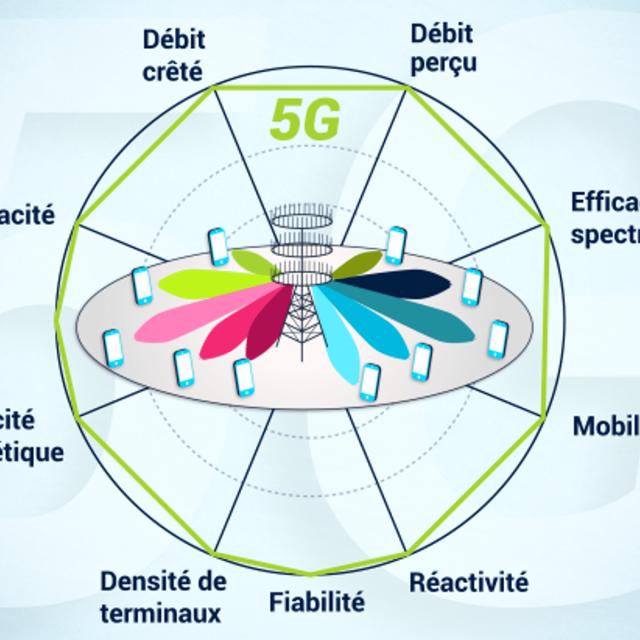
This MOOC presents the services and the architecture of 5G networks, the main principles of the new radio interface (NR), data flow management, security and the new Service-Based Architecture (SBA). In recent years, operators have been deploying 5G technology on commercial mobile networks. The latter is announced as a major technological breakthrough with speeds beyond Gbit/s, very low latencies and above all a distribution in many sectors of activity (industry, transport, medicine, etc.).

Nov 23rd 2026
5-12 Weeks
Cybersecurity Job Search, Resume, and Interview Prep (Coursera) Coursera
IBM

Cybersecurity Job Search, Resume, and Interview Prep (Coursera)

With the digital and AI disruption, cybersecurity professionals are in even higher demand around the world, and the trend shows no sign of slowing. There are also several great candidates. How can you get the edge in such a competitive field? This course will prepare you to enter the job market as a great candidate for an entry-level cybersecurity position. You will be equipped with practical techniques to create job-related documents, such as a resume, a portfolio, a cover letter, and an elevator pitch.

Nov 23rd 2026
4 Weeks
Automation With Salt (Coursera) Coursera
Whizlabs

Automation With Salt (Coursera)

Salt is an automation configuration management framework designed on the idea of executing commands remotely. This is open source software developed to automate the configuration of server systems. The course begins with the introduction to Automation with Salt followed by Salt Installation. A brief explanation about features of Salt using command-line tools and Matching Elements is provided in the course. The course also demonstrates the working of Jinja2 and Pillars in a detailed manner.

Nov 9th 2026
2 Weeks