Advanced Machine Learning and Signal Processing (Coursera)

Offered by IBM,
Advanced Machine Learning and Signal Processing (Coursera)

This course, Advanced Machine Learning and Signal Processing, is part of the IBM Advanced Data Science Specialization which IBM is currently creating and gives you easy access to the invaluable insights into Supervised and Unsupervised Machine Learning Models used by experts in many field relevant disciplines. We’ll learn about the fundamentals of Linear Algebra to understand how machine learning modes work.

Class Deals by MOOC List - Click here and see Coursera's Active Discounts, Deals, and Promo Codes.

Then we introduce the most popular Machine Learning Frameworks for python Scikit-Learn and SparkML. SparkML is making up the greatest portion of this course since scalability is key to address performance bottlenecks. We learn how to tune the models in parallel by evaluating hundreds of different parameter-combinations in parallel. We’ll continuously use a real-life example from IoT (Internet of Things), for exemplifying the different algorithms. For passing the course you are even required to create your own vibration sensor data using the accelerometer sensors in your smartphone. So you are actually working on a self-created, real dataset throughout the course.
Course 2 of 4 in the Advanced Data Science with IBM Specialization.

Syllabus

WEEK 1: Setting the stage
WEEK 2: Supervised Machine Learning
WEEK 3: Unsupervised Machine Learning
WEEK 4: Digital Signal Processing in Machine Learning


Go to Class
MOOC List is learner-supported. When you buy through links on our site, we may earn an affiliate commission.

Related Courses

Machine Learning in Retail (Coursera) Coursera
Coursera Project Network

Machine Learning in Retail (Coursera)

Who are your customers? What are they like? How do they interact with your business? This Short Course was created to help analysts better understand their customer behaviour through the power of machine learning. In this course, you will apply two different machine learning techniques to segment customers according to their purchasing behaviour and provide actionable insights for each group. Along the way, you'll also examine some other retail case studies, including web visitor analysis for marketing and store clustering for logistics.

Aug 3rd 2026
1 Week
The Finite Element Method for Problems in Physics (Coursera) Coursera
University of Michigan

The Finite Element Method for Problems in Physics (Coursera)

This course is an introduction to the finite element method as applicable to a range of problems in physics and engineering sciences. The treatment is mathematical, but only for the purpose of clarifying the formulation. The emphasis is on coding up the formulations in a modern, open-source environment that can be expanded to other applications, subsequently.

Aug 10th 2026
13-24 Weeks
Code Free Data Science (Coursera) Coursera
University of California, San Diego

Code Free Data Science (Coursera)

The Code Free Data Science class is designed for learners seeking to gain or expand their knowledge in the area of Data Science. Participants will receive the basic training in effective predictive analytic approaches accompanying the growing discipline of Data Science without any programming requirements. Machine Learning methods will be presented by utilizing the KNIME Analytics Platform to discover patterns and relationships in data.

Aug 3rd 2026
4 Weeks
Math for AI beginner part 1 Linear Algebra (Coursera) Coursera
Korea Advanced Institute of Science and Technology - KAIST

Math for AI beginner part 1 Linear Algebra (Coursera)

'Learn concept of AI such as machine learning, deep-learning, support vector machine which is related to linear algebra. Learn how to use linear algebra for AI algorithm. After completing this course, you are able to understand AI algorithm and basics of linear algebra for AI applications.

Aug 3rd 2026
5-12 Weeks
Using Machine Learning in Trading and Finance (Coursera) Coursera
New York Institute of Finance,Google Cloud

Using Machine Learning in Trading and Finance (Coursera)

This course provides the foundation for developing advanced trading strategies using machine learning techniques. In this course, you’ll review the key components that are common to every trading strategy, no matter how complex. You’ll be introduced to multiple trading strategies including quantitative trading, pairs trading, and momentum trading.

Jul 31st 2026
4 Weeks
Machine Translation (Coursera) Coursera
Karlsruhe Institute of Technology - KIT

Machine Translation (Coursera)

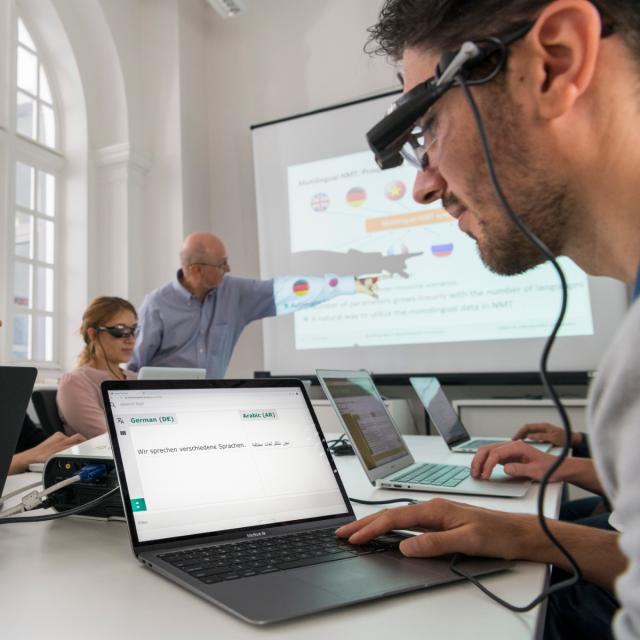
Welcome to the CLICS-Machine Translation MOOC. This MOOC explains the basic principles of machine translation. Machine translation is the task of translating from one natural language to another natural language. Therefore, these algorithms can help people communicate in different languages. Such algorithms are used in common applications, from Google Translate to apps on your mobile device.

Aug 3rd 2026
5-12 Weeks
Advanced Linear Models for Data Science 1: Least Squares (Coursera) Coursera
Johns Hopkins University

Advanced Linear Models for Data Science 1: Least Squares (Coursera)

Welcome to the Advanced Linear Models for Data Science Class 1: Least Squares. This class is an introduction to least squares from a linear algebraic and mathematical perspective. Before beginning the class make sure that you have the following: a basic understanding of linear algebra and multivariate calculus; a basic understanding of statistics and regression models; at least a little familiarity with proof based mathematics; basic knowledge of the R programming language.

Jul 27th 2026
5-12 Weeks
A Crash Course in Data Science (Coursera) Coursera
Johns Hopkins University

A Crash Course in Data Science (Coursera)

By now you have definitely heard about data science and big data. In this one-week class, we will provide a crash course in what these terms mean and how they play a role in successful organizations. This class is for anyone who wants to learn what all the data science action is about, including those who will eventually need to manage data scientists. The goal is to get you up to speed as quickly as possible on data science without all the fluff. We've designed this course to be as convenient as possible without sacrificing any of the essentials.

Jul 27th 2026
1 Week
Machine Learning Algorithms (Coursera) Coursera
Sungkyunkwan University - SKKU

Machine Learning Algorithms (Coursera)

In this course you will: understand the naïve Bayesian algorithm; understand the Support Vector Machine algorithm; understand the Decision Tree algorithm; understand the Clustering. Please make sure that you’re comfortable programming in Python and have a basic knowledge of mathematics including matrix multiplications, and conditional probability.

Aug 3rd 2026
4 Weeks
Data Science in Stratified Healthcare and Precision Medicine (Coursera) Coursera
University of Edinburgh

Data Science in Stratified Healthcare and Precision Medicine (Coursera)

An increasing volume of data is becoming available in biomedicine and healthcare, from genomic data, to electronic patient records and data collected by wearable devices. Recent advances in data science are transforming the life sciences, leading to precision medicine and stratified healthcare. In this course, you will learn about some of the different types of data and computational methods involved in stratified healthcare and precision medicine.

Aug 10th 2026
5-12 Weeks
Machine Learning (Coursera) Coursera
Stanford University

Machine Learning (Coursera)

Machine learning is the science of getting computers to act without being explicitly programmed. In the past decade, machine learning has given us self-driving cars, practical speech recognition, effective web search, and a vastly improved understanding of the human genome. Machine learning is so pervasive today that you probably use it dozens of times a day without knowing it. Many researchers also think it is the best way to make progress towards human-level AI. In this class, you will learn about the most effective machine learning techniques, and gain practice implementing them and getting them to work for yourself. More importantly, you'll learn about not only the theoretical underpinnings of learning, but also gain the practical know-how needed to quickly and powerfully apply these techniques to new problems.

Jul 27th 2026
5-12 Weeks