U.S. History: First Peoples to the Civil War and Reconstruction (Canvas.net)

U.S. History: First Peoples to the Civil War and Reconstruction (Canvas.net)

This course examines U.S. History from European settlement to the end of Reconstruction.

This course examines U.S. History from European settlement to the end of Reconstruction. It explores two interrelated processes: the often contested effort to create and maintain an American nation and the impact of social and economic changes on that endeavor. The course considers these developments from a variety of perspectives, including those of women, workers, African-Americans, politicians, and social leaders.

More info: https://www.canvas.net/courses/u-s-history-first-peoples-to-the-civil-war-and-reconstruction

Go to Class
MOOC List is learner-supported. When you buy through links on our site, we may earn an affiliate commission.
Related Courses

Exploring Beethoven’s Piano Sonatas Part 2 (Coursera) Coursera
Curtis Institute of Music

Exploring Beethoven’s Piano Sonatas Part 2 (Coursera)

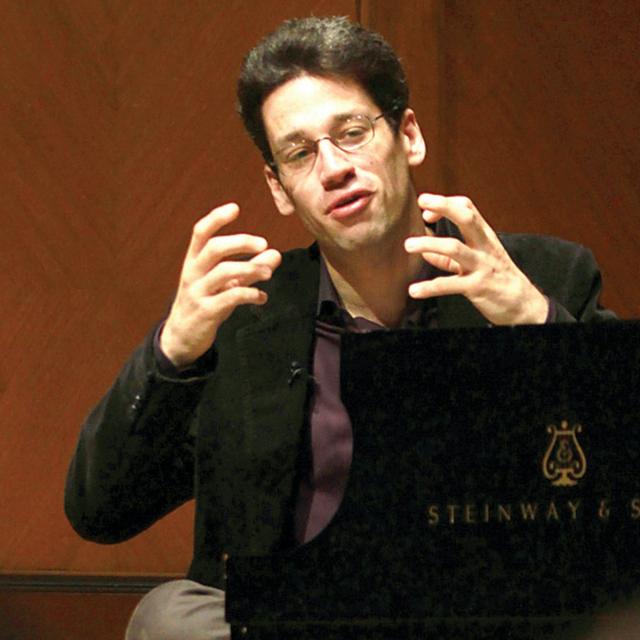
Welcome to Part 2 of Exploring Beethoven's Piano Sonatas! I'm delighted to launch another set of new lectures of this course as Part 2. As before, this class is meant for people of all levels of experience with Beethoven's music (including no experience at all!). Remember that you are able to watch the lectures as many times as you like, at whatever pace is comfortable for you.

Oct 5th 2026
5-12 Weeks
History of Rock, Part Two (Coursera) Coursera
University of Rochester

History of Rock, Part Two (Coursera)

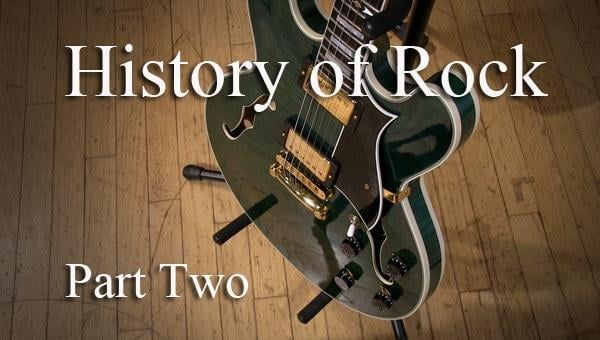
This course, part 2 of a 2-course sequence, examines the history of rock, primarily as it unfolded in the United States, from the early 1970s to the early 1990s. This course covers the music of Led Zeppelin, the Allman Brothers, Carole King, Bob Marley, the Sex Pistols, Donna Summer, Michael Jackson, Madonna, Prince, Metallica, Run-DMC, and Nirvana, and many more artists, with an emphasis both on cultural context and on the music itself. We will also explore how developments in the music business and in technology helped shape the ways in which styles developed.

Sep 28th 2026
5-12 Weeks
The Gilded Age to the Roaring Twenties: The Emergence of Modern America (Canvas.net) Canvas Network
Seattle Central Community College

The Gilded Age to the Roaring Twenties: The Emergence of Modern America (Canvas.net)

This course will explore government policies dealing with African-Americans and Native Americans; the rise of big business and urbanization; the second industrial revolution and immigration; U.S. overseas expansion and participation in the First World War; as well as progressivism and the modernist cultures of the 1920s.

No sessions available
No Information
Warfare and Weapons in Ancient Egypt (Canvas net) Canvas Network
University of Manchester

Warfare and Weapons in Ancient Egypt (Canvas net)

Dynastic Egypt united in approximately 3100 B.C. It remained an independent land for much of its 3,000 year history, before becoming absorbed into the Roman Empire in 30 B.C. This course, led by expert Egyptologist and author, Dr. Joyce Tyldesley, explores the art, archaeology, and technology of Egyptian warfare and weapons from the Predynastic Period (Dynasty 0) to the end of the New Kingdom (Dynasty 20).

Jan 11th 2016
4 Weeks
The Holocaust: The Destruction of European Jewry (Coursera) Coursera
University of California, Santa Cruz

The Holocaust: The Destruction of European Jewry (Coursera)

The Holocaust: The Destruction of European Jewry is an adaptation of an on-campus course that has been co-taught by Murray Baumgarten, Distinguished Professor of English and Comparative Literature (Literature Department), and Peter Kenez, Professor Emeritus (History Department), for over 20 years at UC Santa Cruz. In this course, you will explore the Holocaust from the overlapping perspectives of literature and history—through memoirs, historical documents, poetry, documentary footage, filmic representations, and novels.

Sep 21st 2026
5-12 Weeks
Understanding China, 1700-2000: A Data Analytic Approach, Part 2 (Coursera) Coursera
The Hong Kong University of Science and Technology - HKUST

Understanding China, 1700-2000: A Data Analytic Approach, Part 2 (Coursera)

The purpose of this course is to summarize new directions in Chinese history and social science produced by the creation and analysis of big historical datasets based on newly opened Chinese archival holdings, and to organize this knowledge in a framework that encourages learning about China in comparative perspective. Our course demonstrates how a new scholarship of discovery is redefining what is singular about modern China and modern Chinese history.

Sep 28th 2026
4 Weeks
Recovering the Humankind's Past and Saving the Universal Heritage (Coursera) Coursera
Sapienza University of Rome

Recovering the Humankind's Past and Saving the Universal Heritage (Coursera)

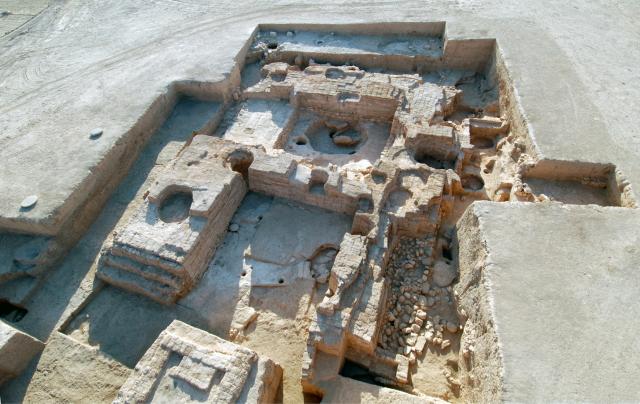
Archaeology has as its objective the recovery and revival of humankind past, and as its aim the rescue and preservation of cultural heritage. Archaeology is, among human sciences, the discipline with the strongest importance for the rediscovery, but also for the preservation and protection of cultural heritage, as Humankind’s universal patrimony. You will be introduced to the way we ourselves reflect on and are engaged with the study of human past: from the practical and material recovery of ancient traces in the field to the study and interpretation. On the other hand, the discovery of human past implies the correct conservation and presentation for both experts and general public: the study and protection of the past we share every day prevent from any possible destruction, misuse, abuse and thus cancellation of human memory.

Sep 21st 2026
5-12 Weeks
Words Spun Out of Images: Visual and Literary Culture in Nineteenth Century Japan (Coursera) Coursera
The University of Tokyo

Words Spun Out of Images: Visual and Literary Culture in Nineteenth Century Japan (Coursera)

In their ambition to capture “real life,” Japanese painters, poets, novelists and photographers of the nineteenth century collaborated in ways seldom explored by their European contemporaries. This course offers learners the chance to encounter and appreciate behavior, moral standards and some of the material conditions surrounding Japanese artists in the nineteenth century, in order to renew our assumptions about what artistic “realism” is and what it meant.

Oct 5th 2026
4 Weeks
The Ancient Greeks (Coursera) Coursera
Wesleyan University

The Ancient Greeks (Coursera)

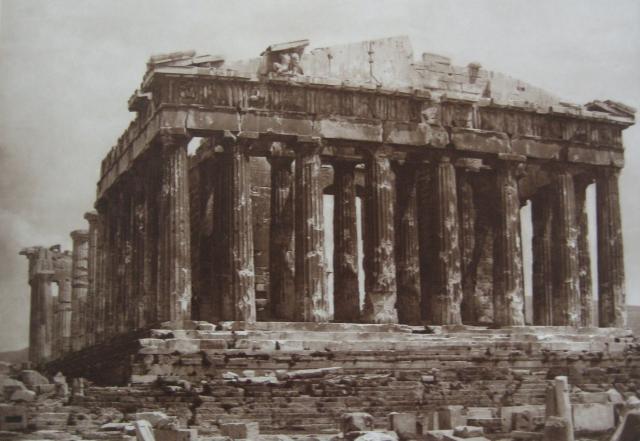
This is a survey of ancient Greek history from the Bronze Age to the death of Socrates in 399 BCE. Along with studying the most important events and personalities, we will consider broader issues such as political and cultural values and methods of historical interpretation.

Sep 21st 2026
5-12 Weeks
Terrorism and Counterterrorism: Comparing Theory and Practice (Coursera) Coursera
Leiden University

Terrorism and Counterterrorism: Comparing Theory and Practice (Coursera)

Terrorism has arguably been one of the defining factors of our age. It frequently makes headlines, threatening or attacking governments, private business and ordinary citizens. And in many parts of the world, it has been one of the most important threats to peace, security and stability. But what does this exactly mean? What is the nature of this threat? Who or what is threatened, how, by whom and why? What can be done about it or how can we at least limit the impact of terrorism and make sure that terrorists do not make headlines and manage to scare us? These are just a handful of questions that will be addressed in this course that consists of three parts.

Oct 5th 2026
5-12 Weeks