EdX

Understanding Classroom Interaction (edX)

Understanding Classroom Interaction (edX)

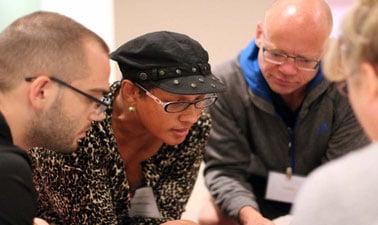
Students will learn about, critique, and practice methods for analyzing interaction in classrooms, developing tools to build more engaged, effective, and equitable classroom communication.

Class Deals by MOOC List - Click here and see EdX's Active Discounts, Deals, and Promo Codes.

Have you ever wondered why some classroom discussions are lively and engaging and others more like painful interrogations? Why some students always have an answer ready, but others never participate? Why everybody (or nobody) laughs at a teacher’s jokes? What role multiple languages should play in classroom talk?
This course gives classroom teachers at all levels and subject areas the analytic tools to answer these and more questions about classroom communication.
Each lesson introduces fundamental concepts and techniques of classroom discourse analysis, developing an analytic toolkit and promoting critical reflection on pedagogical practices over five weeks.

What you'll learn:
You’ll explore student engagement strategies including how to identify and analyze:

  • turn-taking patterns and their function
  • question types and their effects on classroom talk
  • the role of intonation, gesture and other subtle cues on interaction
  • types and functions of classroom storytelling
  • types of class participation and their effects

Syllabus

Week One: Introduction to classroom interaction (What is it and why do it?)
Introduction to previous classic research and reasons for studying classroom interaction. Introduction to basic terminology of the field and brief examples of how this terminology can be used to focus our observation of classroom talk.

Week Two: Turn-taking patterns and question types
Introduction to typical turn-taking patterns, the different types of questions teachers and students ask and the consequences for student engagement and learning. Students will view examples of different types of questions and analyze the way classroom discussions develop around them.

Week Three: Beyond Language: The role of intonation, gesture and other non-linguistic cues on interaction
Introduction to the concept of “contextualization cues,” that is the role of gesture, posture, dress, and appearance in cueing how teachers and students understand and contribute to classroom interaction.

Week Four: Types and functions of classroom storytelling
Review of classic research literature on storytelling in classrooms, from pre-school “sharing time” to literature and science discussions. Examples illustrate techniques of narrative analysis in everyday classroom settings.

Week Five: Types of participation and their effects
Introduction to different participant structures with emphasis on the joint nature of any classroom talk (from group work to teacher-delivered lectures). Examples of how different frameworks for participation in classrooms affects who talks, what gets said, and how.


Go to Class
MOOC List is learner-supported. When you buy through links on our site, we may earn an affiliate commission.

Related Courses

The Postdoc Academy: Succeeding as a Postdoc (edX) EdX
Boston University,BUx

The Postdoc Academy: Succeeding as a Postdoc (edX)

Create a rewarding postdoc experience that will launch you into your chosen career path by developing strategies and skills to successfully navigate your time as a postdoc. Are you a postdoc looking for flexible professional development? Are you looking for a place to connect with and regularly interact with other postdocs? This course is built for you!

Mar 18th 2024
5-12 Weeks
Equity and Inclusion in Education (edX) EdX
SDGAcademyX,SDG Academy

Equity and Inclusion in Education (edX)

The equitable education online course aims to educate, raise awareness and build capacity on ten core aspects of equitable education, why they are important, and what can be done in order to implement them in practice. It is directed at a broad audience of education experts and practitioners, namely policy-makers, government officials, NGOs/CBOs in the education sector, educators and university students.

Self Paced
Self-Paced
Introduction to Family Engagement in Education (edX) EdX
HarvardX,Harvard University

Introduction to Family Engagement in Education (edX)

Learn about successful collaborations between families and educators and why they lead to improved outcomes for students and schools. In this education course, you will learn what family engagement is and why it matters to the success of students and schools. We will explore the research linking family engagement to better educational outcomes and speak directly with researchers, educators, students, and families about promising practices in the field.

Self Paced
Self-Paced
Fired Up About Energy (edX) EdX
Smithsonian,SmithsonianX

Fired Up About Energy (edX)

Fired Up About Energy – explores common student misconceptions related to the study of energy and suggests methods for effectively representing and discussing the topic in the classroom. This online workshop: “Fired up about Energy ” is based on ideas presented in Good Thinking! an original animated series developed by the Smithsonian Science Education Center (SSEC) and FableVision Studios as a professional development resource for K-12 science educators.

Self Paced
Self-Paced
STEM Outside (edX) EdX
The University of British Columbia

STEM Outside (edX)

Outdoor Education in STEM is an activity focused, self-paced course designed to help educators use the skills that can be learned from outside, in nature and in the community and transferred to other STEM fields. The course will provide teachers with an understanding of how to incorporate outdoor education topics into their existing STEM curriculum.

Self Paced
Self-Paced
Teaching with Physical Computing: Introduction to Project-Based Learning (edX) EdX
Arm Education,ArmEducationX

Teaching with Physical Computing: Introduction to Project-Based Learning (edX)

This course introduces the fundamental concepts underpinning Project-Based Learning, and how you can apply it with programmable devices to bring STEM & Computing to life in the classroom. Arm’s first professional development course introduces you to the core elements of physical computing. This includes common Arm-based hardware platforms such as Arduino, Raspberry Pi and micro:bit, as well as the learning theories and concepts that underpin a Project-Based Learning pedagogy. The course helps you transform your approach to teaching Computer Science in the classroom, sharing best practice and practical guides to give all learners the opportunity to develop and practice a broad range of STEM skills.

Self Paced
Self-Paced
The Smithsonian Summer Sessions: Inspiring Civic Engagement (edX) EdX
Smithsonian,SmithsonianX

The Smithsonian Summer Sessions: Inspiring Civic Engagement (edX)

Discover how museum objects can help learners explore the challenges and opportunities of living in a democracy and inspire civic action. How can educators of all disciplines prepare students to be active and informed participants in a democracy? Join us to explore this question through the lens of six Smithsonian collections! Discover how museum objects can help learners explore the challenges and opportunities of living in a democracy and inspire civic action.

Self Paced
Self-Paced
AI in Practice: Preparing for AI (edX) EdX
Delft University of Technology,DelftX

AI in Practice: Preparing for AI (edX)

Learn to recognize and understand the implications of Artificial Intelligence for organizations, and the importance of compliance and ethics when AI is applied in practice. This course is not about difficult algorithms and complex programming; it is a course for anyone interested in learning about the benefits and implications of AI when applied in practical settings.

Self Paced
Self-Paced
Sign Language Science: Factors Contributing to Natural Learning (edX) EdX
Georgetown University,GeorgetownX

Sign Language Science: Factors Contributing to Natural Learning (edX)

This course promotes a better understanding of the factors that may affect how people learn signed language. In this course, we will look at how multiple, varying factors can account for language-learning patterns. Age, for example, is a key factor that predicts fluency. Another topic of particular importance to signed languages is the mind.

Self Paced
Self-Paced