Superpowers of the Ancient World: the Near East (FutureLearn)

Superpowers of the Ancient World: the Near East (FutureLearn)

Experience the world’s first international age, 3,500 years ago in the ancient Near East, with this free online course.

Class Deals by MOOC List - Click here and see FutureLearn's Active Discounts, Deals, and Promo Codes.

Over four weeks, this free online course explores four ancient Near-Eastern cultures and how they interacted with each other 3,500 years ago.

Tracking the Egyptian, Mitannian and Hittite superpowers
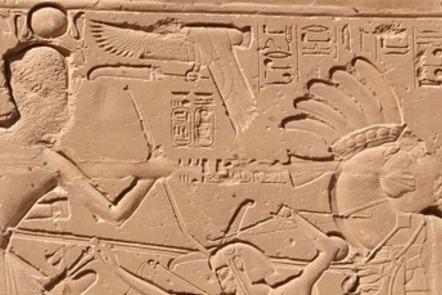
Travel, diplomacy, trade and warfare feature, as we track the ancient Egyptian, Mitannian and Hittite superpowers. We will see how they came into contact with each other in their efforts to extend their influence into the ever-contested Syria-Palestine lands.
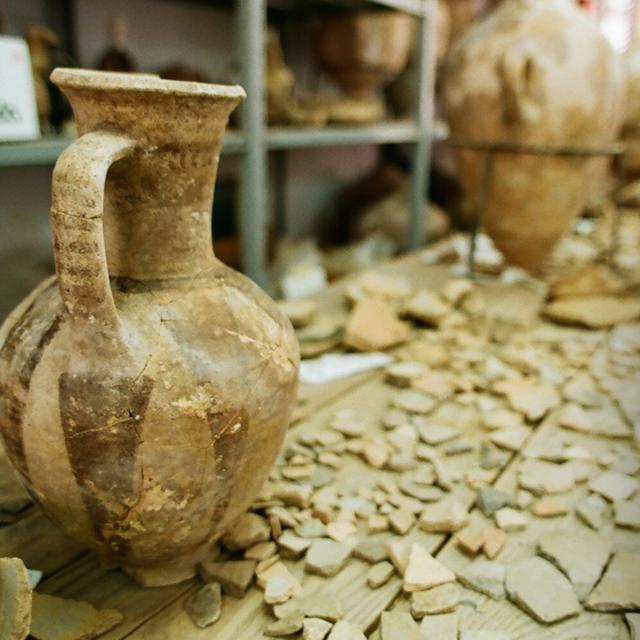
We will examine objects from the University of Liverpool’s Garstang Museum of Archaeology - one of the most important collections of artefacts in the UK - enabling you to learn not only about the history of this period, but also how experts use artefacts to reconstruct the past.

Using the present to illuminate the past
The archaeological evidence that we will consult is often disparate and fragmentary, so in order to understand it better, we will look into current approaches to international relations and discuss modern parallels with an expert from our Department of Politics.

Accessing ancient landscapes
Our experts will familiarise you with the ancient Near-Eastern landscapes and introduce you to key objects that featured in diplomacy and warfare at this time in the distant past.
You will also consider the bigger picture, as empires prospered and floundered in the struggle to become the main superpower of the ancient Near East.
Go to Class
MOOC List is learner-supported. When you buy through links on our site, we may earn an affiliate commission.

Related Courses

Genealogy: Researching Your Family Tree (FutureLearn) FutureLearn
University of Strathclyde

Genealogy: Researching Your Family Tree (FutureLearn)

Dive into your family ancestry and learn how to create a family tree on this online genealogy course. Discover the basics of genealogy and build your own family tree. Have you ever wondered about your family ancestry or wanted to create a family tree of your own? On this 6-week genealogy course for beginners, you’ll learn how to uncover the past and record your family history. The information on this course does not apply to just one country, so you can learn about your family lineage no matter where you’re from.

Self Paced
5-12 Weeks
Early Modern Scottish Palaeography: Reading Scotland's Records (FutureLearn) FutureLearn
University of Glasgow

Early Modern Scottish Palaeography: Reading Scotland's Records (FutureLearn)

Travel back in time through Scottish history by examining early modern Scottish handwriting. Explore Scottish history and learn more about using historical sources. Palaeography is the study of ancient handwriting and a vital skill in the historian’s toolkit. It is essential when conducting research on early modern Scotland – a period of profound political, religious and social change the effects of which can still be felt today.

Self Paced
3 Weeks
The Bible in Light of the Ancient Near East (edX) EdX
IsraelX

The Bible in Light of the Ancient Near East (edX)

This course is an introduction to the Bible, set against the background of the rich Archaeological findings from the Ancient Near East. The purpose of this course is to introduce you to the fascinating world of Israel’s neighboring civilizations in biblical times. It offers a comparative study that examines the relationship between the Bible and these civilizations.

Mar 14th 2023
5-12 Weeks
Pyramids of Giza: Ancient Egyptian Art and Archaeology (edX) EdX
HarvardX,Harvard University

Pyramids of Giza: Ancient Egyptian Art and Archaeology (edX)

Explore the archaeology, history, art, and hieroglyphs surrounding the famous Egyptian Pyramids at Giza. Learn about Old Kingdom pharaohs and elites, tombs, temples, the Sphinx, and how new technology is unlocking their secrets. Where is Giza? How were the Pyramids built? How did the cemeteries and hundreds of decorated tombs around them develop? What was Giza’s contribution to this first great age of ancient Egyptian civilization, the Old Kingdom?

Self Paced
Self-Paced
An Introduction to Japanese Subcultures (FutureLearn) FutureLearn
Keio University

An Introduction to Japanese Subcultures (FutureLearn)

Explore Japanese subcultures and learn about their history from the 1970s to today. Subcultures have existed for a long time: the greasers of 1950s America, the mods and rockers of the 1960s and 70s in England, the grunge of the 1980s and 90s, to name a few. Each subculture sits within a broader ‘parent’ culture and can often give us an insight into cultural fears and hopes, especially in the youth of the population. On this course you will get an introduction to Japanese subcultures that have developed since the 1970s.

Self Paced
4 Weeks
From Waterloo to the Rhine: The British Army 1815-1945 (FutureLearn) FutureLearn
University of Kent,National Army Museum

From Waterloo to the Rhine: The British Army 1815-1945 (FutureLearn)

Examine one of the UK’s most storied institutions, and how 130 years of social, cultural and military change have shaped it. Explore the British Army’s part in the making of the modern world. With a legacy stretching back centuries, the British Army is proud of its hard-won reputation as one of the most formidable fighting forces in the world.

Self Paced
4 Weeks
Religions From The Inside: Improving Interreligious Dialogue (FutureLearn) FutureLearn
Università della Svizzera italiana

Religions From The Inside: Improving Interreligious Dialogue (FutureLearn)

Explore the value of cooperation between faiths and learn how the five main world religions’ core beliefs relate to each other. Learn how to encourage and benefit from respectful interfaith dialogue. This short course, led by the Faculty of Theology of Lugano in collaboration with USI, will develop your knowledge of what interfaith dialogue means from a philosophical and epistemological point of view, and teach how to enjoy productive interfaith dialogue.

Oct 4th 2021
5-12 Weeks
Teaching the Holocaust: Innovative Approaches to the Challenges We Face (FutureLearn) FutureLearn
University College London,Yad Vashem

Teaching the Holocaust: Innovative Approaches to the Challenges We Face (FutureLearn)

Explore history, delve into pedagogical challenges revealed by research, and find practical solutions for teaching the Holocaust. The Holocaust was the murder of approximately 6 million Jews perpetrated by Nazi Germany and its collaborators. That this atrocity proved possible raises many complex questions which remain relevant for young people today.

Self Paced
3 Weeks
Lancaster Castle and Northern English History: The View from the Stronghold (FutureLearn) FutureLearn
Lancaster University

Lancaster Castle and Northern English History: The View from the Stronghold (FutureLearn)

We will use the iconic building of Lancaster Castle to investigate how 2000 years of history has shaped the north-west of England. This course takes an innovative approach to exploring history, focusing on Lancaster Castle as a microcosm of broader trends. This fascinating location provides a wealth of evidence from the remains of Roman forts to its life as a prison and visitor attraction.

Oct 18th 2021
5-12 Weeks
Radical Spirituality: the Early History of the Quakers (FutureLearn) FutureLearn
Lancaster University,Woodbrooke Quaker Study Centre

Radical Spirituality: the Early History of the Quakers (FutureLearn)

Learn about the beginnings of this radical religious group as it emerged in 17th century England, with this free online course. When you think of the Quakers, it might bring to mind porridge oats, or pacifism, or perhaps prison reform. But there is much much more to the Quakers than any of these things. Through this course, we will be finding out about what lies at the heart of Quaker beginnings, who its main characters were, and how in a few weeks during the summer of 1652 the Quaker movement was formed in the north of England.

Jan 24th 2022
3 Weeks