RPA Lifecycle: Deployment and Maintenance (Coursera)

Offered by Automation Anywhere,
RPA Lifecycle: Deployment and Maintenance (Coursera)

Robotic Process Automation (or RPA) implementation is conducted over multiple critical phases. In the Discovery phase, you identify the business processes beneficial for automation. In the Design phase, you create an RPA plan for automating them. In the Development and Testing phase, you execute the RPA plan and develop bots, testing them thoroughly during development.

Class Deals by MOOC List - Click here and see Coursera's Active Discounts, Deals, and Promo Codes.

Next, you need to deploy the bots and set them up for routine monitoring. These activities are performed next in the implementation lifecycle: in the Deployment and Maintenance phases.
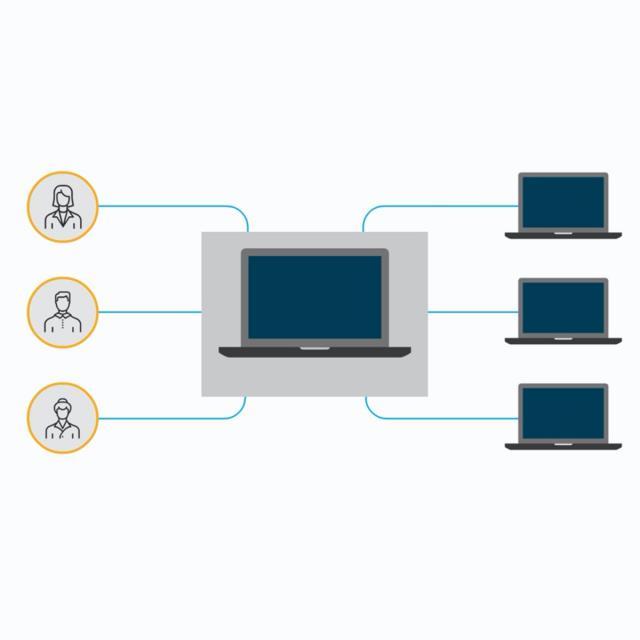
You can deploy bots in various devices and also monitor their performance live via the Web Control Room. This is a web-based application, with comprehensive workload management, granular security controls, and an intuitive analytics dashboard. It is the one central interface from where you can create and manage users and roles, monitor connected and disconnected devices and schedule bot execution.
As you begin this course, you will be introduced to the user interface of the Web Control Room. You will explore various panels and components in its Features Panel. You will also study some of the best practices and troubleshooting procedures that you can apply while using the Web Control Room during RPA Deployment and Maintenance. The learning will be reinforced through concept description, hands-on tasks, and guided practice.

What You Will Learn

  • Describe what is the Web Control Room
  • Support and troubleshoot issues with bots by applying maintenance best practices

Course 3 of 4 in the Implementing RPA with Cognitive Automation and Analytics Specialization.

Syllabus

WEEK 1
Understanding Control Room
In this module, you will explore the user interface of the Web Control Room and the panels and components present in its Features Panel. You will then use the Dashboards and Activity panels and their components to monitor and view activities of deployed bots respectively.

WEEK 2
Using Control Room Feature Panel -I
In this module, you will use the feature panels of the Control Room such as Bots, Devices and Workload to schedule and execute deployed bots, monitor devices and device pool and manage workload across machines.

WEEK 3
Using Control Room Feature Panel - II
In this module, you will use the feature panels of the Control Room such as Audit Log and Administration to view or back up activities performed in the Control Room and AAE Client, and to create and manage users, roles, and licenses. Finally, you will Identify the best practices and troubleshooting procedures followed during the RPA Deployment and Maintenance phases.

WEEK 4
Course Project: Performing the steps for Deployment and Maintenance of the RPA Lifecycle
In this project, you will learn how to create users and roles and distribute work items across devices using the Workload Manager.

Go to Class
MOOC List is learner-supported. When you buy through links on our site, we may earn an affiliate commission.

Related Courses

Continuous Integration and Deployment with ASP.NET Core (Coursera) Coursera
EDUCBA

Continuous Integration and Deployment with ASP.NET Core (Coursera)

This comprehensive course covers the foundational principles of Continuous Integration (CI) and Continuous Deployment (CD), emphasizing the integral role of automation in the software development lifecycle. Gain essential knowledge and practical skills to navigate and optimize CI/CD workflows, ensuring seamless automation throughout development.

Jul 20th 2026
4 Weeks
Collaborative Robot Safety: Design & Deployment (Coursera) Coursera
University at Buffalo,The State University of New York

Collaborative Robot Safety: Design & Deployment (Coursera)

As robots evolve and increasingly interact with humans, enhancing the safety of personnel working with these “collaborative robots” (cobots) is vital. This course equips you to assess the safety of a collaborative robot workcell and prevent the chances of injury or harm. It imparts industry-endorsed safety standards, technical report recommendations and best practices from the International Organization for Standardization (ISO), Robotic Industries Association (RIA) and Occupational Safety and Health Administration (OSHA).

Aug 3rd 2026
4 Weeks
SAP Intelligent Robotic Process Automation in a Nutshell (openSAP) OpenSAP
SAP

SAP Intelligent Robotic Process Automation in a Nutshell (openSAP)

Join this free online course to learn about SAP Intelligent Robotic Process Automation. You’ll find out what it is, the use cases, and the value it has for today’s businesses. Robotic Process Automation (RPA) accelerates the digital transformation of business processes by automatically replicating tedious actions that have no added value. SAP Intelligent Robotic Process Automation is a complete automation suite where software robots are designed to mimic humans by replacing manual clicks, interpreting text-heavy communications, or making process suggestions to end users for definable and repeatable business processes.

Self Paced
Self-Paced
Business Process Automation in SAP S/4HANA with SAP Intelligent RPA (openSAP) OpenSAP
SAP

Business Process Automation in SAP S/4HANA with SAP Intelligent RPA (openSAP)

Join this free online course to learn how you can use SAP Intelligent Robotic Process Automation as part of your SAP S/4HANA landscape, and how you can adjust the bots according to your business needs. Robotic process automation (RPA) helps reduce human error by automating business process-related manual tasks, increasing speed and lowering the total cost of ownership by saving you time and effort. Adding intelligence, which is what SAP Intelligent Robotic Process Automation does, means automated decision making, which leads to additional savings through the reduction of analytical effort.

Self Paced
Self-Paced
DevOps CI/CD Pipeline: Automation from development to deployment (edX) EdX
Universidad Anáhuac,AnahuacX

DevOps CI/CD Pipeline: Automation from development to deployment (edX)

Reduce software development times to get ahead of the competition with DevOps. Master the tools that enable you to create infrastructure from code and implement a process of continuous integration and continuous delivery, all while assuring its quality. For developers, sys admins and computer scientists or engineers, to stand out and reduce delivery times without compromising quality and reliability it is essential to know and master DevOps.

Self Paced
Self-Paced
Robotic process and intelligent automation for finance (edX) EdX
ACCA

Robotic process and intelligent automation for finance (edX)

In this course we explain how automation can play a key role in delivering the requirement to have robust processes and clean data. By using automation tools and machine learning, finance leaders can identify, implement and configure the right solutions for their organisation. It also shows how tools, such as Python, can be applied to finance processes and the benefits this will bring.

Self Paced
Self-Paced
Gain Experience with Business Partner for SAP S/4HANA Conversion (openSAP) OpenSAP
SAP

Gain Experience with Business Partner for SAP S/4HANA Conversion (openSAP)

Join this free online course to learn about the introduction of business partner master data in an SAP ERP system before conversion to SAP S/4HANA. The course is targeted at functional experts in the area of customer and vendor master data, and it includes hands-on exercises for you to prepare for your next SAP S/4HANA project.

Sep 29th 2021
5-12 Weeks
Applying Data Analytics in Accounting (Coursera) Coursera
University of Illinois at Urbana-Champaign

Applying Data Analytics in Accounting (Coursera)

This course explores business analytic applications in accounting. First, it presents a survey of technology topics in accounting, including process mining, blockchain and applications in audit, tax, and assurance. Next, the course explores visualization and basic analytics in audit and control testing using R and Alteryx. Next, the course examines the uses of text analysis in accounting and conducts text analysis using R and RStudio. Finally, the course examines robot process automation in general using UiPath and its applications in accounting.

Jul 20th 2026
4 Weeks
Industry 4.0: PLM, Value Chain, and Smart Factory (Coursera) Coursera
L&T EduTech

Industry 4.0: PLM, Value Chain, and Smart Factory (Coursera)

This course is designed for Mechanical, Manufacturing, and Mechatronics Engineers. Throughout the course, students will obtain an extensive understanding of Product Life Cycle and Value Chain Management, Manufacturing Workflow, and integration into the Smart Factory concept. Participants will gain a holistic understanding of how these elements collaborate to revolutionize traditional production methods, driving us towards a more connected, efficient, and intelligent future.

Jul 20th 2026
3 Weeks
Blue Prism Foundation Training (Coursera) Coursera
Blue Prism

Blue Prism Foundation Training (Coursera)

Blue Prism is the global leader in intelligent automation for the enterprise, transforming the way work is done by empowering businesses to automate time-intensive, mundane tasks and to help free-up their employees to be more creative and innovative. In this course, Blue Prism Foundation Training provides a comprehensive introduction to all of the key concepts and activities associated with configuring a Blue Prism Process Solution.

Jul 20th 2026
5-12 Weeks
DevOps on AWS: Release and Deploy (Coursera) Coursera
AWS

DevOps on AWS: Release and Deploy (Coursera)

AWS provides a set of flexible services designed to enable companies to more rapidly and reliably build and deliver products using AWS and DevOps practices. These services simplify provisioning and managing infrastructure, deploying application code, automating software release processes, and monitoring your application and infrastructure performance.

Jan 13th 2025
2 Weeks