Relational Database Design (Coursera)

Relational Database Design (Coursera)

Have you ever wanted to build a database but don't know where to start? This course will provide you a step-by-step guidance. We are going to start from a raw idea to an implementable relational database. Getting on the path, practicing the real-life mini cases, you will be confident and comfortable with Relational Database Design. Let's get started!

Class Deals by MOOC List - Click here and see Coursera's Active Discounts, Deals, and Promo Codes.

Relational Database Design can be taken for academic credit as part of CU Boulder’s Master of Science in Data Science (MS-DS) degree offered on the Coursera platform. The MS-DS is an interdisciplinary degree that brings together faculty from CU Boulder’s departments of Applied Mathematics, Computer Science, Information Science, and others. With performance-based admissions and no application process, the MS-DS is ideal for individuals with a broad range of undergraduate education and/or professional experience in computer science, information science, mathematics, and statistics.

What You Will Learn

  • Create Entity Relationship Models and Entity Relationship Diagrams
  • Create Relational Models
  • Normalize a Relational Model to 3NF

Syllabus

WEEK 1
Introduction to DBMS, and Entity Relational Models
Introduce students to Database Management Systems. Introduce and train students with how to build conceptual entity relationship models.

WEEK 2
Relational Models
Introduce the concepts about relational models. Train students with how to convert a conceptual entity relationship model to a relational model.

WEEK 3
Normalization
Introduce students with the reasons and process of normalization. Train students with skills to normalize a relational model to 3NF.

WEEK 4
Case Study
A summary of the knowledge we learned in this course, starting from an Entity Relationship Model to a Relational Model in 3NF and ready for implementation.
Go to Class
MOOC List is learner-supported. When you buy through links on our site, we may earn an affiliate commission.

Related Courses

SQL: A Practical Introduction for Querying Databases (Coursera) Coursera
IBM

SQL: A Practical Introduction for Querying Databases (Coursera)

Much of the world's data lives in databases. SQL (or Structured Query Language) is a powerful programming language that is used for communicating with and manipulating data in databases. A working knowledge of databases and SQL is a must for anyone who wants to start a career in Data Engineering, Data Warehousing, Data Analytics, Data Science or Business Intelligence. The purpose of this course is to help you learn and apply foundational and intermediate knowledge of the SQL language, and become familiar with many relational database (RDBMS) concepts along the way.

Oct 19th 2026
5-12 Weeks
Software Design as an Abstraction (Coursera) Coursera
University of Colorado System

Software Design as an Abstraction (Coursera)

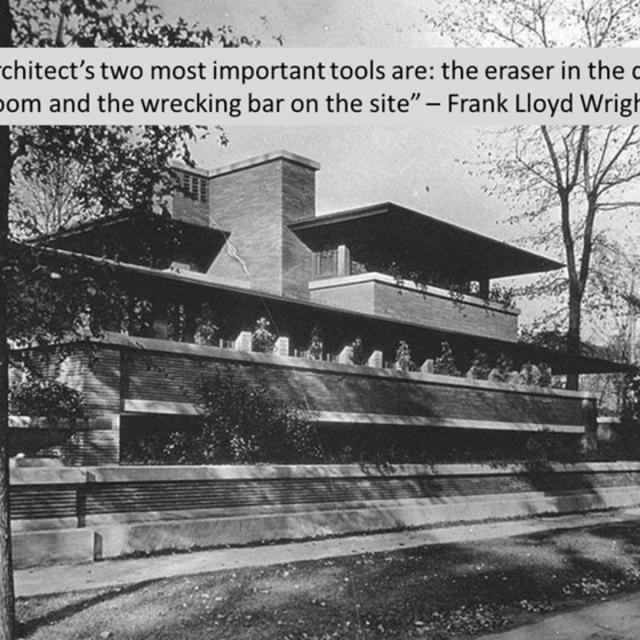
The design step in developing software has some unique characteristics. First of all, it’s the only step where drawing pictures of things is the norm. Why is that? What do pictures do that other representations cannot do? Pictures have varying levels of detail; pictures have context. Pictures…paint a picture. Why are these things important? In this course, too, we begin looking at other disciplines (building architecture is a favorite one) for lessons on design.

Oct 12th 2026
5-12 Weeks
Introduction to Relational Databases (Coursera) Coursera
Illinois Tech

Introduction to Relational Databases (Coursera)

Database management systems are a crucial part of most large-scale industry and open-source systems. This course will introduce you to important concepts of database systems and design. We will learn what relational databases are, what they are used for, the theory underlying their design, and how to query and modify a database using the declarative SQL language.

Oct 5th 2026
4 Weeks
SQL for Data Science with R (Coursera) Coursera
IBM

SQL for Data Science with R (Coursera)

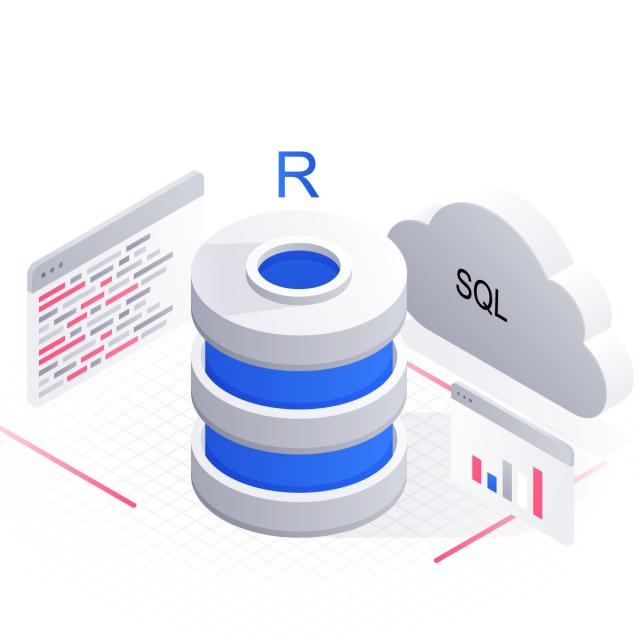
Much of the world's data resides in databases. SQL (or Structured Query Language) is a powerful language which is used for communicating with and extracting data from databases. A working knowledge of databases and SQL is a must if you want to become a data scientist. The purpose of this course is to introduce relational database concepts and help you learn and apply foundational knowledge of the SQL and R languages. It is also intended to get you started with performing SQL access in a data science environment.

Oct 12th 2026
5-12 Weeks
Foundations for Big Data Analysis with SQL (Coursera) Coursera
Cloudera

Foundations for Big Data Analysis with SQL (Coursera)

In this course, you'll get a big-picture view of using SQL for big data, starting with an overview of data, database systems, and the common querying language (SQL). Then you'll learn the characteristics of big data and SQL tools for working on big data platforms. You'll also install an exercise environment (virtual machine) to be used through the specialization courses, and you'll have an opportunity to do some initial exploration of databases and tables in that environment.

Oct 12th 2026
5-12 Weeks
Getting Started with Apache Cassandra (Coursera) Coursera
Whizlabs

Getting Started with Apache Cassandra (Coursera)

The “Getting Started with Cassandra” course is designed to help you gain knowledge of the Cassandra database system. You will learn architecture as well as how to design, build and use Cassandra databases. This training course helps you develop your skills and knowledge in Cassandra. Cassandra is a NoSQL database that has the traits of a distributed, open-source, and decentralized database or storage system. It can support the management of excessively massive amounts of structured data without a single point of failure, thereby resulting in the provision of highly available services.

Oct 12th 2026
3 Weeks
Data Engineering Capstone Project (Coursera) Coursera
IBM

Data Engineering Capstone Project (Coursera)

In this course you will apply a variety of data engineering skills and techniques you have learned as part of the previous courses in the IBM Data Engineering Professional Certificate. You will assume the role of a Junior Data Engineer who has recently joined the organization and be presented with a real-world use case that requires a data engineering solution.

Oct 5th 2026
5-12 Weeks