Reinforcement Learning (Udacity)

Reinforcement Learning (Udacity)

You should take this course if you have an interest in machine learning and the desire to engage with it from a theoretical perspective. Through a combination of classic papers and more recent work, you will explore automated decision-making from a computer-science perspective. You will examine efficient algorithms, where they exist, for single-agent and multi-agent planning as well as approaches to learning near-optimal decisions from experience. At the end of the course, you will replicate a result from a published paper in reinforcement learning.

Class Deals by MOOC List - Click here and see Udacity's Active Discounts, Deals, and Promo Codes.

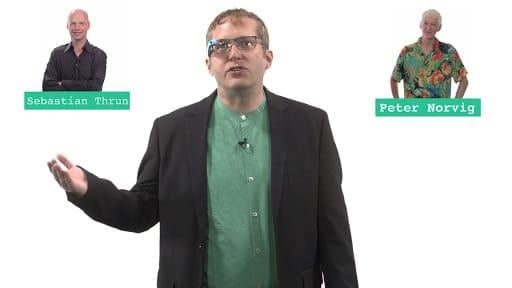
This course will prepare you to participate in the reinforcement learning research community. You will also have the opportunity to learn from two of the foremost experts in this field of research, Profs. Charles Isbell and Michael Littman.

Prerequisites and requirements
Before taking this course, you should have taken a graduate-level machine-learning course and should have had some exposure to reinforcement learning from a previous course or seminar in computer science.
Additionally, you will be programming extensively in Java during this course. If you are not familiar with Java, we recommend you review Udacity's Object Oriented Programming in Java course materials to get up to speed beforehand.


Go to Class
MOOC List is learner-supported. When you buy through links on our site, we may earn an affiliate commission.

Related Courses

Attention Mechanism with Google Cloud (Udacity) Udacity
Udacity,Google Cloud

Attention Mechanism with Google Cloud (Udacity)

Learn how the attention mechanism works and can be applied to machine translation. This course will introduce you to the attention mechanism, a powerful technique that allows neural networks to focus on specific parts of an input sequence. You will learn how attention works, and how it can be used to improve the performance of a variety of machine learning tasks, including machine translation, text summarization, and question answering.

Self Paced
Self-Paced
Machine Learning Interview Preparation (Udacity) Udacity
Udacity

Machine Learning Interview Preparation (Udacity)

Prove your qualifications in your machine learning interviews. In this course, you’ll learn exactly what to expect during a machine learning interview. You’ll cover all the common questions and technical strategies, and review a range of important topics, from machine learning algorithms to image categorization. You’ll also learn best practices for data structure questions and whiteboard problems, and at the end of the course, you’ll get unlimited access to mock interviews on Pramp.

Self Paced
Self-Paced
Machine Learning: Classification (Coursera) Coursera
University of Washington

Machine Learning: Classification (Coursera)

Case Studies: Analyzing Sentiment & Loan Default Prediction. In our case study on analyzing sentiment, you will create models that predict a class (positive/negative sentiment) from input features (text of the reviews, user profile information,...). In our second case study for this course, loan default prediction, you will tackle financial data, and predict when a loan is likely to be risky or safe for the bank.

Jun 15th 2026
5-12 Weeks
Machine Learning Foundations: A Case Study Approach (Coursera) Coursera
University of Washington

Machine Learning Foundations: A Case Study Approach (Coursera)

Do you have data and wonder what it can tell you? Do you need a deeper understanding of the core ways in which machine learning can improve your business? Do you want to be able to converse with specialists about anything from regression and classification to deep learning and recommender systems? In this course, you will get hands-on experience with machine learning from a series of practical case-studies.

Jun 15th 2026
5-12 Weeks
AI Fundamentals (Udacity) Udacity
Udacity,Microsoft Azure

AI Fundamentals (Udacity)

Learn the AI skills top companies are looking for. This course is an entry point into the world of AI using Microsoft's cloud-based solutions, such as Azure Machine Learning and Azure Cognitive Services. You will have the chance to learn and experience firsthand how to train and deliver machine learning models and use Azure Cognitive Services for typical AI workloads such as Computer Vision, Natural Language Processing and Conversational AI.

Self Paced
Self-Paced
Nearest Neighbor Collaborative Filtering (Coursera) Coursera
University of Minnesota

Nearest Neighbor Collaborative Filtering (Coursera)

In this course, you will learn the fundamental techniques for making personalized recommendations through nearest-neighbor techniques. First you will learn user-user collaborative filtering, an algorithm that identifies other people with similar tastes to a target user and combines their ratings to make recommendations for that user.

Jun 15th 2026
4 Weeks
Matrix Factorization and Advanced Techniques (Coursera) Coursera
University of Minnesota

Matrix Factorization and Advanced Techniques (Coursera)

In this course you will learn a variety of matrix factorization and hybrid machine learning techniques for recommender systems. Starting with basic matrix factorization, you will understand both the intuition and the practical details of building recommender systems based on reducing the dimensionality of the user-product preference space. Then you will learn about techniques that combine the strengths of different algorithms into powerful hybrid recommenders.

Jun 15th 2026
5-12 Weeks