Object Oriented Programming in Java (Udacity)

Offered by Udacity,
Object Oriented Programming in Java (Udacity)

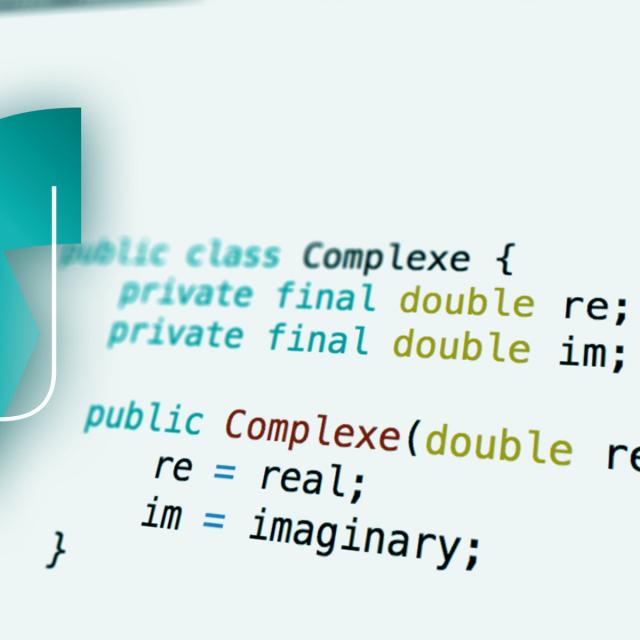
Build Interactive Java Programs. This course will introduce you to some of the most powerful programming concepts in Java, including: objects, inheritance and collections. You will learn how to use these object-oriented programming concepts in code examples, discover how these concepts are used in applications that require user input, and understand the benefits of mastering these concepts in Java.

Class Deals by MOOC List - Click here and see Udacity's Active Discounts, Deals, and Promo Codes.

By the end of the course, you will create your own game, understand how and when to apply foundational Java concepts, and will gain a deeper understanding of the tools and logic that professional Java developers use everyday. You will also have the Java programming foundations you need to take our Android Developer Nanodegree program.
Java is the one of the most popular programming languages in the world today. It works on any platform, and is the core language used in developing Android apps. It’s a great first language for any aspiring programmer, so whether you want to program Android apps, web apps, or simply learn the foundational skills that all programmers use, this course is a great place to start!

What You Will Learn

LESSON 1
The World of Objects

  • Learn how to create classes and objects and use them in programs
  • Discover the purpose of constructors fields and methods
  • Learn how to use access modifiers to set your classes to public or private

LESSON 2
User Interaction

  • Learn how to accept user input at runtime
  • Learn how to pass user input to be stored for access later
  • Build a program that a user can interact with

LESSON 3
Inheritance

  • Understand the core OOP concepts of encapsulation polymorphism and inheritance
  • Learn how to use interfaces to extend and add features to classes
  • Experiment with overriding methods and the super keyword to access methods

LESSON 4
Collections

  • Learn about Collection types: list set queue stack and map
  • Understand how the Collection interface is implemented

Prerequisites and Requirements
You should be familiar with Java syntax, as well as basic Java programming concepts like variables, data types, functions and loops. You also should have an IDE (Integrated Development Environment) installed on your machine that supports programming in Java, such as IntelliJ or Android Studio. If you lack this background, please take our free Java Programming Basics course prior to enrolling in this course.


Go to Class
MOOC List is learner-supported. When you buy through links on our site, we may earn an affiliate commission.

Related Courses

Swift for Beginners (Udacity) Udacity
Udacity

Swift for Beginners (Udacity)

Your First Programming Language. In this course, you’ll begin learning Swift, Apple's programming language for building iOS applications. You'll start with fundamentals and work your way towards understanding all the core principles necessary to get started creating your first app. At the end of the course, you'll complete a problem set of exercises designed to challenge your understanding of Swift and give you the opportunity to apply what you've learned.

Self Paced
Self-Paced
Swift for Developers (Udacity) Udacity
Udacity

Swift for Developers (Udacity)

Your Next Programming Language. This course offers a quick practical introduction to Swift basics, including types, variables, constants, and functions. It combines syntax exercises with hands-on iOS development in Xcode. By the end of the course students will build their first iOS app, an app that creates and displays song lyrics customized to user input.

Self Paced
Self-Paced
Programming Fundamentals (Coursera) Coursera
Duke University

Programming Fundamentals (Coursera)

Programming is an increasingly important skill, whether you aspire to a career in software development, or in other fields. This course is the first in the specialization Introduction to Programming in C, but its lessons extend to any language you might want to learn. This is because programming is fundamentally about figuring out how to solve a class of problems and writing the algorithm, a clear set of steps to solve any problem in its class.

Oct 5th 2026
4 Weeks
Introduction à la programmation orientée objet (en Java) (Coursera) Coursera
École Polytechnique Fédérale de Lausanne

Introduction à la programmation orientée objet (en Java) (Coursera)

Ce cours introduit la programmation orientée objet (encapsulation, abstration, héritage, polymorphisme) en l'illustrant en langage Java. Il présuppose connues les bases de la programmation (variables, types, boucles, fonctions, ...). Il est conçu comme la suite du cours « Initiation à la programmation (en Java) ».

Oct 11th 2026
5-12 Weeks
JavaScript Design Patterns (Udacity) Udacity
Udacity

JavaScript Design Patterns (Udacity)

Organizing Code in a Disorganized World. This course covers methods for organizing your code, both conceptually and literally. You’ll learn the importance of separating concerns when writing JavaScript, gaining hands-on experience along the way. Separating concerns can be done with or without an organizational library or framework. We’ll learn how to separate concerns without one, and then we’ll explore an organizational library together. You’ll also learn strategies for exploring other libraries and frameworks on your own.

Self Paced
Self-Paced
C++ For Programmers (Udacity) Udacity
Udacity

C++ For Programmers (Udacity)

Learn features and constructs for C++. C++ for Programmers is designed for students who are familiar with a programming language and wish to learn C++. This course focuses on 'how' as opposed to 'what'. For example, in the lesson on functions, we do not teach what a function is, but rather how to create a function in C++. The lessons are taught by several different instructors who have used C++ in their professional careers, so students get to experience different perspectives.

Self Paced
Self-Paced
Intro to AJAX (Udacity) Udacity
Udacity

Intro to AJAX (Udacity)

Making Asynchronous Requests with jQuery. In this course you will learn how to make asynchronous requests with JavaScript (using jQuery’s AJAX functionality), and gain a better understanding of what’s actually happening when you do so. You will also learn how to use data APIs so you can take advantage of freely accessible data in your applications, including photo results, news articles and up-to-date data about the world around us.

Self Paced
Self-Paced
Intro to jQuery (Udacity) Udacity
Udacity

Intro to jQuery (Udacity)

Manipulating Websites with Ease. jQuery is the most popular JavaScript library today, in use by over 60% of the top 100,000 most visited websites. This course will teach you how to use jQuery’s core features - DOM element selections, traversal and manipulation. You'll also learn how to read and make sense of jQuery's documentation, making it easy for you to go beyond the methods taught in this class and take advantage of jQuery's full array of features!

Self Paced
Self-Paced