Programmazione I (Federica Web Learning)

Programmazione I (Federica Web Learning)

Obiettivo di questo corso è fornire competenze teoriche e pratiche di programmazione orientata agli oggetti e presentare alcune tecniche avanzate di programmazione, utilizzando come linguaggio di riferimento il linguaggio C++.

I contenuti riguardano quindi principalmente la programmazione orientata agli oggetti (classi, oggetti, ereditarietà, polimorfismo, le altre relazioni tra classi), la memoria dinamica, lo sviluppo di alcuni contenitori quali pile e code, la gestione delle eccezioni.
Non ci riferiremo ad una particolare versione dello standard del C++, gli esempi che verranno sviluppati nel corso non necessitano di particolari caratterestiche del linguaggio, tra quelle introdotte negli standard 2011 e 2014 (lo standard 2017 al tempo di realizzazione del corso non è ancora disponibile). Eventuali elementi specifici degli ultimi standard verranno opportunamente segnalati quando utilizzati.
Per sviluppare gli esempi e gli esercizi presentati durante il corso è possibile utilizzare un qualsiasi compilatore C++ (Standard). Si segnalano: l'ambiente di sviluppo DevC++ (GNU General Public License) per Windows, Xcode per Mac OS X, il compilatore GNU C++ su Linux, l'ambiente C++ per piattaforma Eclipse.
Go to Class
MOOC List is learner-supported. When you buy through links on our site, we may earn an affiliate commission.

Related Courses

Programming Languages, Part A (Coursera) Coursera
University of Washington

Programming Languages, Part A (Coursera)

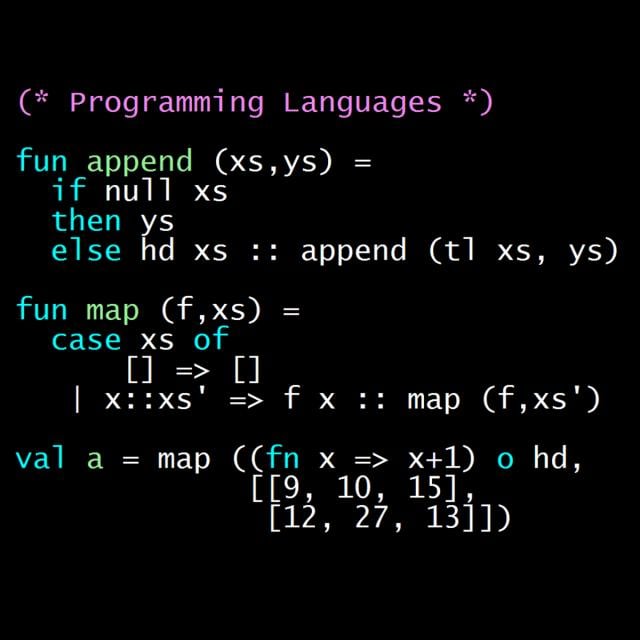
This course is an introduction to the basic concepts of programming languages, with a strong emphasis on functional programming. The course uses the languages ML, Racket, and Ruby as vehicles for teaching the concepts, but the real intent is to teach enough about how any language “fits together” to make you more effective programming in any language -- and in learning new ones.

Nov 2nd 2026
5-12 Weeks
Introduction to Software, Programming, and Databases (Coursera) Coursera
IBM

Introduction to Software, Programming, and Databases (Coursera)

There are many types of software and understanding software can be overwhelming. This course aims to help you understand more about the types of software and how to manage software from an information technology (IT) perspective. This course will help you understand the basics of software, cloud computing, web browsers, development and concepts of software, programming languages, and database basics.

Nov 9th 2026
5-12 Weeks
Fondamenti di informatica (Federica Web Learning) Federica Web Learning
University of Naples Federico II

Fondamenti di informatica (Federica Web Learning)

Il mondo moderno è sempre più dipendente dall’Informatica e conoscerne i fondamenti e le relative applicazioni risulta essenziale per comprendere il funzionamento degli attuali Sistemi di Elaborazione delle Informazioni, oramai diffusi nei contesti più disparati ed imprescindibili per molte delle attività della nostra vita quotidiana. Il corso di Fondamenti di Informatica si propone di fornire ai discenti le nozioni preliminari alla base dell’informatica, ed in particolare quelle relative al trattamento delle informazioni mediante procedure “automatizzabili”.

No sessions available
13-24 Weeks
Laboratório de Programação Orientada a Objetos - Parte 2 (Coursera) Coursera
Universidade de São Paulo, Brasil

Laboratório de Programação Orientada a Objetos - Parte 2 (Coursera)

Esta é a segunda parte do curso avançado de Programação Orientada a Objetos oferecido pelo Departamento de Ciência da Computação do IME-USP. O curso é voltado para profissionais ou estudantes interessados em Desenvolvimento de Software Avançado e que já dominam uma linguagem de programação e já conhecem os fundamentos básicos da orientação a objetos.

Nov 9th 2026
5-12 Weeks
Problem Solving Using Computational Thinking (Coursera) Coursera
University of Michigan

Problem Solving Using Computational Thinking (Coursera)

Have you ever heard that computers "think"? Believe it or not, computers really do not think. Instead, they do exactly what we tell them to do. Programming is, "telling the computer what to do and how to do it." Before you can think about programming a computer, you need to work out exactly what it is you want to tell the computer to do. Thinking through problems this way is Computational Thinking. Computational Thinking allows us to take complex problems, understand what the problem is, and develop solutions. We can present these solutions in a way that both computers and people can understand.

Nov 9th 2026
5-12 Weeks
Kotlin for Java Developers (Coursera) Coursera
JetBrains

Kotlin for Java Developers (Coursera)

The Kotlin programming language is a modern language that gives you more power for your everyday tasks. Kotlin is concise, safe, pragmatic, and focused on interoperability with Java code. It can be used almost everywhere Java is used today: for server-side development, Android apps, and much more. This course aims to share with you the power and the beauty of Kotlin.

Nov 9th 2026
5-12 Weeks
Learn JavaScript (Coursera) Coursera
Scrimba

Learn JavaScript (Coursera)

This is perhaps the most interactive JavaScript course ever recorded. It contains 140+ coding challenges, meaning that you will finally build that ever-so-important JavaScript muscle memory. You will solve the challenges directly in the browser thanks to Scrimba's interactive video technology, so there's not setup needed. Say goodbye to "tutorial hell" and get ready to start feeling your JavaScript superpowers grow exponentially.

Nov 9th 2026
4 Weeks
Programming and Application Foundations (Coursera) Coursera
Illinois Tech

Programming and Application Foundations (Coursera)

This course introduces the students to the creation and deployment of modern, standards-compliant web pages written in HTML, CSS, and JavaScript in the context of the client-server architecture of the web. The course also covers the fundamentals of programming in a modern programming language, basic data modeling, database design, implementation, and administration of single-user and shared multi-user database applications using a contemporary relational database management system.

Nov 9th 2026
5-12 Weeks
Functional Program Design in Scala (Scala 2 version) (Coursera) Coursera
École Polytechnique Fédérale de Lausanne

Functional Program Design in Scala (Scala 2 version) (Coursera)

In this course you will learn how to apply the functional programming style in the design of larger Scala applications. You'll get to know important new functional programming concepts, from lazy evaluation to structuring your libraries using monads. We'll work on larger and more involved examples, from state space exploration to random testing to discrete circuit simulators. You’ll also learn some best practices on how to write good Scala code in the real world. Finally, you will learn how to leverage the ability of the compiler to infer values from types.

Nov 2nd 2026
5-12 Weeks
Introducción a la programación en Python I: Aprendiendo a programar con Python (Coursera) Coursera
Pontificia Universidad Católica de Chile

Introducción a la programación en Python I: Aprendiendo a programar con Python (Coursera)

Decía Steve Jobs que “todo el mundo debería aprender a programar un ordenador porque esto te ayuda a pensar”. Hoy en día la programación es una herramienta fundamental para el desarrollo de la tecnología moderna. Este curso te introduce en el mundo de la programación en el lenguaje Python.

Nov 2nd 2026
5-12 Weeks
Persistent Memory Technology - Introduction and Deployment (Coursera) Coursera
EDUCBA

Persistent Memory Technology - Introduction and Deployment (Coursera)

Embark on a dynamic learning journey through this course. In the first module, explore the intricacies of Persistent Memory (PMEM), unraveling its fundamental concepts, characteristics, and operating system support. Transition seamlessly into the second module, mastering transactional concepts, optimizing hardware configurations, and discerning between volatile and persistent libraries. In the final module, dive into advanced programming with libpmemobj, overcoming C++ Standard limitations, and applying insights to real-world scenarios like building a phonebook.

Nov 9th 2026
3 Weeks