EdX

Probability and Statistics III: A Gentle Introduction to Statistics (edX)

Probability and Statistics III: A Gentle Introduction to Statistics (edX)

This course provides an introduction to basic statistical concepts. We begin by walking through a library of probability distributions – including the normal distribution, which in turn leads to the Central Limit Theorem. We then discuss elementary descriptive statistics and estimation methods.

Class Deals by MOOC List - Click here and see EdX's Active Discounts, Deals, and Promo Codes.

This course provides an introduction to basic statistical concepts.
We begin by walking through a library of probability distributions, where we motivate their uses and go over their fundamental properties.
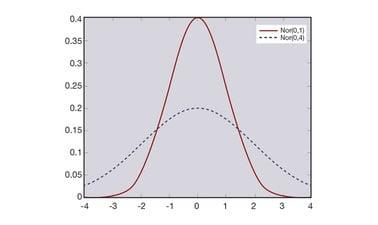
These distributions include such important folks as the Bernoulli, binomial, geometric, Poisson, uniform, exponential, and normal distributions, just to name a few. Particular attention is paid to the normal distribution, because it leads to the Central Limit Theorem (the most-important mathematical result in the universe, actually), which enables us to make probability calculations for arbitrary averages and sums of random variables.
We then discuss elementary descriptive statistics and estimation methods, including unbiased estimation, maximum likelihood estimation, and the method of moments – you gotta love your MoM! Finally, we describe the t, χ2, and F sampling distributions, which will prove to be useful in upcoming statistical applications.
This course is part of the Statistics, Confidence Intervals and Hypothesis Tests Professional Certificate.

What you'll learn
Upon completion of this course, learners will be able to:

  • Review a library of discrete and continuous probability distributions
  • Recognize normal distribution and the Central Limit Theorem, and how they are applied in practice
  • Recognize elementary methods of descriptive statistics
  • Describe methods that can be used to estimate the unknown parameters of a distribution
  • Identify statistical sampling distributions

Prerequisites
Learners will be expected to come in knowing a bit of set theory and basic calculus, as well as the material from the first two courses in this series (the Gentle Introduction to Probability and Random Variables courses). The prerequisite material is all available for you to access; and in any event, we will try to make the current course as self-contained as possible. In addition, this course will involve a bit of computer programming, so it would be nice to have at least a little experience in something like Excel and/or the R freeware statistical package.

Syllabus

Module 1: Distributions
• Lesson 1: Bernoulli and Binomial Distributions
• Lesson 2: Hypergeometric Distribution
• Lesson 3: Geometric and Negative Binomial Distributions
• Lesson 4: Poisson Distribution
• Lesson 5: Uniform, Exponential, and Friends
• Lesson 6: Other Continuous Distributions
• Lesson 7: Normal Distribution: Basics

Module 2 (cont’d): Distributions
• Lesson 8: Standard Normal Distribution
• Lesson 9: Sample Mean of Normals
• Lesson 10: The Central Limit Theorem + OPTIONAL Proof
• Lesson 11: Central Limit Theorem Examples
• Lesson 12 [OPTIONAL]: Extensions – Multivariate Normal Distribution
• Lesson 13 [OPTIONAL]: Extensions – Lognormal Distribution
• Lesson 14: Computer Stuff, including OPTIONAL Box-Muller Proof

Module 3: Getting Started with Statistics
• Lesson 1: Introduction to Descriptive Statistics
• Lesson 2: Summarizing Data
• Lesson 3: Candidate Distributions
• Lesson 4: Introduction to Estimation
• Lesson 5: Unbiased Estimation
• Lesson 6: Mean Squared Error

Module 4 (cont’d): Getting Started with Statistics
• Lesson 7: Maximum Likelihood Estimation
• Lesson 8: Trickier MLE Examples
• Lesson 9: Invariance Property of MLEs
• Lesson 10: Method of Moments Estimation
• Lesson 11: Sampling Distributions

Go to Class
MOOC List is learner-supported. When you buy through links on our site, we may earn an affiliate commission.

Related Courses

R Data Science Capstone Project (edX) EdX
IBM

R Data Science Capstone Project (edX)

Apply various data analysis and visualization skills and techniques you have learned by taking on the role of a data scientist working with real-world data sets. In this capstone course, you will apply various data science skills and techniques that you have learned as part of the previous courses in the IBM Data Science with R or IBM Data Analytics with Excel and R Professional Certificate Programs.

Self Paced
Self-Paced
MathTrackX: Statistics (edX) EdX
University of Adelaide,AdelaideX

MathTrackX: Statistics (edX)

Understand fundamental concepts relating to statistical inference and how they can be applied to solve real world problems. This course will build on probability and random variable knowledge gained from previous courses in the MathTrackX XSeries with the study of statistical inference, one of the most important parts of statistics.

Self Paced
Self-Paced
Statistics and R (edX) EdX
HarvardX,Harvard University

Statistics and R (edX)

An introduction to basic statistical concepts and R programming skills necessary for analyzing data in the life sciences. We will learn the basics of statistical inference in order to understand and compute p-values and confidence intervals, all while analyzing data with R. We provide R programming examples in a way that will help make the connection between concepts and implementation.

Self Paced
Self-Paced
Statistics (edX) EdX
Delft University of Technology,DelftX

Statistics (edX)

This course provides an overview of bachelor-level statistics. You will review the concepts of descriptive and inferential statistics. You will use the statistical software package R on real data to gain insight in these topics. A strong foundation in mathematics is critical for success in all science and engineering disciplines. Whether you want to make a strong start to a master’s degree, prepare for more advanced courses, solidify your knowledge in a professional context or simply brush up on fundamentals, this course will get you up to speed.

Self Paced
Self-Paced
Data Science: R Basics (edX) EdX
HarvardX,Harvard University

Data Science: R Basics (edX)

Build a foundation in R and learn how to wrangle, analyze, and visualize data. This course will introduce you to the basics of R programming. You can better retain R when you learn it to solve a specific problem, so you’ll use a real-world dataset about crime in the United States. You will learn the R skills needed to answer essential questions about differences in crime across the different states.

Self Paced
Self-Paced
Mathematical understanding of uncertainty (edX) EdX
Seoul National University,SNUx

Mathematical understanding of uncertainty (edX)

This lecture series discusses how the concept of probability can be used to handle, control, and exploit uncertainty in the real-world. It is an undergraduate-level lecture series on probability, but is entirely different from the usual courses on probability theory. The lectures cover the basics of probability theory including the relevant mathematics, but instead of focusing on mathematics, the lectures explain how probability theory can help understand real-world uncertainty using various examples.

Self Paced
Self-Paced
Data Science: Capstone (edX) EdX
HarvardX,Harvard University

Data Science: Capstone (edX)

Show what you’ve learned from the Professional Certificate Program in Data Science. To become an expert data scientist you need practice and experience. By completing this capstone project you will get an opportunity to apply the knowledge and skills in R data analysis that you have gained throughout the series. This final project will test your skills in data visualization, probability, inference and modeling, data wrangling, data organization, regression, and machine learning.

Self Paced
Self-Paced
Introduction to Data Science and Basic Statistics for Business (edX) EdX
Tecnológico de Monterrey,TecdeMonterreyX

Introduction to Data Science and Basic Statistics for Business (edX)

In this course you will acquire statistical methods for decision making in business, as well as technological tools to develop quantitative skills. Areas such as " big data" require very clear knowledge of statistics and business, technology provides us various applications that require solid training in statistics for proper use and interpretation .

Self Paced
Self-Paced
Probability and Statistics II: Random Variables – Great Expectations to Bell Curves (edX) EdX
Georgia Institute of Technology,GTx

Probability and Statistics II: Random Variables – Great Expectations to Bell Curves (edX)

This course discusses properties and applications of random variables. For instance, how many customers are likely to arrive in the next hour? What’s the probability that a lightbulb will last more than a year? When you’re done with this course, you’ll have enough firepower to undertake a wide variety of modeling and analysis problems; and you’ll be well-prepared for the upcoming Statistics courses.

Self Paced
Self-Paced
Probability and Statistics in Data Science using Python (edX) EdX
University of California, San Diego,UC San DiegoX

Probability and Statistics in Data Science using Python (edX)

Using Python, learn statistical and probabilistic approaches to understand and gain insights from data. The job of a data scientist is to glean knowledge from complex and noisy datasets. Reasoning about uncertainty is inherent in the analysis of noisy data. Probability and Statistics provide the mathematical foundation for such reasoning.

Self Paced
Self-Paced